The Monsignor Noe Field Archives and Special Collections Center is pleased to announce the addition of six new archival collections related to the Irish-American experience. Thanks to a generous grant from the New Jersey Historical Commission, we were able to process the following collections that are now available to researchers:
In addition to processing these collections, we have digitized roughly 1,200 files, at just over 9GB of data, primarily from the John Concannon and James Comerford collections.
Irish-American Experience in the 20th Century: Collection Highlights
The correspondence, research files, publications, photographs, and audio-visual materials in these collections provide an inside look at how Irish-American fraternal organizations worked together and separately to wield influence and political pressure on issues of importance to their communities — primarily immigration reform and the Troubles in Northern Ireland. These documents demonstrate how many of these organizations, notably the Ancient Order of Hibernians, maintained close ties with local political and religious leaders in New York and New Jersey.
For the first half of the 20th century, in the absence of larger governmental programs, membership organizations collected dues and shared out their funds to members in need of assistance. The AOH New Jersey and Knights of Columbus collections include ledgers and membership registers that record in granular detail how these organizations provided health insurance and sick benefits to their members.
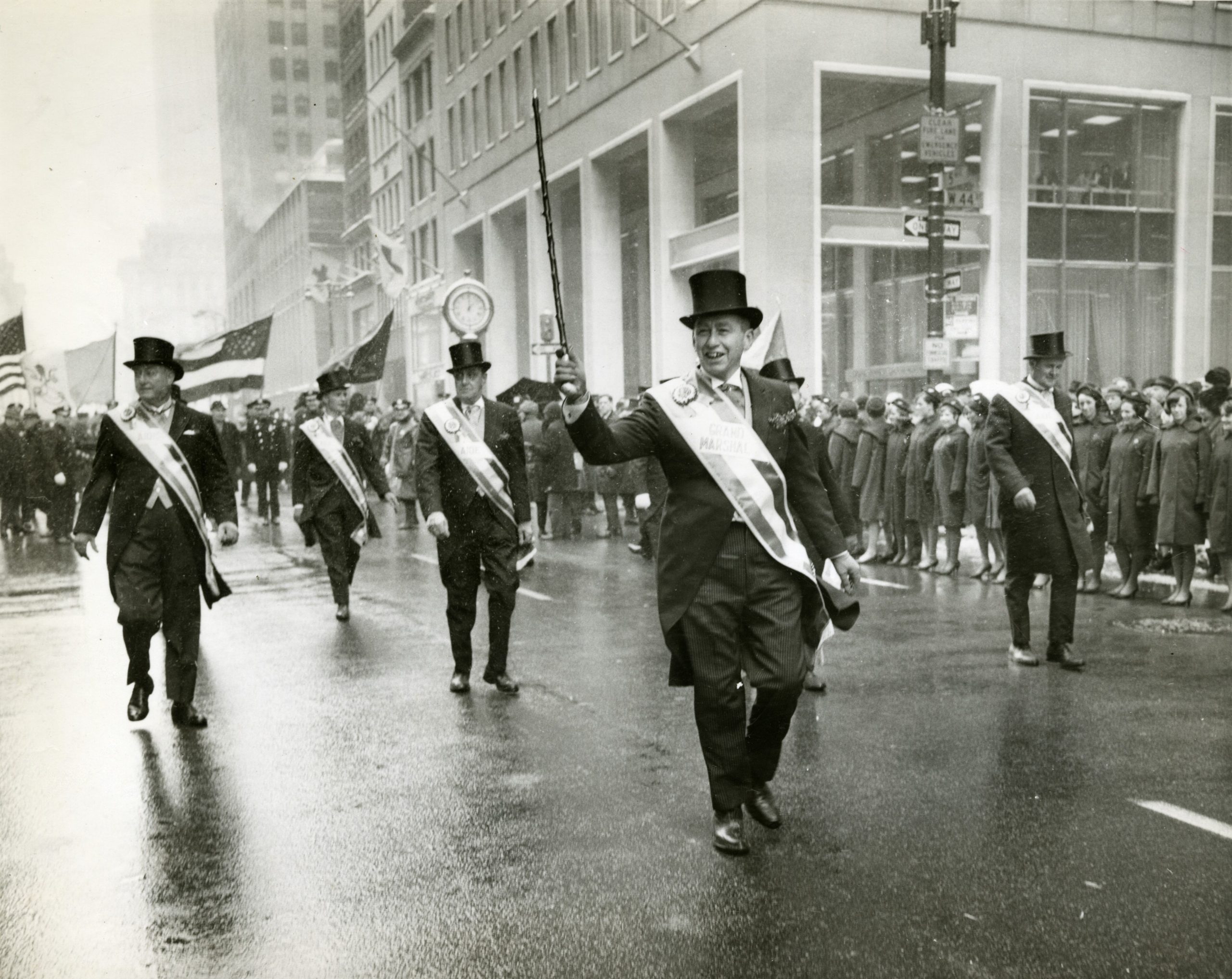
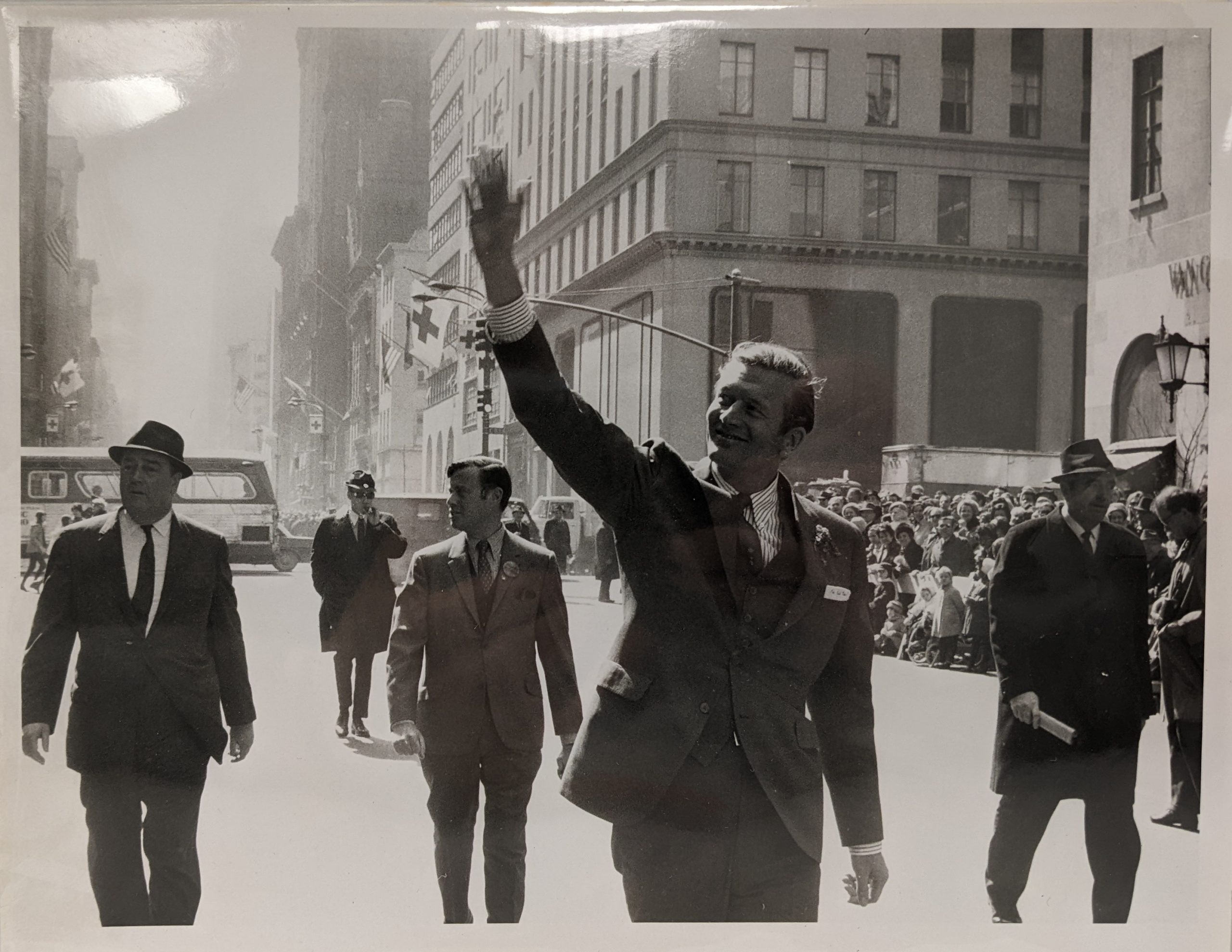
In addition to serving as advocacy groups, Irish-American organizations provided a sense of community and maintained a full calendar of social events. The New York City St. Patrick’s Day Parade is widely documented in the John Concannon collection, as members of the Ancient Order of Hibernians helmed its operation for many decades. The collection includes internal documents, lines of march, invitations, correspondence, and hundreds of photographs.
Digital Exhibits
For an overview of these collections, we invite you to explore two digital exhibits:
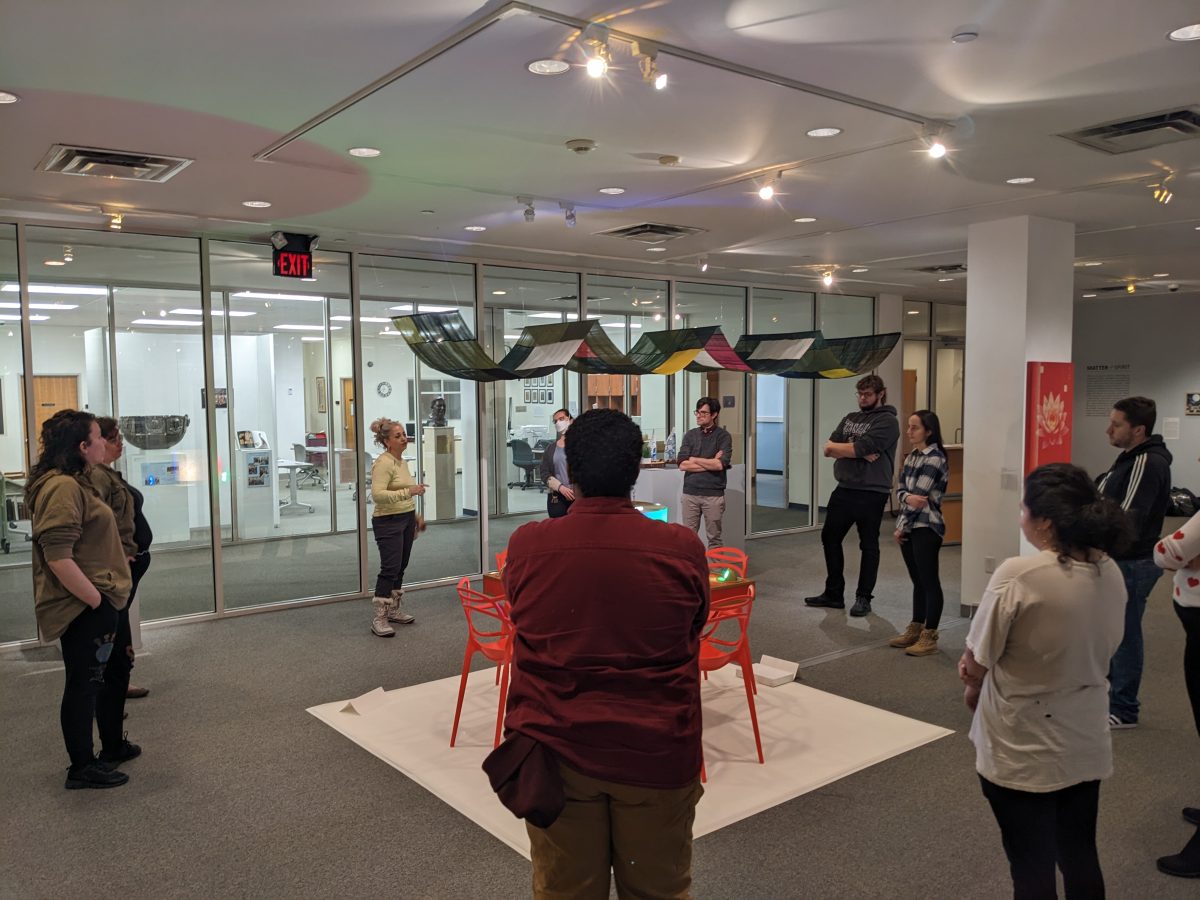
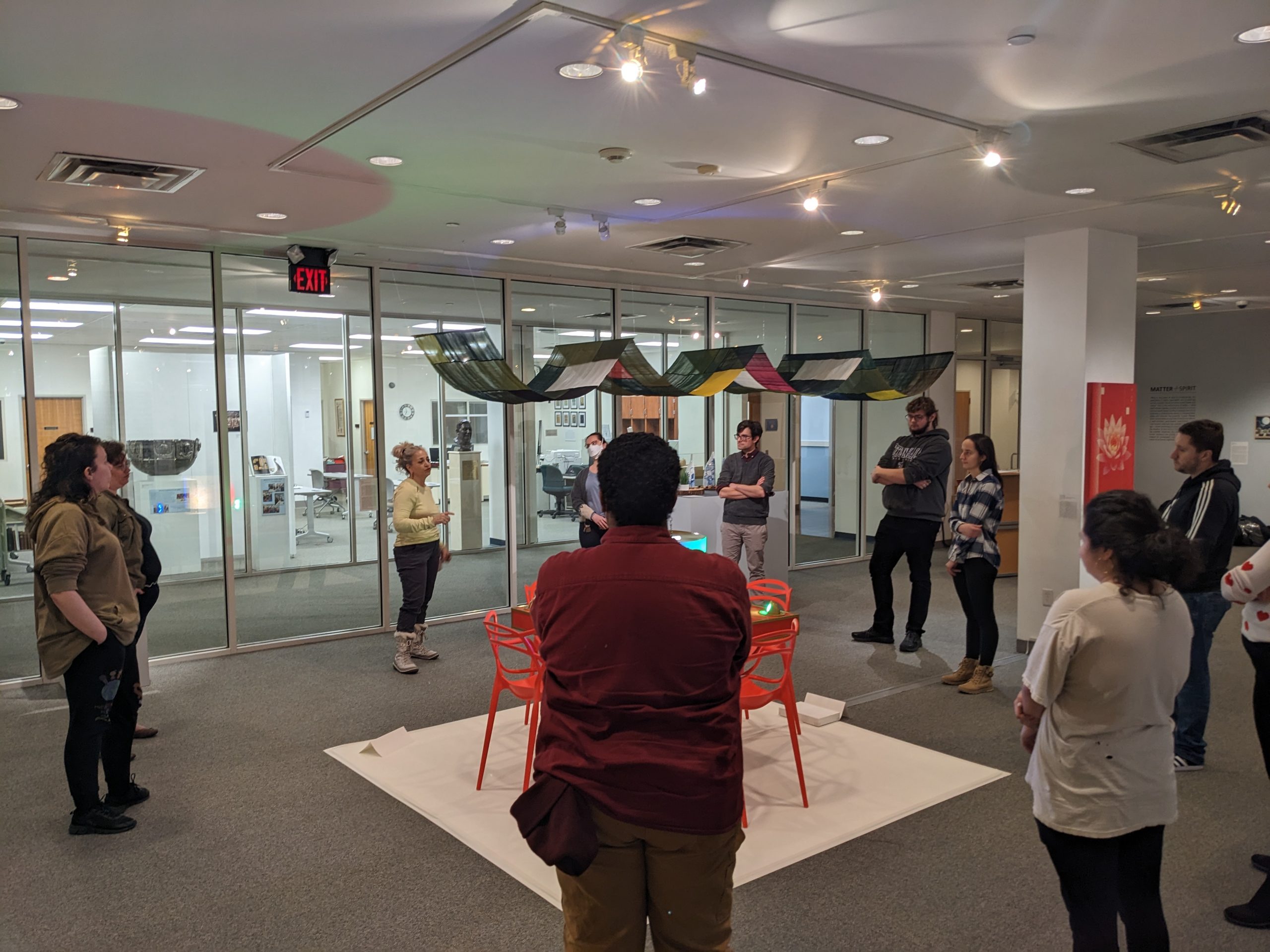
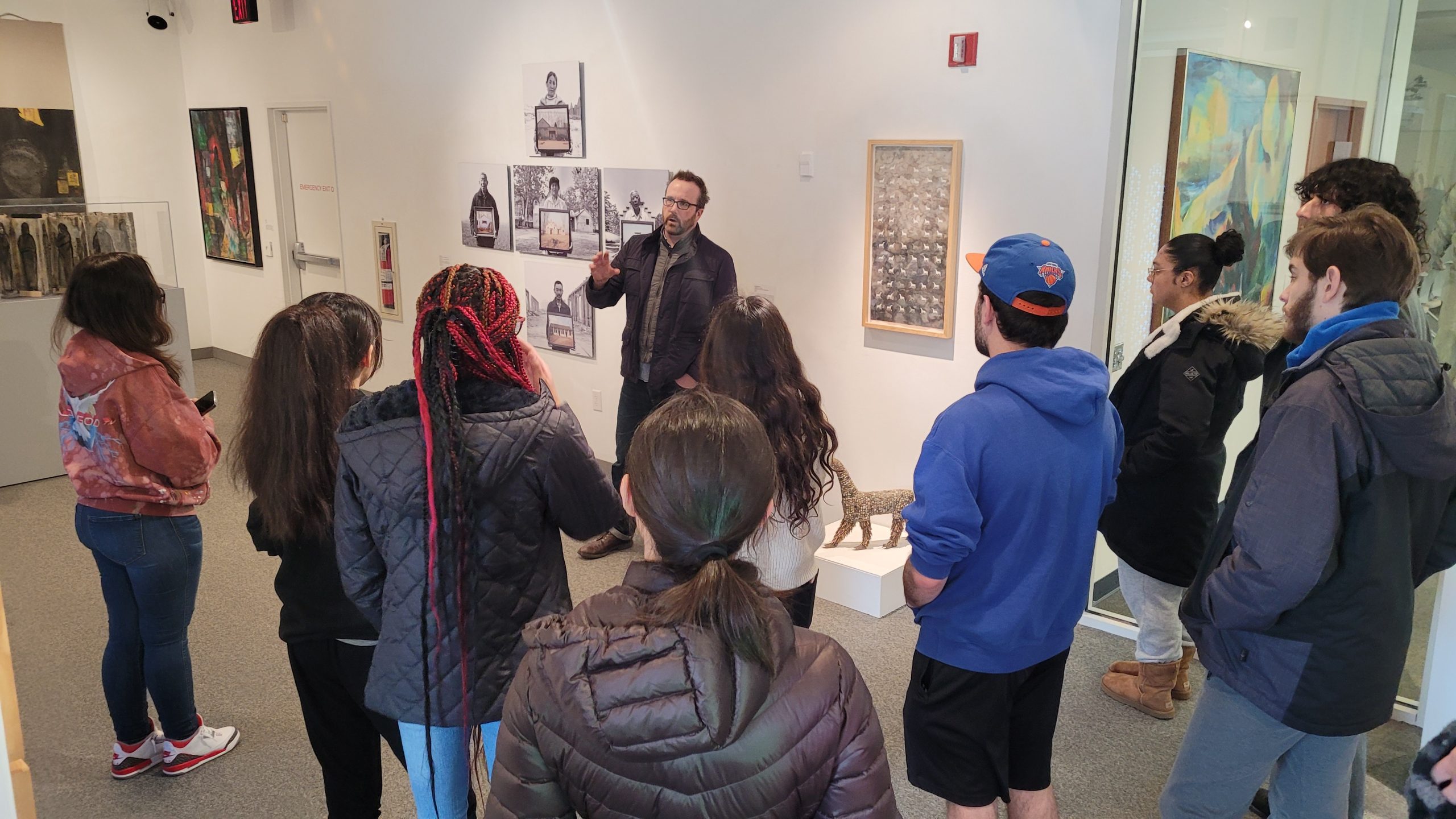
Professor David Bonner visits the Walsh Gallery with his graduate level class, “Object Care.”
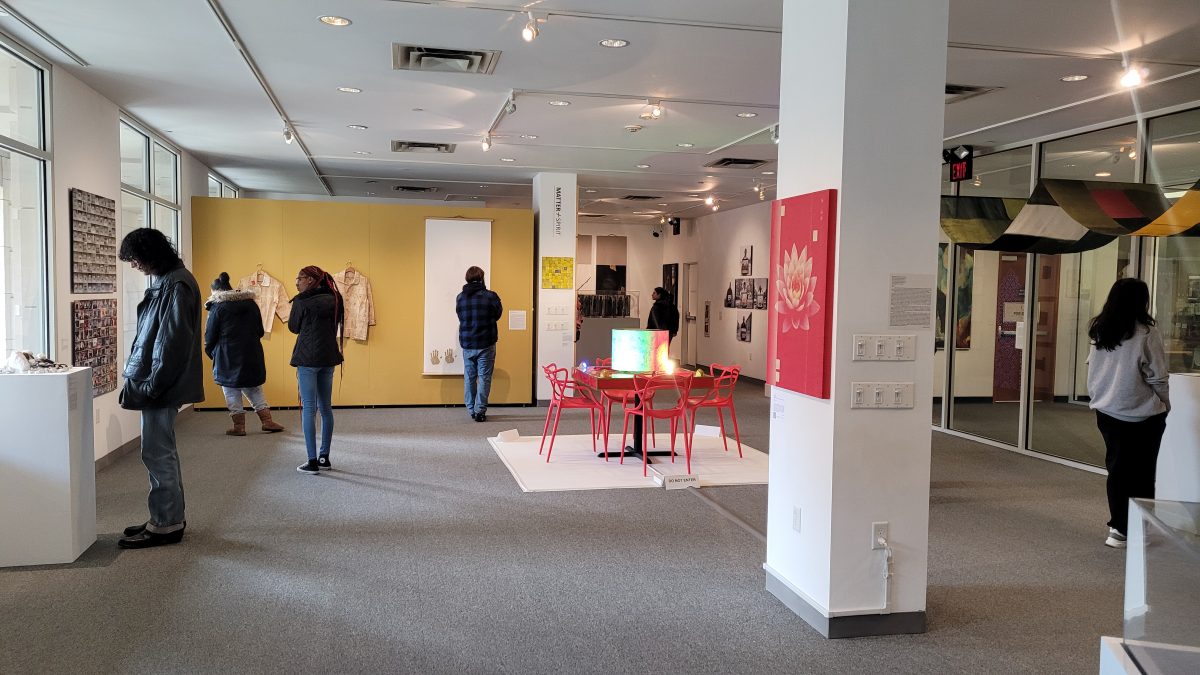
Undergraduate students in Professor Christine Lhowe’s course “Typography I” and graduate students in Professor David Bonner’s “Object Care” recently visited the exhibition Matter + Spirit at the Walsh Gallery. Both visits enabled students in two distinct disciplines to apply their knowledge of graphic design and museum collections care using the exhibition as a case study. Students conversed with gallery staff, asking questions, making observations and connecting theory with experience. Prior to their engagement with staff, students viewed the exhibit independently. The variety of materials employed by the artists range from pieces with AR (augmented reality) components that immerse viewers in additional layers of experience, LED light sculptures powered by Arduino microcontrollers and kinetic installation art in addition to other media.
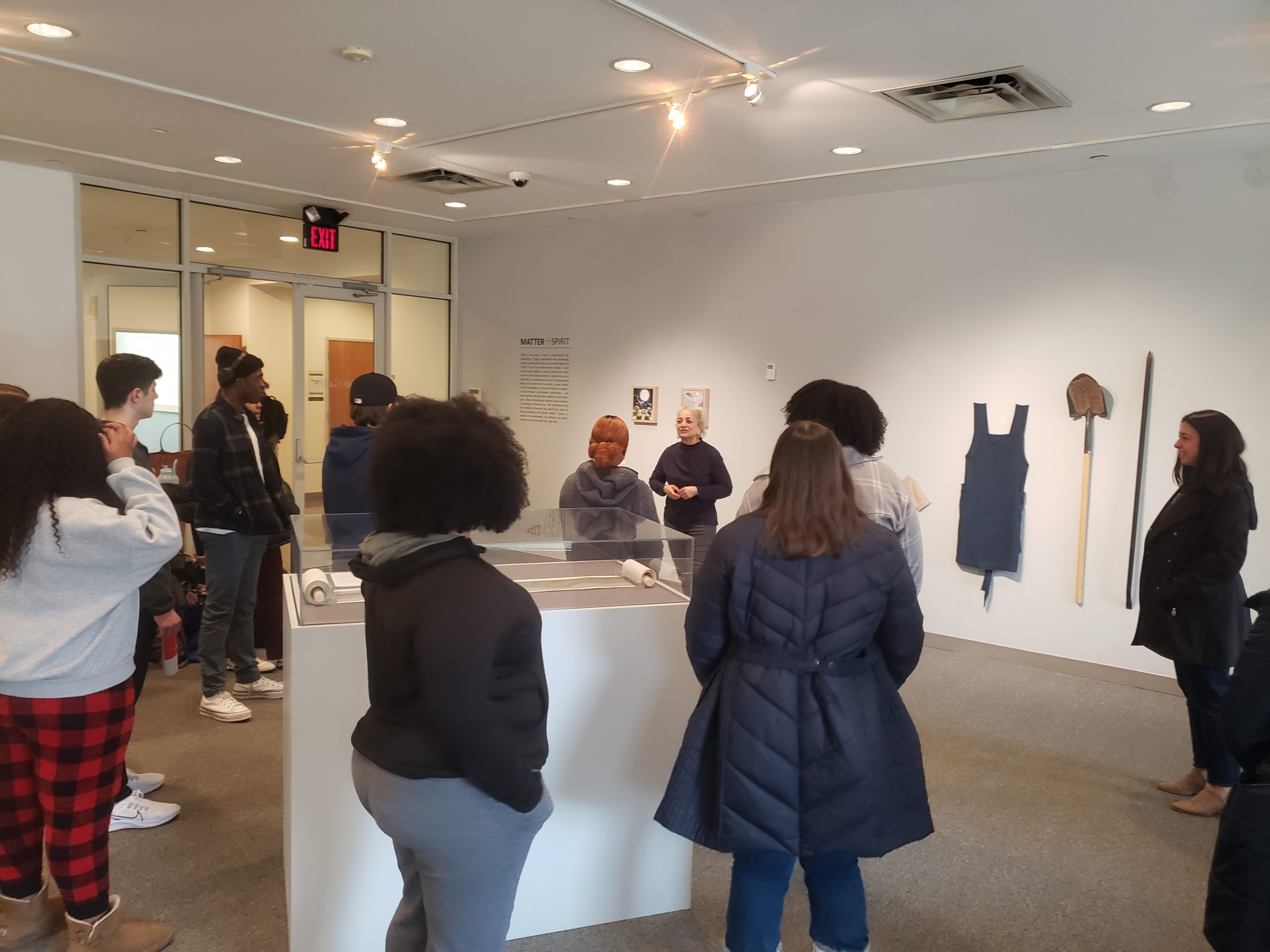
Visiting on February 21, students in Professor Lhowe’s “Typography I” were briefed on the overall theme of the exhibition with a discussion of some highlights. The conversation articulated the main points
Professor Christine Lhowe (far right) visiting with her “Typography I” students
of the exhibition, enabling students to critique the branding, typography, layout and overall design components chosen by the organizers and designers of this traveling exhibit from Taylor University of Indiana. In this manner, Matter + Spirit became an immersive backdrop through which to review how graphic design contributes to the function, communication and aesthetics of the exhibition, preparing students to produce similar projects for clients when they enter the field.
Students in David Bonner’s Museum Professions graduate course, “Object Care” similarly used Matter + Spirit to apply to their knowledge of caring for museum objects, exhibition planning and installation techniques. Conversations centered on the challenges of traveling exhibitions and the necessity of planning, flexibility, good communication and coordination among gallery staff, contractors and exhibition organizers. Other challenges discussed included the care of unusual and delicate materials, troubleshooting hardware components and planning for the unexpected while staying on deadline.
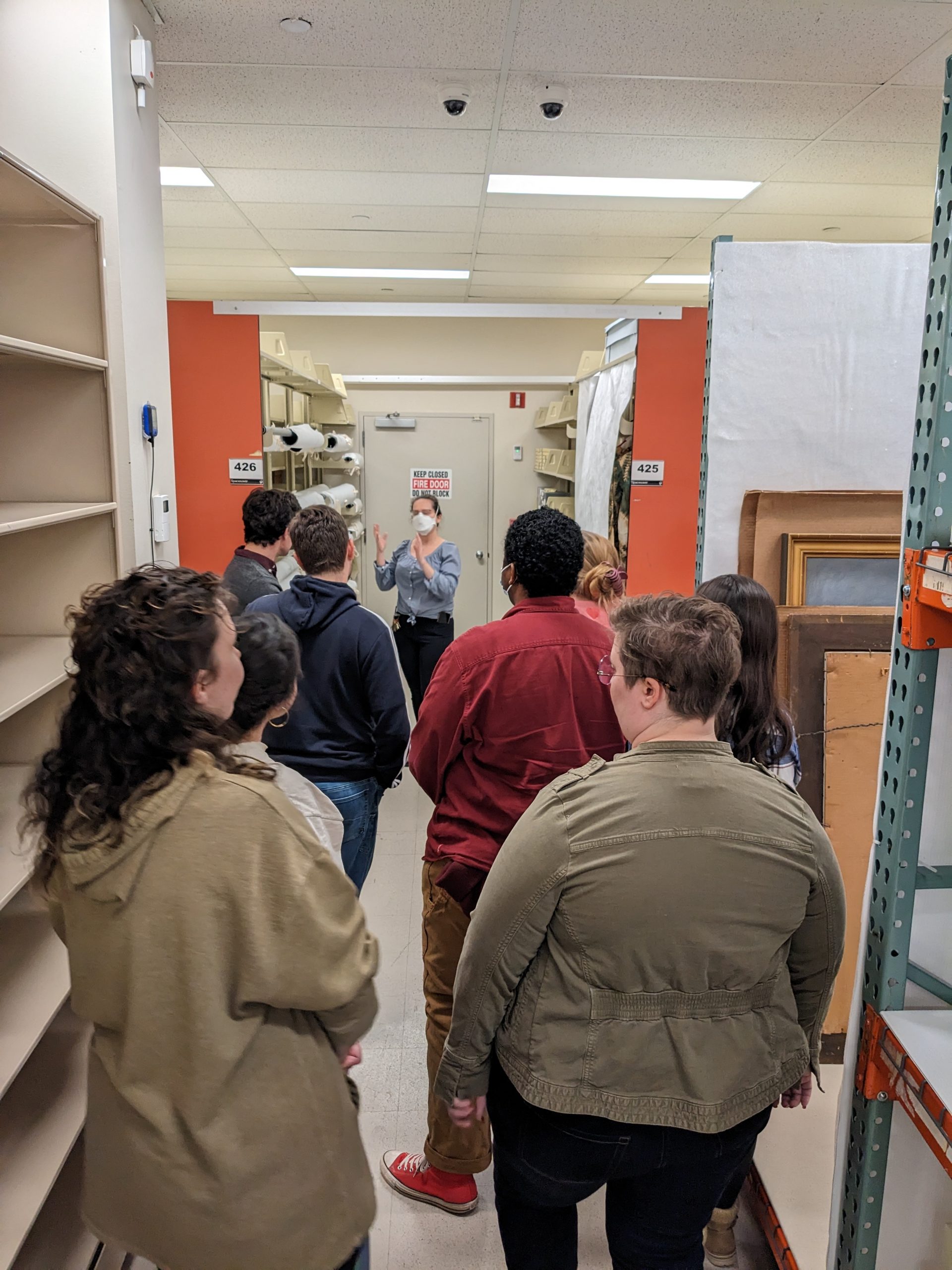
After the gallery conversation, students were then given a behind-the-scenes tour by Collections Manager Laura Hapke who showed students the preservation lab where staff actively work on collections prior to exhibitions, preservation or cataloguing tasks. A variety of objects were on view so that students could see first-hand the way materials age and how the aging process is abated by specific collections care strategies. This conversation was followed by a visit to the storage areas where students saw how objects were stored for long-term care when not on view to the public. Students saw painting racks, rolled and hanging textile storage, compact shelving and map cases, among other storage furniture options
Collections Manager Laura Hapke shows students the object storage vault
for museum art and artifacts. The different types of storage allow the Walsh Gallery to care for objects in the best manner possible to meet both professional and ethical standards for care.
______
Since 1994, the Walsh Gallery has enhanced classroom learning for a variety of graduate and undergraduate students using exhibitions as an interdisciplinary educational tool. If you would like to visit Spirit + Matter with your group or you’d like to know more about how experiential learning can enhance your classes, contact us at 973-275-2033or walshgallery@shu.edu to make a research appointment. The gallery is located on the 1st floor of the Walsh Library and is open Monday to Friday from 9am to 5pm. Groups of 8 or more must make an appointment prior to visiting.
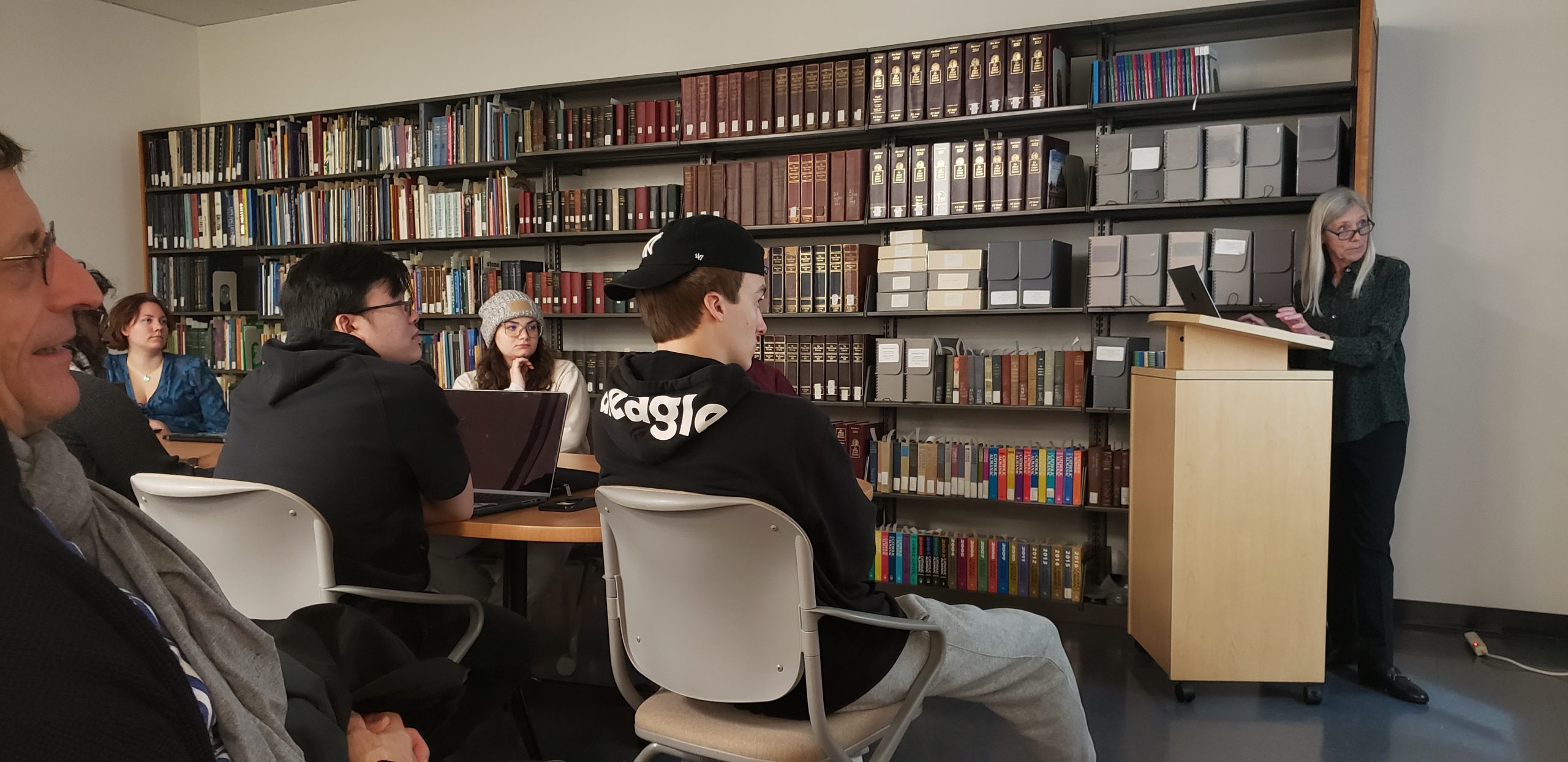
On Monday, January 23rd, the Walsh Gallery opened its first exhibition of 2023, “Matter + Spirit.” The show features Seton Hall University’s Lauren Schiller, Professor of Fine Arts, whose finely detailed oil paintings grace the entry to this group show. Curated by Rachel Taylor of Calvin University, the exhibition stems from a residency that brought together a cohort of artists from North America that traveled to China in 2018 to engage with colleagues in that country. The show is a sort of visual dialogue resulting from this two week program which acquainted participants with the current art scene in China while focusing their attention to the place of spirituality in contemporary life. On the afternoon of the opening reception, Professor Schiller discussed her experiences in China in a presentation attended by students in her Painting I class, faculty and retired faculty. This was followed by a visit to the gallery to view the exhibition and Schiller’s paintings. Schiller also made remarks at the opening reception to the larger group of attendees later that afternoon.
Lauren Schiller discusses her time in China with students in Painting I
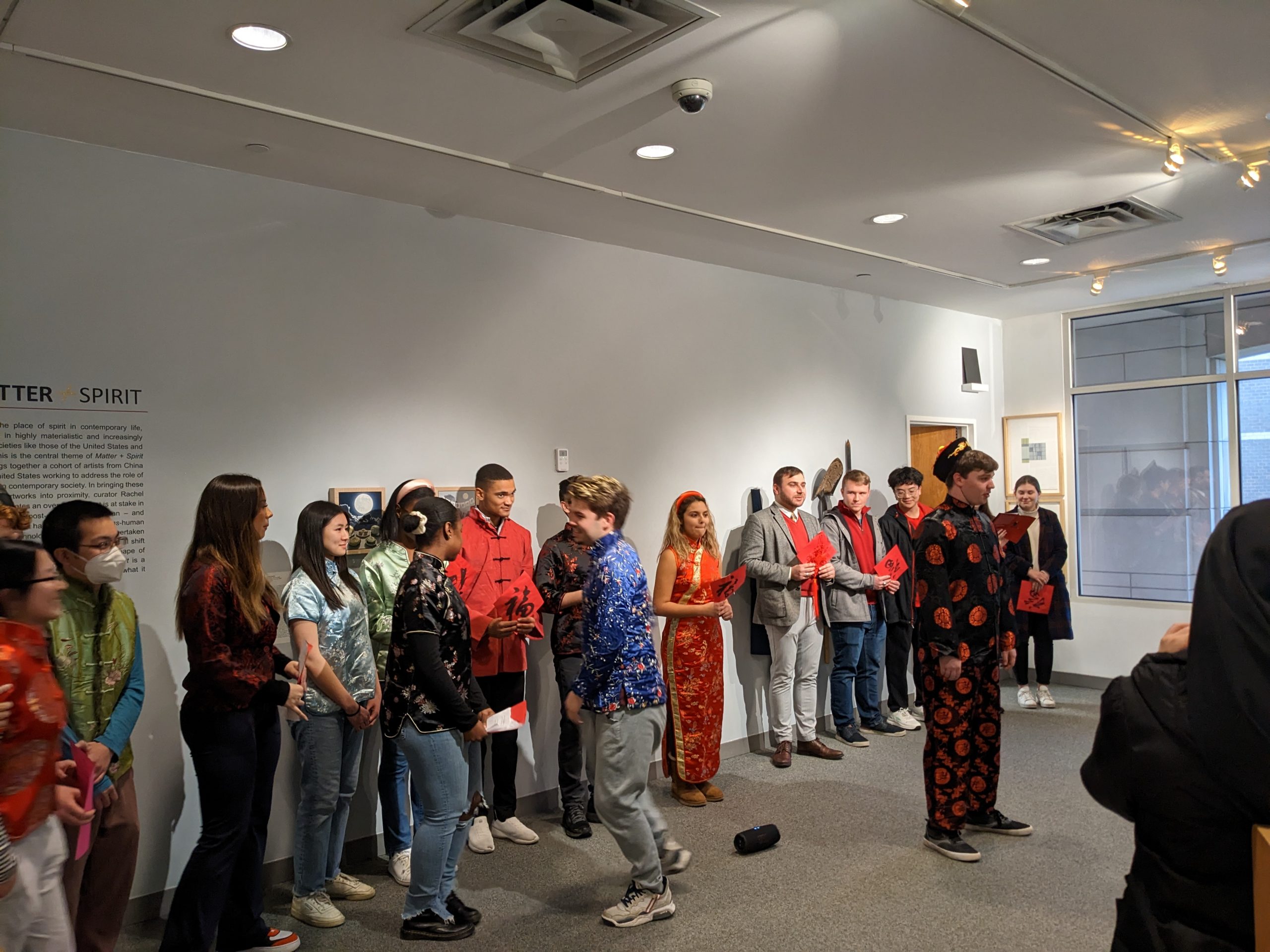
After Professor Schiller’s remarks at the opening reception, which coincided with the Lunar New Year, students studying Chinese Language (Mandarin) with Dongdong Chen, Asian Studies, Department of Languages, Literatures and Cultures welcomed the Year of the Rabbit with a chorale performance of songs in Mandarin to an enthusiastic crowd.
“Matter + Spirit” was later visited by Professor Nathan Oates’ creative writing class. Students were given a brief talk on the formation and theme of the exhibition before exploring the show independently. They then settled in to write an assignment based on an object they selected from the 44 artworks on display. Some students were attracted to traditional forms of art such as painted scrolls featuring panoramic landscape imagery, while others were drawn to a multi-media installation featuring LED lights, kinetic elements, and drawing, while other students preferred to investigate AR (augmented reality) artworks that are activated with a mobile phone app they can download to their cellphone.
Students in the Chinese Program perform at the opening receptionProfessor Nathan Oates discusses the exhibit with students in Creative Writing I
The Walsh Gallery welcomes visits for personal enjoyment and enrichment. We also welcome scheduled group visits with that use the exhibitions or university’s collections for pedagogy and research. If you would like to inquire about how the gallery and special collections can support your teaching and learning experience with objects and/or exhibitions, please contact us at walshgallery@shu.edu
_________
The Walsh Gallery has a considerable collection of fine art, artifacts and archeological specimens for use by faculty, students and researchers. For access to this or other objects in our collections, contact us at 973-275-2033 or walshgallery@shu.edu to make a research appointment. Now on view in the Walsh Gallery: “Matter + Spirit” through Friday, May 12th. The gallery is located on the 1st floor of the Walsh Library and is open Monday to Friday from 9am to 5pm. Groups of 8 or more must make an appointment prior to visiting.
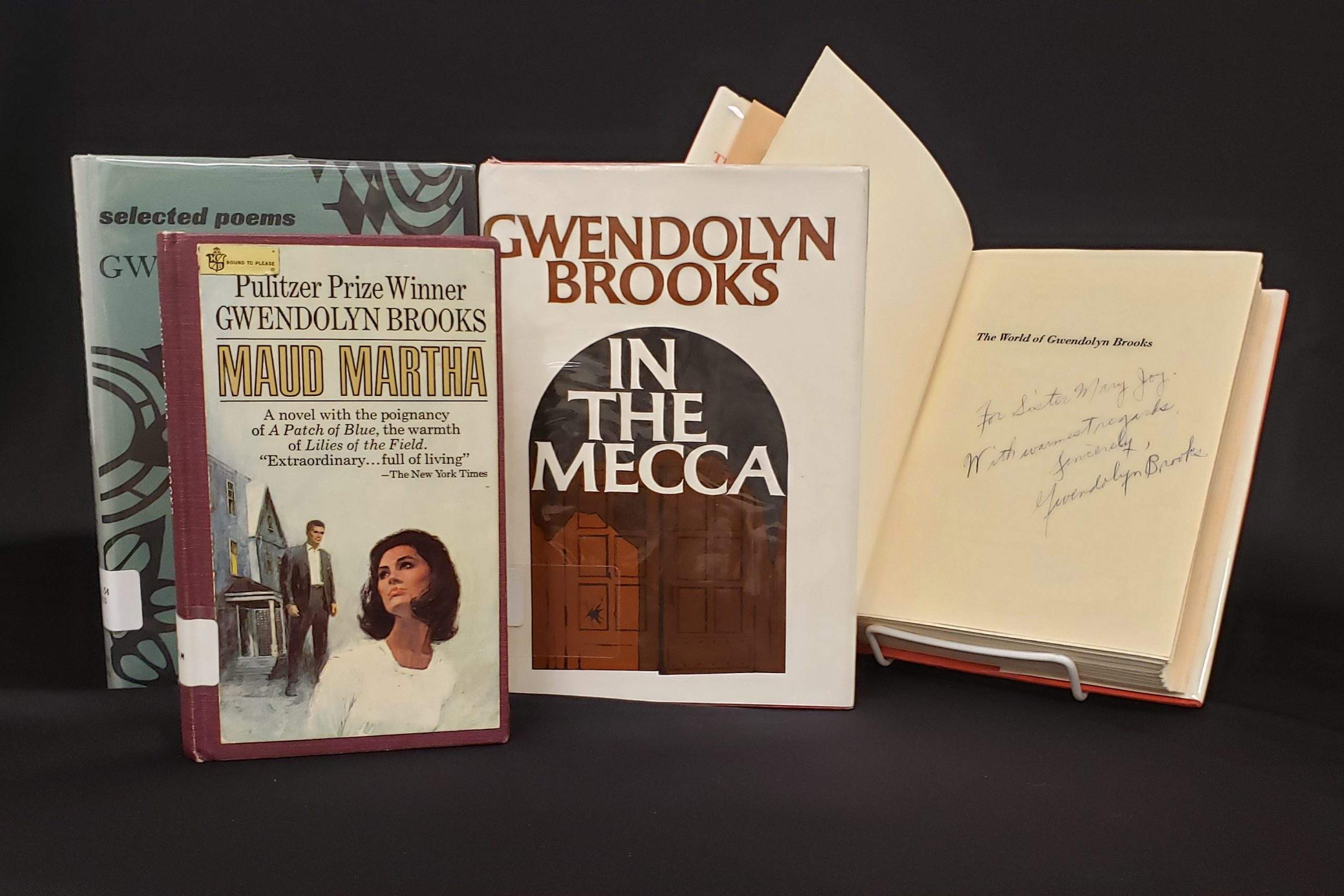
Walsh Library has acquired signed first editions of books by some of the biggest names in African American literature: James Baldwin and Gwendolyn Brooks.
Gwendolyn Brooks (1917-2000) was one of the most influential poets of the twentieth century, the first Black author to win the Pulitzer Prize and the first Black woman to serve as poetry consultant to the Library of Congress. She was also the Poet Laureate of the State of Illinois, where she lived for most of her life in Chicago. Her poetry documents her experience and community even while being in conversation with the roots of the Western tradition, mobilizing forms such as the sonnet and reinterpreting classics such as the Aeneid to buttress her own powerful authorial voice.
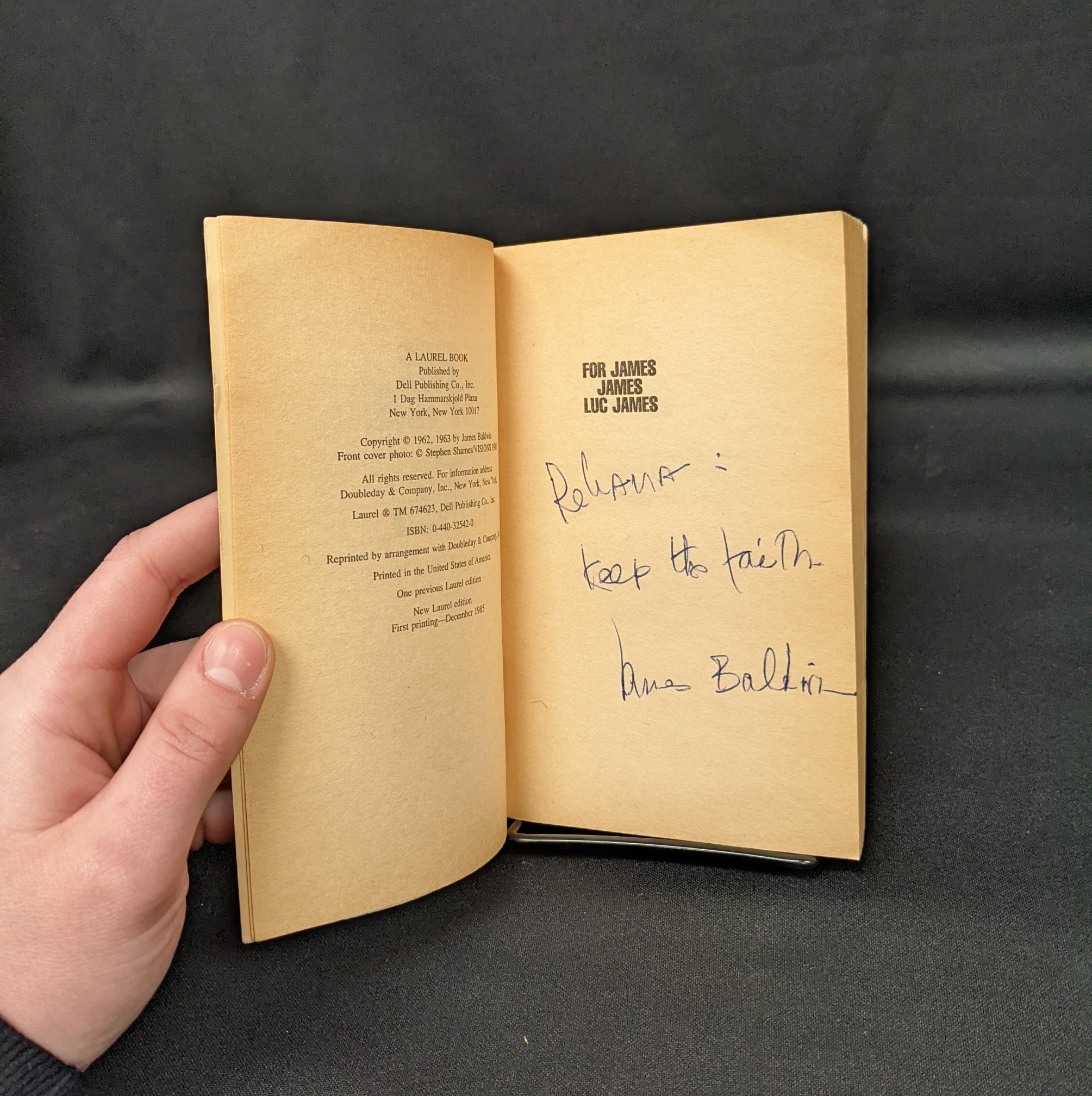
The Library also acquired a signed first edition of James Baldwin’s The Fire Next Time. This powerful work which recounts Baldwin’s personal experience of racism in America as well as his critique of Christianity, is part of the Core Curriculum at Seton Hall. It is a key cultural touchstone.
Seton Hall’s edition is inscribed by Baldwin to a person named Reliana and says “Keep the faith.” This inspiring message is an especially appropriate one for Seton Hall, given that this work plays a role in the conversations about life’s purpose and meaning that take place in the Core Curriculum’s classes.
Get into the Halloween spirit with these spooky tales from Seton Hall’s rare book collections! They come from the book Ancient Legends of Ireland, written by Lady Wilde (mother of Oscar Wilde!), which we hold in our collections, and is currently on display in Walsh Gallery. You can read the entire book online at the Internet Archive.
Happy Halloween!
With thanks to the Teaching, Learning, and Technology Center for filming and editing.
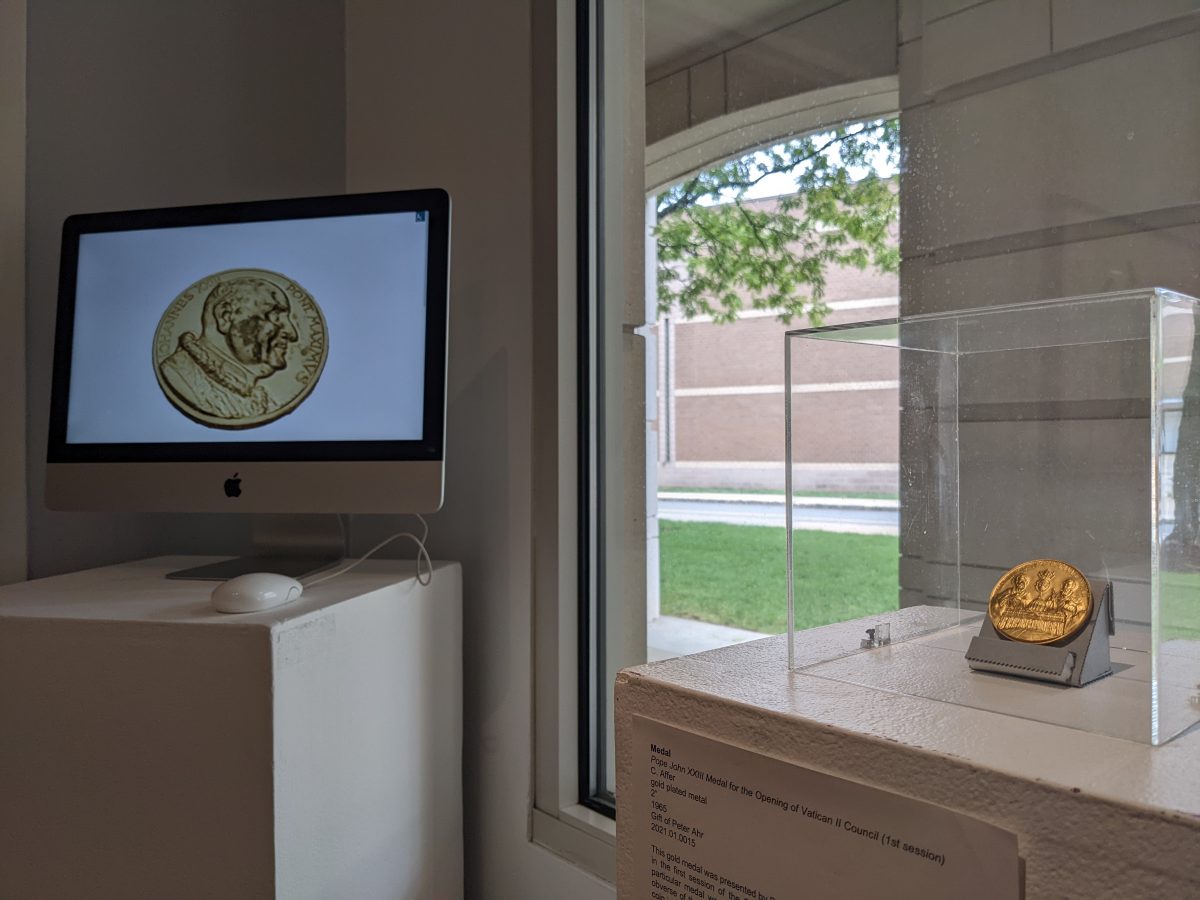
Walsh Gallery is delighted to announce its first use of in-house 3D modeling in its current exhibit, Seton Hall Re-Collects.
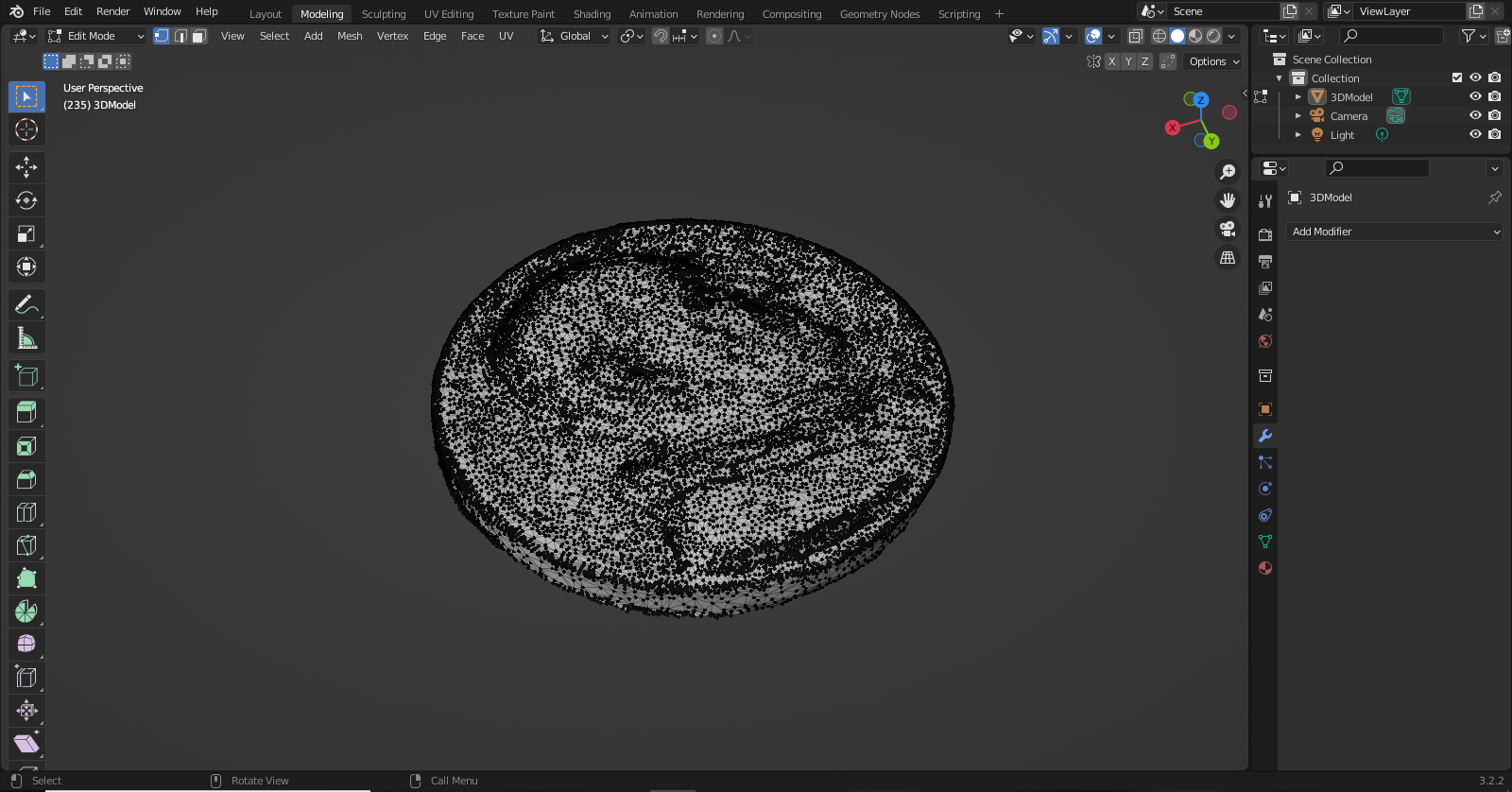
Screenshot of the Pope John XXIII Medal for the Opening of Vatican II Council (1st session) being edited in Blender.
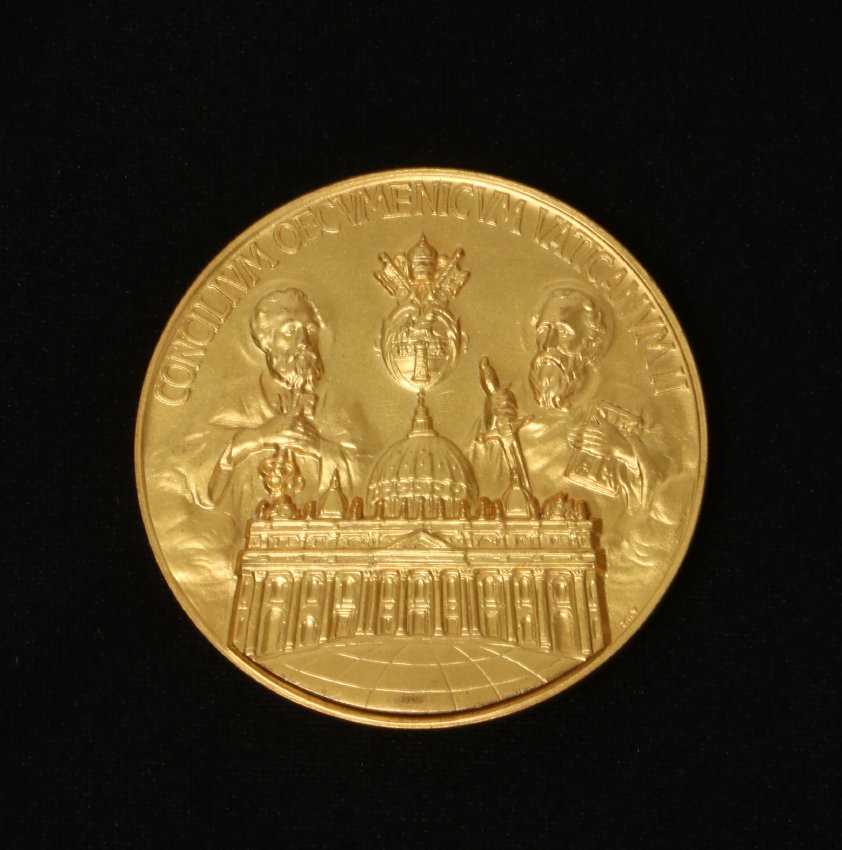
For our first model, the Pope John XXIII Medal for the Opening of Vatican II Council (1st session), a gift of Peter Ahr, was used. The medal was scanned in the TLTC’s Digital Scanning Lab using the KIRI Engine app and later edited in Blender to create the final file. By uploading the file into a 3D viewer plugin on WordPress, it allows visitors to rotate and zoom in on the front of the medal while appreciating the back displayed by its physical counterpart. Using 3D technology has allowed us to display both the front and back of the medal simultaneously!
Image of the reverse side of the Pope John XXIII Medal for the Opening of Vatican II Council (1st session).
Medal Pope John XXIII Medal for the Opening of Vatican II Council (1st session)
C. After
gold plated metal
2″
1965
Gift of Peter Ahr
2021.01.0015
Make sure to stop by and check out Seton Hall Re-Collects in the Walsh Gallery, a crowd-sourced exhibition featuring the university’s collections. Objects on display were selected by those who have worked with them, collected them or used them for research. Participants include students, faculty, staff, interns, volunteers, donors and scholars from other institutions – each contributing a label written in their unique voice which describes their interest in the object(s) they chose. The show includes of a wide array of art, artifacts and rare books including Japanese toys, historic 19th century ledgers, 17th century engravings, Roman and Byzantine coins, a print by Salvador Dalí and a medal from the Second Vatican Council – among other items. The show is on view September 12 – December 9, 2022.
The show’s inspiration draws on a series of exhibits organized by the Art Department in the 1980’s titled Seton Hall Collects. Each exhibition highlighted a related group of objects; traditional Japanese prints, Modern paintings and contemporary American prints. This reboot similarly highlights the collections though the selections are not limited to any one medium or type of object to emphasize the breadth and scope of the university’s holdings. Labels reflect the writers’ perspectives, favoring personal and contextual information about the objects over their physical attributes which was once the fashion for exhibitions. Gallery Director Jeanne Brasile conceived of the exhibition when she found an old exhibition catalogue from 1984 featuring Japanese prints while researching the Asian art collection. “This exhibition harkens back to the history of Seton Hall and the people who cultivated the many collections we enjoy today, while bringing this time-honored format into the future. It was exciting to see the exhibition take shape through the eyes of our collaborators.”
Seton Hall University’s beautiful main campus is located in suburban South Orange, New Jersey, and is only 14 miles from New York City — offering students a wealth of employment, internship, cultural and entertainment opportunities. Seton Hall’s nationally recognized School of Law is prominently located in downtown Newark. The University’s Interprofessional Health Sciences (IHS) campus in Clifton and Nutley, N.J. houses Seton Hall’s College of Nursing and School of Health and Medical Sciences as well as the Hackensack Meridian School of Medicine at Seton Hall University. The Walsh Gallery, located on the first floor of the Walsh Library is open 9am to 5pm, Monday—Friday. Groups of 8 or more must register in advance. Admission to the gallery and its programs is free and
open to the public.
From its earliest days, Seton Hall has welcomed international students from locations across the globe. During the post-World War II era, the school made a concerted effort to introduce and promote educational initiatives specifically devoted to the Asian experience. These measures have enhanced the intellectual and interactive opportunities for the benefit of countless Setonians over the past several years.
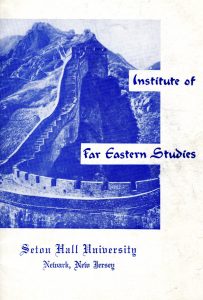
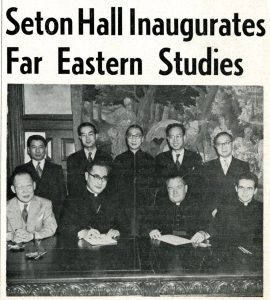
The formal genesis of a venture into learning more about civilizations across the Pacific Ocean led to the creation of the Far Eastern Institute (now known as the Asia Center) at Seton Hall University on October 29, 1951. This date became a major milestone in school history as Monsignor John McNulty, University President hosted various dignitaries from Japan and the Republics of China (Taiwan), Korea, and Vietnam at the South Orange campus to officially christen the Institute. The basis of this alliance was founded on the principles of offering specialized instruction, promoting scholarship, programming opportunities, and the encouragement of cultural exchange with the faculty, student body, and community at large.
Institute of Far Eastern Studies, Inaugural Prospectus Cover Art, 1951
In more formal terms, the principles of this center were outlined in the following manner: “The Institute of Far Eastern Studies was organized to promote better understanding between the American people and the people of the Far East. The academic courses of this Institute will give the student an opportunity to study the cultural, historical, political, economic, religious and social aspects of the Far East. Since the Institute wishes to use every means available to encourage the interchange of Eastern and Western culture, it is engaged in research work, it conducts public lectures and forums, and publishes articles, monographs and books.”
First Board Advisory Board for the Institute of Far Eastern Studies, 1951
The first advisory board featured a distinguished group of officials who directed the incorporation and implementation of programs ultimately adopted by the Institute. This “regency” of trustees included the following individuals: The Reverend John J. Cain, representative of Seton Hall University and the Archdiocese of Newark; The Most Reverend Paul Yu-Pin, Archbishop (later Cardinal) of Nanking; The Honorable John Chang Nyum, Prime Minister of South Korea; The Honorable Kostaro Tanaka, Chief Justice of Japan, who later became President of Tokyo University; The Honorable Ngo Dinh Diem, former Prime Minister of Việtnam who later became President of the Republic; and Dr. John C.H. Wu, Chinese Jurist and Minister of China to the Holy See who also served as a Professor of Law at the Seton Hall University School of Law.
The first noticeable examples of institutional support came in the form of Seton Hall-endorsed research projects that focused upon various aspects of Chinese socio-political life. The major studies that began this trend included one by the Reverend John Niu, who investigated the cultural and social development of the Industrial Bank of China along with the reorganization of Chinese Economics from a Communistic perspective. In addition, Mr. Yeu Yeu Pan, former Commissioner of Education of Shanghai, conducted research on the principles of democracy as explained by selected ancient Chinese writers representing different centuries and schools of thought.
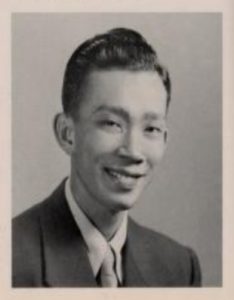
Mr. Ly-Chanh-Du, ’52
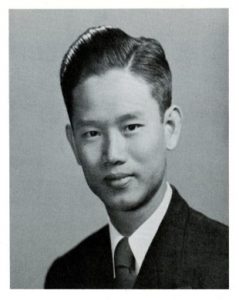
Mr. Francis P. Sing, ’53
Concurrent with the inauguration of the Institute, the first documented Asian students to graduate from Seton Hall occurred during the early 1950s. Counted among the first alumni were Mr. Ly-Chanh-Du, ’52, a native of Travinh, Việtnam who earned a B.S. in Social Studies while attaining Dean’s List status and participated in the Le Circle Français Society. Mr. Francis P. Sing, ’53 hailed from Sen-Hui, Kit-Yang, Swallow, China, and earned his B.A. in Science and Management.
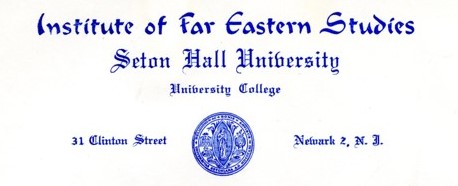
The creation of a formal and specific Asia-centric curriculum offered through the Institute commenced during the early-mid 1950s and was open to both high school and college students who could register both on a registered or non-matriculated basis. Courses were held at the University College Center campus located at 31 Clinton Street in Newark as part of the greater Seton Hall University Urban Division. Primary class offerings included Culture, History, Philosophy, and Political Science by country (including India and Pakistan) along with elementary through advanced levels of language instruction opportunities in Chinese, Japanese, Korean, and Vietnamese.
In the wake of the growing allure of the Institute, The Reverend R.J. de Jaegher was dispatched by Monsignor McNulty on a goodwill tour of Asia during the late-1950s to meet with various dignitaries to further enhance the program. Counted among his findings included the following highlights . . .
The University of Viet-Nam is willing to exchange books, professors, etc., with Seton Hall. President Diem would like to have Father de Jaegher back to Vietnam for important work there as soon as possible.
Chiang Fu-Tsun, Director of the Chinese National Central Library, is a Catholic convert, and he is willing to exchange books with Seton Hall. Recently he has sent some valuable books for the Seton Hall Centennial.
All the Korean Universities invited me to give lectures and gave me a trunk full of Korean books for our Institute. All those Universities asked for documentation on Seton Hall.
Bishop Paul Marie Kinam Ro of Seoul (Korea) has a Holy GHOST MEDICAL College, the only Catholic College in Korea, and Bishop Ro requested me to ask you to have his College affiliated with Seton Hall Medical Center.
Father Willem Grootaers – a professor from the Catholic University of Peiping, a great authority on linguistics . . . after receiving a Doctorate at Seton Hall, could be research professor for Seton Hall in Japan and do some work for Seton Hall free of charge.
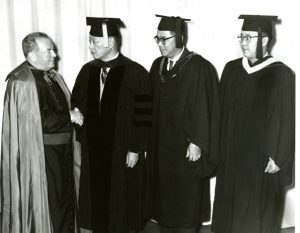
Msgr. John McNulty, University President poses with the following distinguished visitors during Commencement Exercises at Seton Hall University in 1957. Hon. Kotaro Tanaka, Chief Justice of Japan LL.D.; Hon. Chang Chi-Yun, Minister of Education, Republic of China LL.D.; Hon. John Myun Chang, Vice President of the Republic of China LL.D.
Additional advancements were made as the school continued to thrive into the late 1950s and subsequent decades as Seton Hall University teamed with the United States Department of Education, Health and Welfare to offer scholarships to students who were willing to learn to speak fluent Chinese or Japanese. Along with external support, the administration looked to broaden the program and affiliate it with the Department of Social Studies. This led to other opportunities that would arise in subsequent decades including various research endeavors undertaken by a number of faculty and students, the creation of the Seton Hall University Press which specialized in Chinese language texts, and official student and professor exchanges with individual Chinese colleges and universities among other activities of note.
Additional introductory information on the Institute including faculty and graduates of the school can be found within our online yearbook collection – https://scholarship.shu.edu/yearbooks/
For more information on our resources and to schedule an appointment please contact via e-mail: archives@shu.edu or by phone at: (973) 275-2378.
Selected Bibliography
Asia Center, 50th Anniversary Program. South Orange, NJ: Seton Hall University, 2002.
Far Eastern Institute Prospectus. South Orange, NJ: Seton Hall University, 1951.
“Far Eastern Institute” Files. Office of the President & Chancellor of Seton Hall University: John L. McNulty records Collection, Identifier: SHU-0003-012
“Seton Hall Inaugurates Far Eastern Studies,” The Setonian, 2 November 1951, Vol. XXVI, No. 6, 1-3.
Seton Hall University Catalog(ue) Bulletin, 1956-57. South Orange, NJ: Seton Hall University, 1956.
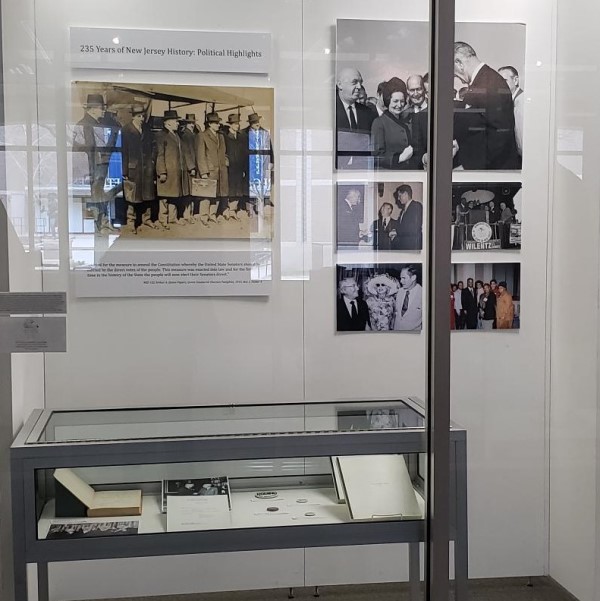
Pathbreakers in New Jersey Politics on display on the first floor of Walsh Library
Seton Hall cares for fourteen archival collections documenting the careers of New Jersey politicians, illustrating the evolution of this state since its founding in 1787. In 2021, the National Archives awarded Seton Hall a federal grant to process five of these collections: the papers of Arthur A. Quinn, early twentieth-century pioneer in labor activism, the papers of Bernard Shanley, Chief of Staff to President Eisenhower, Governors Richard Hughes and Brendan Byrne, and first Black Congressman from New Jersey Donald Payne. After processing, these unique materials will be available to the public, enriching our understanding of the state we live in and the many people who worked to make it better.
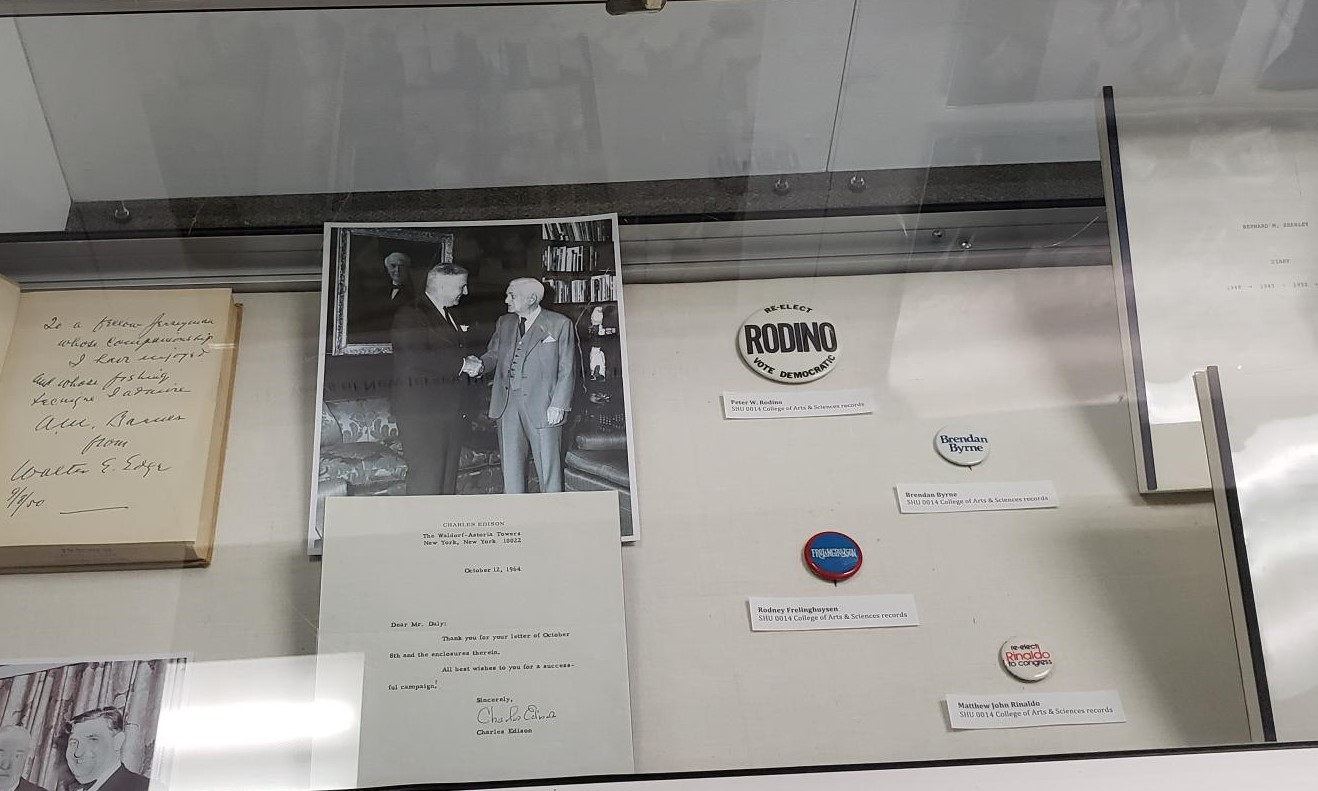
Exhibit case featuring photos, writings, inscribed book, political buttons and bound copy of Shanley diary
The exhibit includes photographs of these politicians, excerpts from their writings, political buttons issued by their campaigns, and most exciting: the daily diary kept by Bernard Shanley when he was Chief of Staff to President Eisenhower. The archives has a full copy of the diary now available to researchers, in addition to the bound copy on display.
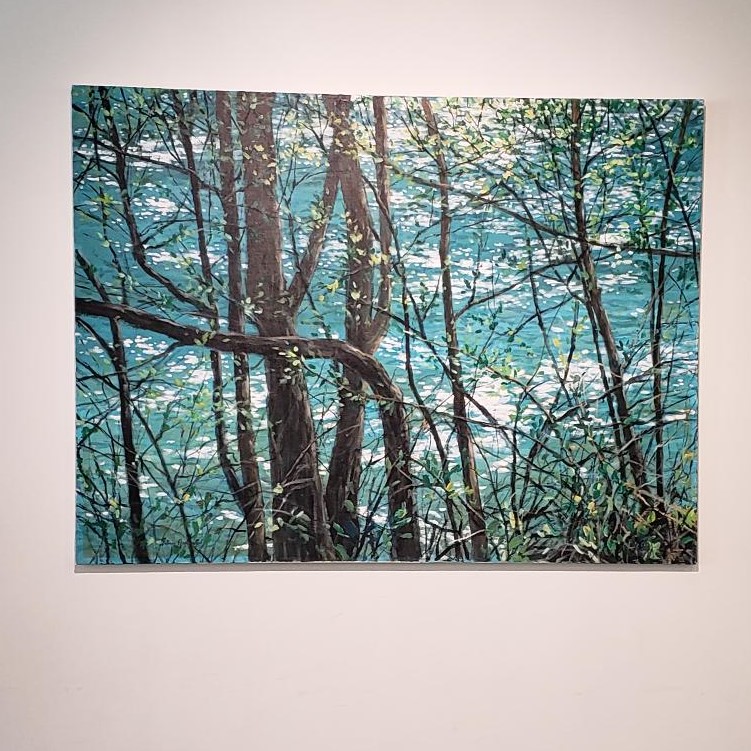
Edwin Havas Along the Delaware 35 1/2” x 47 1/2” oil on canvas Date Unknown 2011.29.0001 Seton Hall University Permanent Collection
This exhibit is currently on display in the Archives Reading Room and may be viewed when the library is open. Hanging next to the hallway exhibit is a landscape by Seton Hall professor Edwin Havas, titled “Along the Delaware,” providing a contrast of the natural landscape in which all this political debate took place.
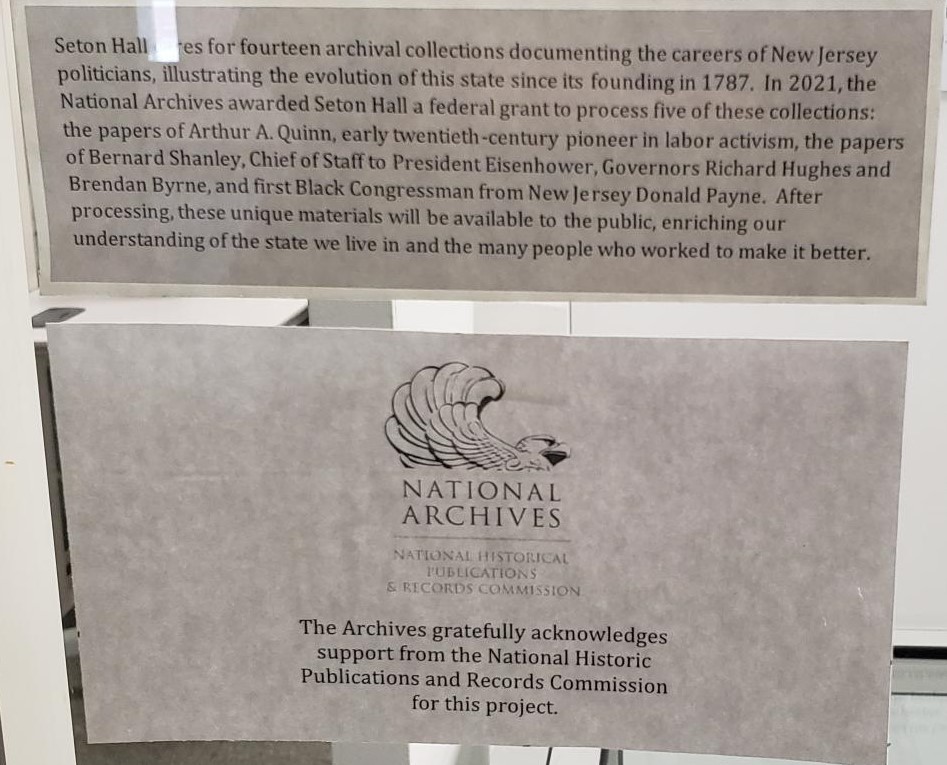
Special Collections and the Gallery acknowledge the support of the National Historic Publications and Records Commission, which generously provided funding for the archival work which made this exhibit possible.
Acknowledgement to the National Historic Publications and Records Commission for its support.
Recently, the Archives received a grant from the New Jersey Historical Commission to organize and describe a large collection of records from Irish immigrant cultural organizations, primarily the Ancient Order of the Hibernians.
These records show how immigrants to the United States organized themselves to help one another. These mutual aid organizations provided an early form of insurance – members would pay a little every month, and if they were injured or got sick or a breadwinner in their family died, the society would pay them a benefit in order to provide financial security. These organizations played a crucial role in supporting working class people before the New Deal provided unemployment insurance on a national scale.
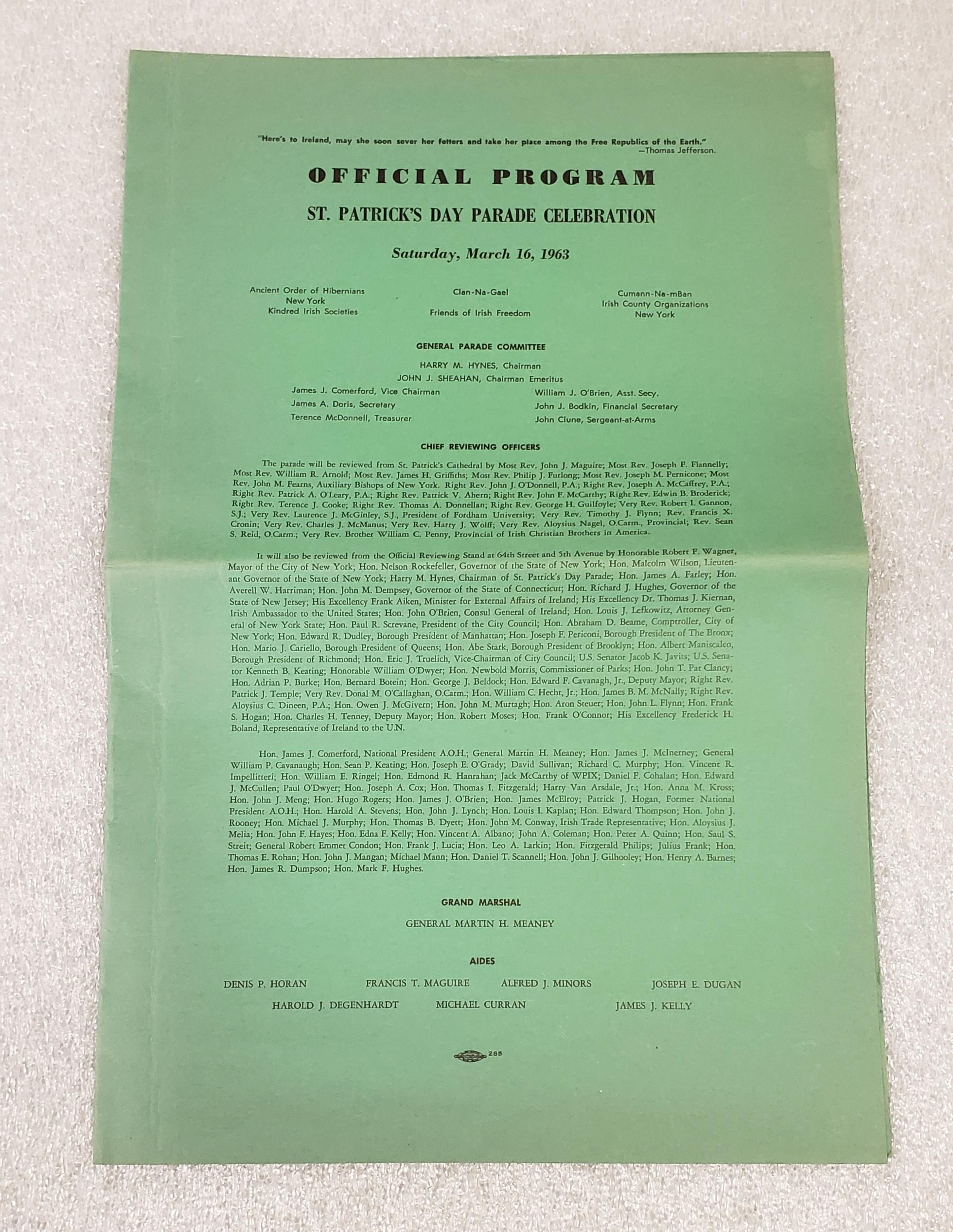
As their original role of financial support receded, these organizations shifted their focus toward celebrating culture and community. The Ancient Order of the Hibernians played a prominent role in organizing the famous St. Patrick’s Day parade in New York.
St. Patrick’s Day parade program, 1963
The John Concannon papers, which project archivist Quinn Christie is processing, also contain planning documents for the parade, invitations to local dignitaries to attend and play roles in the celebration, tickets, musical lineups, and much more. As Christie says, “This collection is full of surprises. I never know what I’m going to find when we open a box. In the papers of Concannon, we found the records of James Comerford, who served as President of the AOH and Chairman of the Parade. In addition to papers from his organizational roles, we found his membership card in the Irish Volunteers (predecessors to the IRA) from 1918.”
The collection will be available to researchers by the end of 2022.
Seton Hall University has a long and memorable historical connection to a number of Summer Olympiads over the last several decades. International appearances by Setonia track stars date back to the appearance of Mel Dalton who competed in the 3,000-meter Steeplechase at the 1928 Amsterdam Games through the success exhibited by Andrew Valmon who earned gold medals as a part of the United States 4×400 meter relay team at both the 1988 Seoul and 1992 Barcelona Games respectively. Numerous track and field stars have also made their mark at the school, but one individual, Andy Stanfield has been hailed by many coaches and fans as one of the most successful sprinters to ever represent the Pirates by virtue of his three Olympic medals earned during the early 1950s.
Andrew “Andy” William Stanfield was born on December 29, 1927 in Washington, D.C. and grew up in Jersey City. Stanfield later attended Lincoln High School in Hudson County where he was the City, District, and New Jersey State Champion in the 220 yard dash and Broad Jump. Following a post-graduation stint in the U.S. Army as a radio repairman, in the South Pacific During World War II, Stanfield enrolled at Seton Hall during the Fall of 1948.
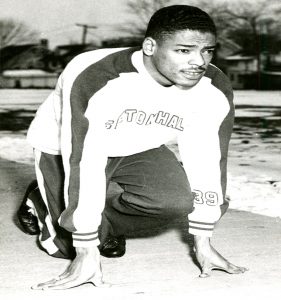
Stanfield, who majored in Education and pledged as part of the Alpha Phi Alpha fraternity during his first year on campus also became a member of the Track & Field team as a freshman. As a means of sharpening his talents, Stanfield was coached by former Olympian Johnny Gibson who helped the freshman become a premier hurdler and long jumper in addition to developing him into a world class sprinter.
Andy Stanfield practicing his race starting technique, c. 1950 (Seton Hall University Athletic Hall of Fame, Accessed 22 February 2022. https://shupirates.com/honors/hall-of-fame/andrew-w-stanfield/203)
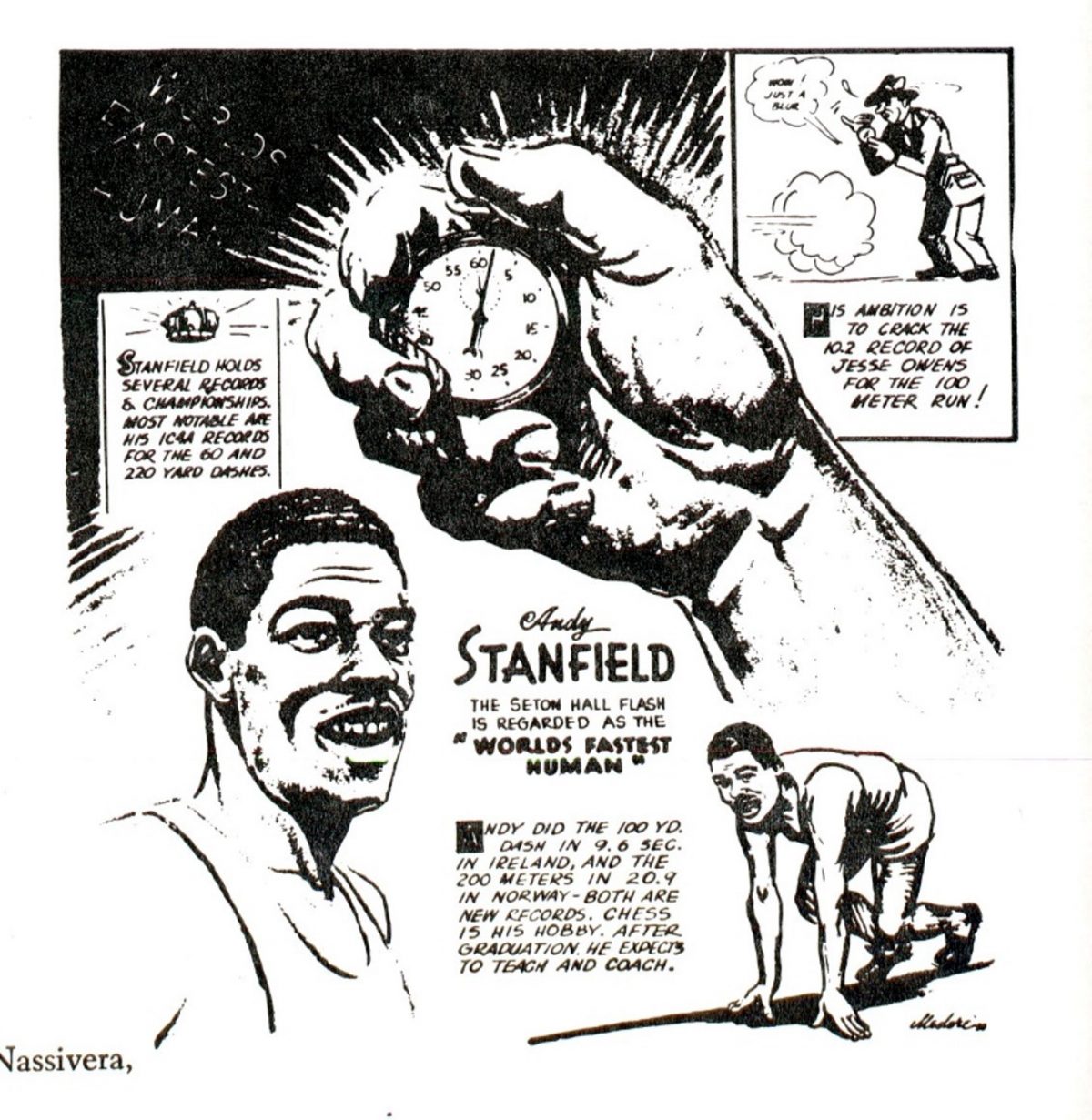
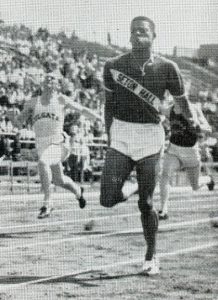
Stanfield began racking up several national titles over the next few years, winning six American Amateur Union (AAU) championships (1949: 100 and 200 meters; 1950: 60 yards; 1951: long jump; 1952: 200 meters; 1953: 220 yards) and eight of nine sprint titles during various Intercollegiate Association of Amateur Athletes of America (1C4A) at both indoor and outdoor meet competitions.
This success caught the attention of the press, where Arthur Daley of the New York Times was the first to provide wide-spread coverage of Stanfield as published in this account from June of 1950:
“The Title of ‘World’s Fastest human’ is not hereditary as is that of the House of Windsor . . . undoubtedly it is safe to take a peek at the current holder of same. He is Andy Stanfield of Seton Hall who has rocketed from nowhere in little more than a year . . . with the silken stride . . . Handy Andy has covered the 100 in 9.4 . . . his style is what is most eye-catching . . . He doesn’t run. He flows!”
Andy Stanfield in action at the IC4A meet held in New York City, 1950 (Cunningham, Thomas W. The Summit of a Century: The Centennial Story of Seton Hall University, 1856-1956. South Orange, NJ: Seton Hall University, 1956, 105)
Shortly after graduating from Seton Hall in 1952 as a world record holder in the 200 meters, Stanfield became an Olympic champion in this event at the 1952 Helsinki Games along with adding a second gold medal as part of the 4×100 meter relay team. Further success came with a silver medal in the 200 meters at the Melbourne Olympic Games of 1956.
Post-competition, Stanfield became Director of Intramural Athletics at Seton Hall in 1953. He later returned to Jersey City and joined the Board of Education as a Physical Education Teacher and was YMCA coordinator at day camps during the mid-1950s. Stanfield later became Athletic Coordinator for Public Schools throughout Jersey City. He also branched out into the computer field where he started training schools in Northern New Jersey along with holding membership on various civic service boards including a stint as Chair of the Director of the Newark Area Redevelopment Council.
Stanfield also never forgot his athletic career as he was a track announcer and analyst for WPIX-TV during the 1960s and participation in Master Level Track and Field meets prior to his induction to the National Track and Field Hall of Fame in 1977. Stanfield passed away in Livingston, New Jersey at the age of 57, but his legacy is not forgotten.
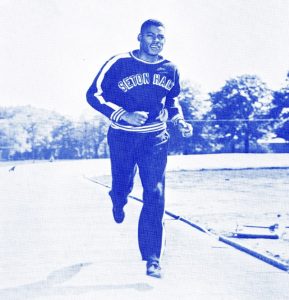
Andy Stanfield running laps during practice session, 1949 (First Annual Seton Hall University Athletic Hall of Fame Enshrinement Dinner Program, 1 June 1973. South Orange, NJ: Seton Hall University)
Documentation related to the accomplishments of Andy Stanfield in the form of match results, meet programs, runner profiles, and other information are included within the University Archives section of the Monsignor William Noé Field Archives & Special Collections Center. Included are references within the Seton Hall University Athletics & Recreation Collection under the Seton Hall University Athletic Hall of Fame as a Charter Member (1973-74) along with the Track and Field Collection dating between 1948-53. A link to the site can be found here – https://archivesspace-library.shu.edu/repositories/2/resources/420
Articles can also be found within the school newspaper, The Setonian between 1948-53 which is available to our research community via microfilm. In addition, Andy Stanfield is featured in various Seton Hall University Yearbooks (The Galleon) during the same time period which are available digitally via the following link – https://scholarship.shu.edu/yearbooks/index.3.html
If you have questions, wish to find more information, or set up an appointment to learn more about Andy Stanfield, or any aspect of University History please feel free to contact us via e-mail at: <archives@shu.edu> or by phone at: (973) 761-9476.
Daley, Arthur. “The World’s Fastest Human Four for Four,” New York Times, 35, 16 June 1950.
First Annual Seton Hall University Athletic Hall of Fame Enshrinement Dinner Program, 1 June 1973. South Orange, NJ: Seton Hall University.
The Setonian (Seton Hall Student Newspaper), January 1, 1948-December 31, 1952, Vols. XXIII-XXVIII. South Orange, NJ: Seton Hall University. [* Individual issues can be provided for further reference upon request]
Cunningham, Thomas W. The Summit of a Century: The Centennial Story of Seton Hall University, 1856-1956. South Orange, NJ: Seton Hall University, 1956.
The Galleon (Seton Hall Student Yearbook), 1948-1952. South Orange, NJ: Seton Hall University.