17th Annual American Literature Association Conference 2006

May 25-28, San Francisco CA.
Panel: “Trauma, Grief, and Recovery in the Works of Susan Glaspell.”
Chair: Mary E. Papke, University of Tennessee.

Modernist artists of the 1910s and 1920s famously captured in their work the cultural trauma and mourning of those who lived through World War I. Susan Glaspell throughout her very long career focused on the legacy of that and other wars as well as on a number of other national political traumas and catastrophic individual losses. The range of trauma Glaspell explores is great, from the death of children (for instance, in The Verge), the loss of family (Fugitive’s Return), the loss of self in madness or self-erasure (The Road to the Temple) to the loss of intellectual and political ideals (Inheritors) and the national trauma suffered in wartime (Judd Rankin’s Daughter). This panel explored specific cases of personal and collective trauma, loss, and, in some cases, recovery in the drama and fiction of Susan Glaspell.

Papers:  “Glaspell, Freeman and Twain: Varied Voices in Magazine Fiction, 1913-1918,” Colette Lindroth, Caldwell College;

“Embodied Loss: Absence and Presence in Susan Glaspell’s Inheritors,” Monica Stufft, University of California at Berkeley;

“The Deracinated Self: Immigrants and Orphans in Susan Glaspell’s Fiction,” Martha C. Carpentier, Seton Hall University.

Susan Glaspell and the Anxiety of Expression: Language and Isolation in the Plays (MacFarland 2006)

Through an exploration of eight plays written between the years of 1916 and 1943 – Trifles, Springs Eternal, The People, Alison’s House, Bernice, The Outside, Chains of Dew and The Verge – Kristina Hinz-Bode elucidates one of Glaspell’s most important themes: individuality versus social conformity.

MacFarland & Company, ISBN 0-7864-2505-9

To order:
http://www.mcfarlandpub.com/book-2.php?id=978-0-7864-2505-1

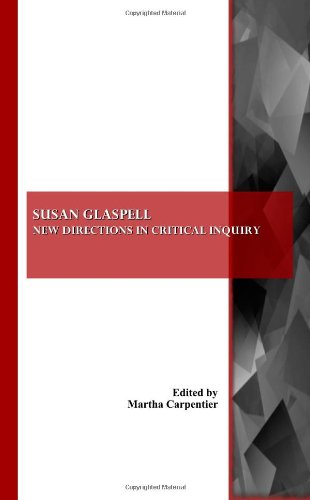
Susan Glaspell: New Directions in Critical Inquiry (Cambridge Scholars Publishing 2006)

Edited and with introduction by Martha C. Carpentier that addresses the complex issues of canon exclusion, Susan Glaspell: New Directions in Critical Inquiry, features all new essays by Barbara Ozieblo, Lucia V. Sander, Marie Molnar, Patricia L. Bryan, J. Ellen Gainor, Mary E. Papke, and Kristina Hinz-Bode.

Available in paperback from Cambridge Scholars Publishing. ISBN 978-1847188441

To order:
http://www.c-s-p.org/Flyers/Susan-Glaspell–New-Directions-in-Critical-Inquiry1-84718-844-3.htm

Disclosing Intertextualities: The Stories, Plays, and Novels of Susan Glaspell (Rodopi 2006)

Edited and with introduction by Martha C. Carpentier and Barbara Ozieblo, Disclosing Intertextualities: The Stories, Plays, and Novels of Susan Glaspell, is a comprehensive anthology featuring 15 critical essays on Glaspell’s work in all three genres by an international group of new and established Glaspell scholars. Available in paperback.

DQR Studies in Literature Vol. 37 from Rodopi.

ISBN 978-90-420-2083-2

Intimations from the Brook 2006

April 22-30, 2006 Silver Creek Campus Performing Arts Center
Snowflake, AZ

Directed by Mike Solomonson
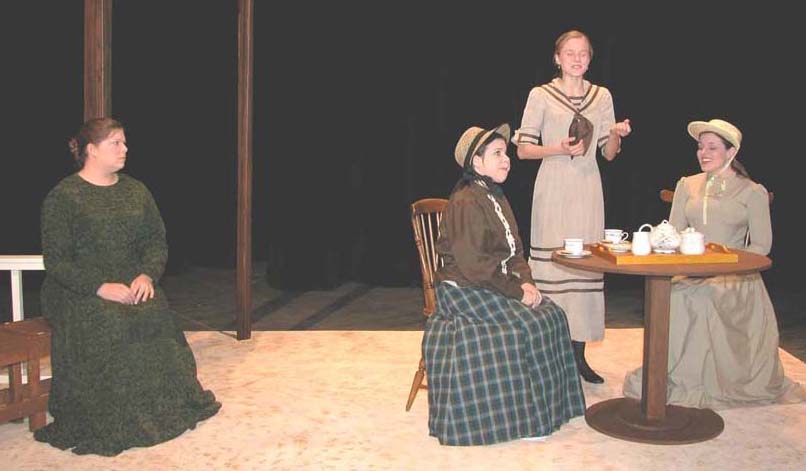
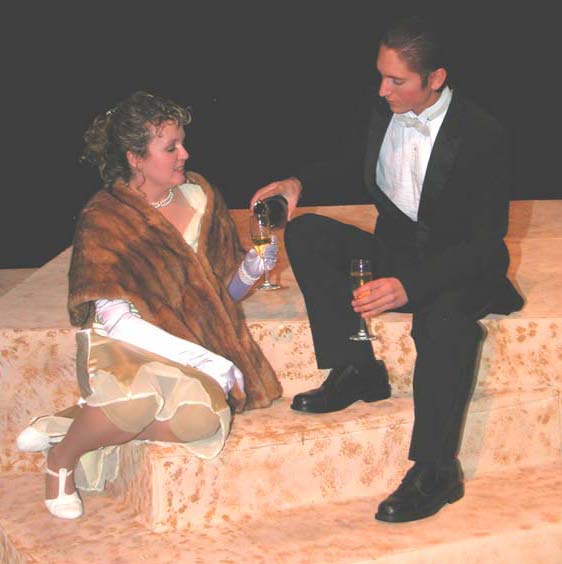
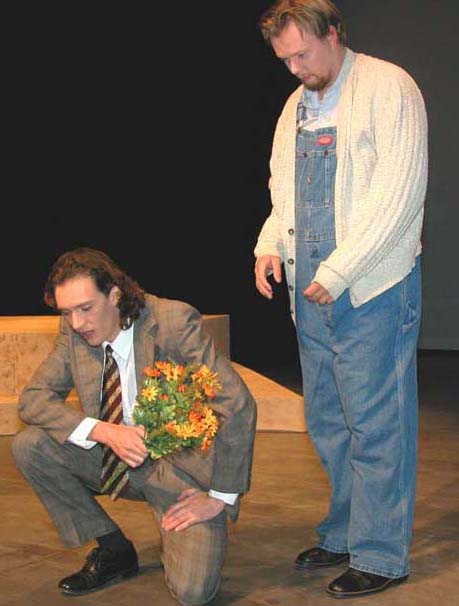
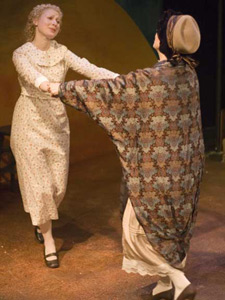
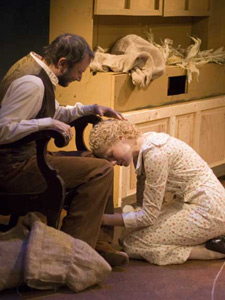
Members of Mike Solomonson’s Northland Pioneer College class, “From Page to Stage,” Elissia Johnston and Debe Sauro-Betts, adapted Susan Glaspell’s 1928 novel Brook Evans for the stage as “Intimations from the Brook”. On Saturday, April 22, Martha Carpentier gave an introductory lecture prior to the opening night performance; the following week on April 29 Linda Ben-Zvi gave a guest lecture, both visits courtesy of Northland Pioneer College.


Stage Manager, Monyca Stewart
Makeup Design, Lindsay Burgess
Set, Light & Costume Design, Debra Fisher
Light Board Operator, Kevin Hanson
Original Score, Benjamin Schoening
CAST

Amy Ramsay as young Naomi
Donovan Stole as Joe
Brian McLane as Caleb Evans
Charlotte Skousen as mature Naomi
Brittan Pyper as young Brook Evans
Lisa Jayne as mature Brook
Marissa Decker as Mrs. Copeland,
Barry Richins as Colonel Fowler,
Gabe Sierra as Erik Helge,
Lorie Williams as Mrs. Kellogg,
Breana Holladay as Mrs. Allen,
Malori Jo Rhinehart as Sister Waite,
Deanna Bailey as Aunt Rosie,
James C. Thompson as Uncle Willie,
Luke Walton as Evans, and
Jeff Jones as grandfather Caleb

A Program Note from Mike:

“The majority of scholars who are researching, writing, and rightfully resurrecting the literary reputation of Susan Glaspell are women. So one might ask how did I make a personal connection with Glaspell. In part, and at the risk of sounding simplistic, I think it is because we are native Iowans. When I read her plays, such as Inheritors, I recognize a person who shared my Iowa experiences and the challenges and quirks that result from living and growing up in a small, rural environment. Part of the conflict that I related to in reading her works was the contest between living the conventional life (what young Brook might call doing the “right thing”), and the realization of a more complex world beyond the idyllic country. It is this world that offered opportunities for greater self-fulfillment, but that demanded unconventional choices. What often results in Glaspell’s work is a war between the desire to make the unconventional choice and the demand that the “right thing” be chosen and honored. The tension between these two standards is both a personal, internal struggle that Glaspell’s characters fight, and a battle imposed on her characters by society and its various human representatives. It is one of the thematic elements found in much of her work and that informs her novel Brook Evans, and inspired my desire to collaborate with Elissia and Debe on our adaptation.”

Introductory Lecture on “Brook Evans” answers the questions, “Why haven’t I ever heard of Glaspell’s novel Brook Evans?” and “Why does it speak to us today?”

Inheritors at the Metropolitan Playhouse 2005

The Metropolitan Playhouse, a New York resident theater dedicated to exploring and re-vitalizing American literature and culture, staged a landmark production of Susan Glaspell’s Inheritors on November 11 – December 11 2005, as part of their 14th season devoted to the “Outsider.” SGS members provided post-show presentations on November 13, 2005 (Martha Carpentier, Sherry Engle, Sharon Friedman, and Monica Stufft) and on November 20 (J. Ellen Gainor).

For more information about The Metropolitan Playhouse, 220A East Fourth St., New York, NY 10009: www.metropolitanplayhouse.org.

Artistic Director, Alex Roe
Assoc. Artistic Director, Michael Bloom
Director, Yvonne Opffer Conybeare
Stage Manager, Pamela Hybridge
Scenic Design, Ryan Scott
Costume Design, Rebecca Lustig
Assistant Costume Design, Emily Pepper
Lighting Design, Alexander C. Senchak
Music/Sound Design, Ben Ruby
Violin, Ben Lively
Fight Director, Scott Barrow
Dramaturg, Michael Bloom

WITASWAN Features Susan Glaspell in 2005

WITASWAN celebrated the 25th anniversary of the release of Sally Heckel’s Oscar-nominated film of “A Jury of Her Peers” in Chicago in March 2005. Sally conducted a post-screening Q&A at the Chicago Cultural Center, followed by a lecture by Patricia Bryan & Tom Wolf (authors of Midnight Assassin: Murder in America’s Heartland).

A few months later, on September 28 2005, Linda Ben-Zvi addressed the Illinois Women’s Press Association at the University Center, Chicago, reading from her new biography Susan Glaspell: Her Life and Times, and also directing students from De Paul University’s Theatre School in selected scenes from Inheritors, Suppressed Desires, and Trifles.

Both events were organized by WITASWAN (Women in the Audience Supporting Women Artists Now), a nationwide initiative dedicated to eliminating the celluloid ceiling that continues to restrict opportunities for women filmmakers, coordinated by Jan Lisa Huttner.

Eugene O’Neill Society 6th International Conference 2005

“Where It All Began,” June 15-20,Provincetown MA.

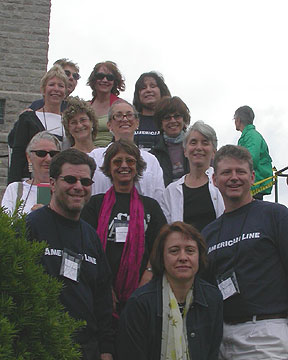
Susan Glaspell and Eugene O’Neill were brought together again in their beloved Provincetown, as the Susan Glaspell Society participated in the Eugene O’Neill Society’s 6th International Conference, June 15-20, 2005. Linda Ben-Zvi gave the keynote address on Friday June 17, “The Place of Provincetown in Glaspell’s Writing,” and the Glaspell Society hosted a wine-and-cheese reception following the Provincetown Fringe Festival’s second annual Susan Glaspell play-reading marathon on Friday, as well as sponsoring a panel on Saturday and a roundtable on Sunday. Many thanks to O’Neill Society President Zander Brietzke and Vice President Steven Bloom for their warm welcome and the chance for scholars of these two founders of American drama to come together.

Susan Glaspell first came to Provincetown in the summer of 1912. When she married Jig Cook in 1913, they returned and the next year bought a house at 564 Commercial Street that was to be Glaspell’s home for the rest of her life. In Provincetown she found a community of like-minded artists and writers who provided her with the intellectual support and understanding her Davenport, Iowa family and friends were unable to offer. It is, therefore, not surprising that Provincetown, its setting, people, and history played a significant role in her writing. In her presentation Prof. Ben Zvi discussed Glaspell’s life in Provincetown and the ways in which she depicts elements of the locale and specific
residents in her plays and fiction.

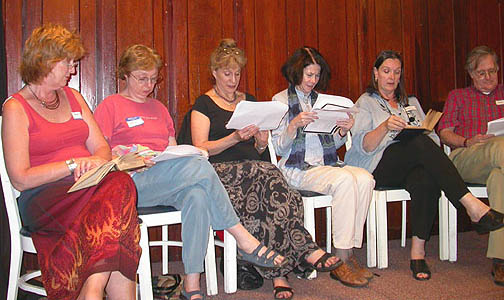
Susan Glaspell Society Panel: “New Approaches to Susan Glaspell’s Theatre,” June 18.  Chair: Martha C. Carpentier, Seton Hall University.

Papers: “Susan Glaspell’s ‘The Plea’: Foreshadowing Trifles and Concerns About Law and Justice,” Patricia L. Bryan, University of North Carolina Law School;

“A Trembling Hand, a Rocking Chair, and a Rocking Chair or Kitchen Sink: Glaspell, O’Neill and their Early Dramatic Experiences,” Lucia V. Sander, University of Brasilia;

Woman’s Honor and the Critique of Slander Per Se,” J. Ellen Gainor, Cornell University;  

“Writing for the Provincetown: Glaspell’s ‘New Woman’ in Chains of Dew,” Barbara Ozieblo, University of Malaga.

Susan Glaspell Society Roundtable: “Susan Glaspell in Context,” June 19.  Moderator: Linda Ben-Zvi, Tel Aviv University.

Sunday’s roundtable discussion took place at the Pilgrim Monument museum. Participants Marcia Noe, Cheryl Black, Sally Heckel, J. Ellen Gainor, Sharon Friedman, Basia Ozieblo, and moderator Linda Ben-Zvi held an animated discussion that included audience members and ranged from the future of Glaspell studies to the relationship of Susan Glaspell and husband Jig Cook.

16th Annual American Literature Association Conference 2005

May 26-29, Boston MA.
Panel: “Four Decades of Fiction at the Forefront: Susan Glaspell’s Critique of American Ideology.”
Chair: Martha C. Carpentier, Seton Hall University.

Papers: “Evaluating America: Cultural Commentary in Susan Glaspell’s Magazine Fiction,” Colette Lindroth, Caldwell College;

“Susan Glaspell’s Last Word on Democracy and War,” Mary E. Papke, University of Tennessee;

“Susan Glaspell and the Epistemological Crisis of Modernity: Truth, Knowledge, and Art in Selected Novels,” Kristina Hinz-Bode, Universitat Kassel, Germany.

Midnight Assassin: Murder in America’s Heartland (Iowa 2007)

As part of their Bur Oak series, University of Iowa Press has reissued Patricia L. Bryan and Tom Wolf’s Midnight Assassin: A Murder in America’s Heartland, the history of the Hossack murder case which Glaspell covered as a reporter and later used as the basis for Trifles.

For more information:
http://www.midnightassassin.com/

To order:
http://uipress.uiowa.edu/books/2007-fall/bryanmidass.html