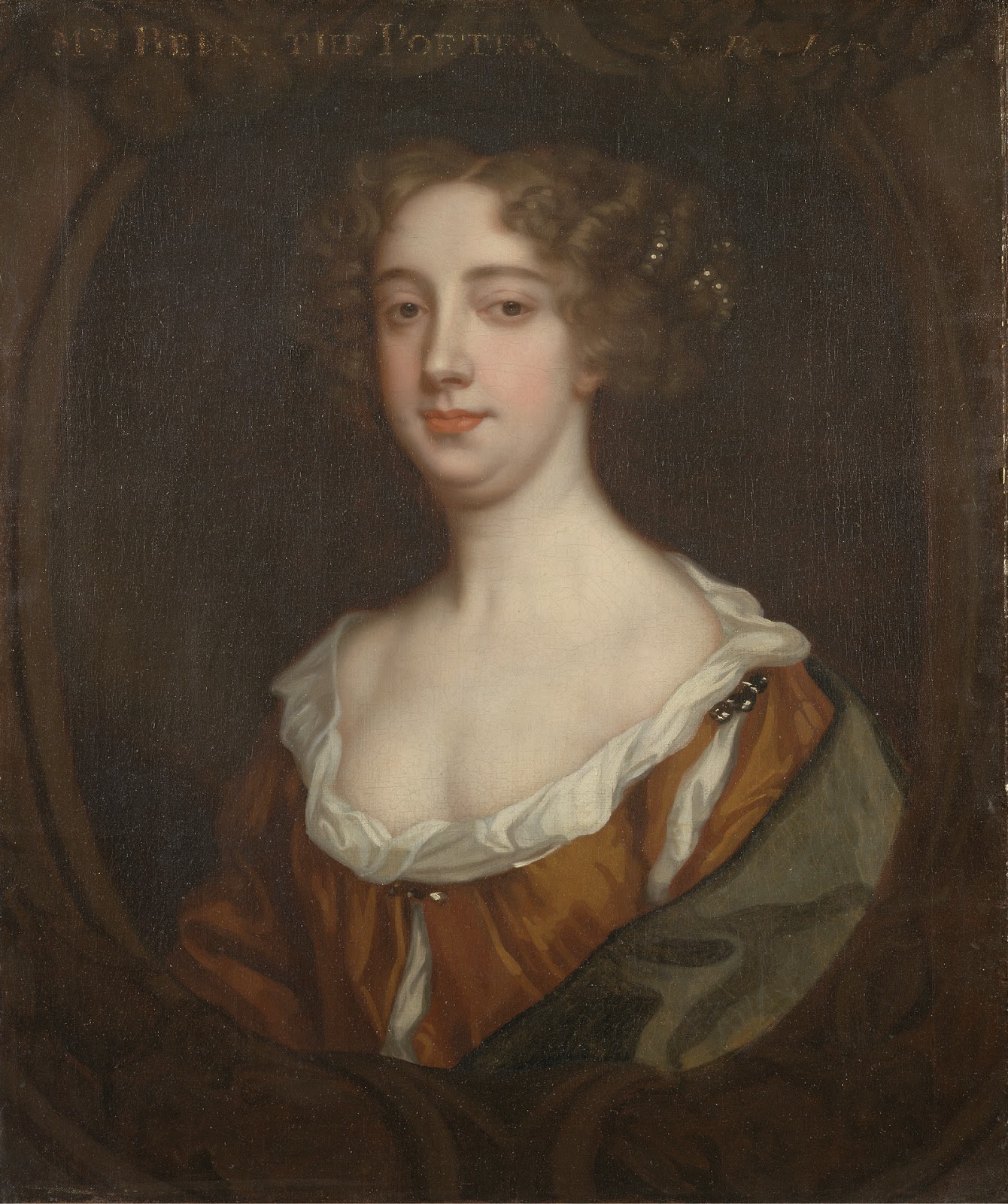
Aphra Behn Conference & A Celebration of Rare Books

Aphra_Behn

Between Wednesday, November 4th-Friday, November 6th, Seton Hall University will serve as host of the biannual Aphra Behn Society Conference.  In the spirit of Aphra Behn herself (c. 1640-1689), a noted British fiction writer, playwright, poet, and translator, members of this organization are actively: “dedicated to encouraging and advancing research that focuses on issues of gender and/or women’s role in the arts of early modern culture, circa 1660-1830. Through its newsletter, website, and biannual meeting, the Aphra Behn Society seeks to promote an exchange of information and ideas among members of the various disciplines engaged in related research.”  Her own works remain a popular source of research among scholars and students alike, but promoting the value of the printed word in its varied forms is a consistent theme that latter day readers often recognize.  In other words, Aphra Behn noted in the pages of her work – The Lucky Chance, Or, the Alderman’s Bargain (1686) a love of books, but more specifically: “That perfect tranquility of life, which is nowhere to be found but in retreat, a faithful friend and a good library.”
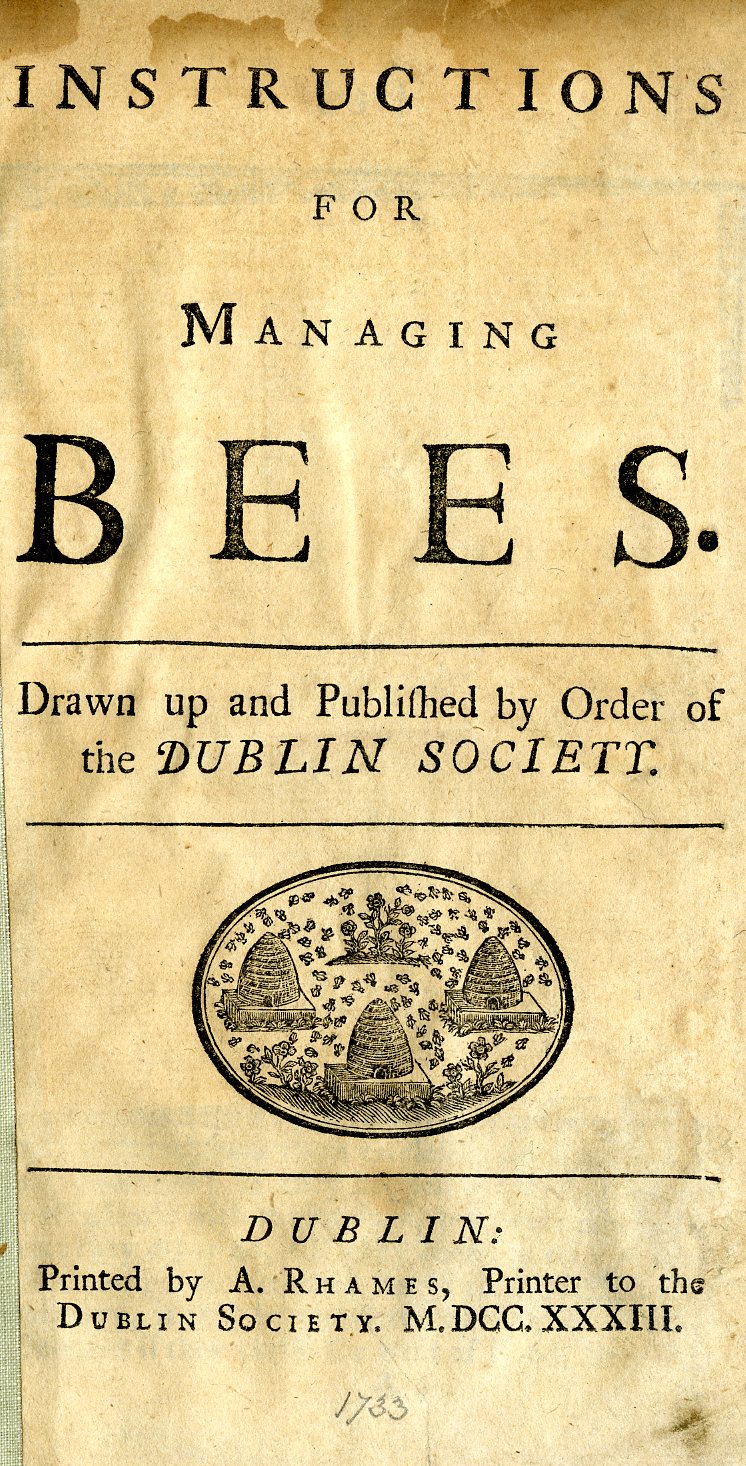
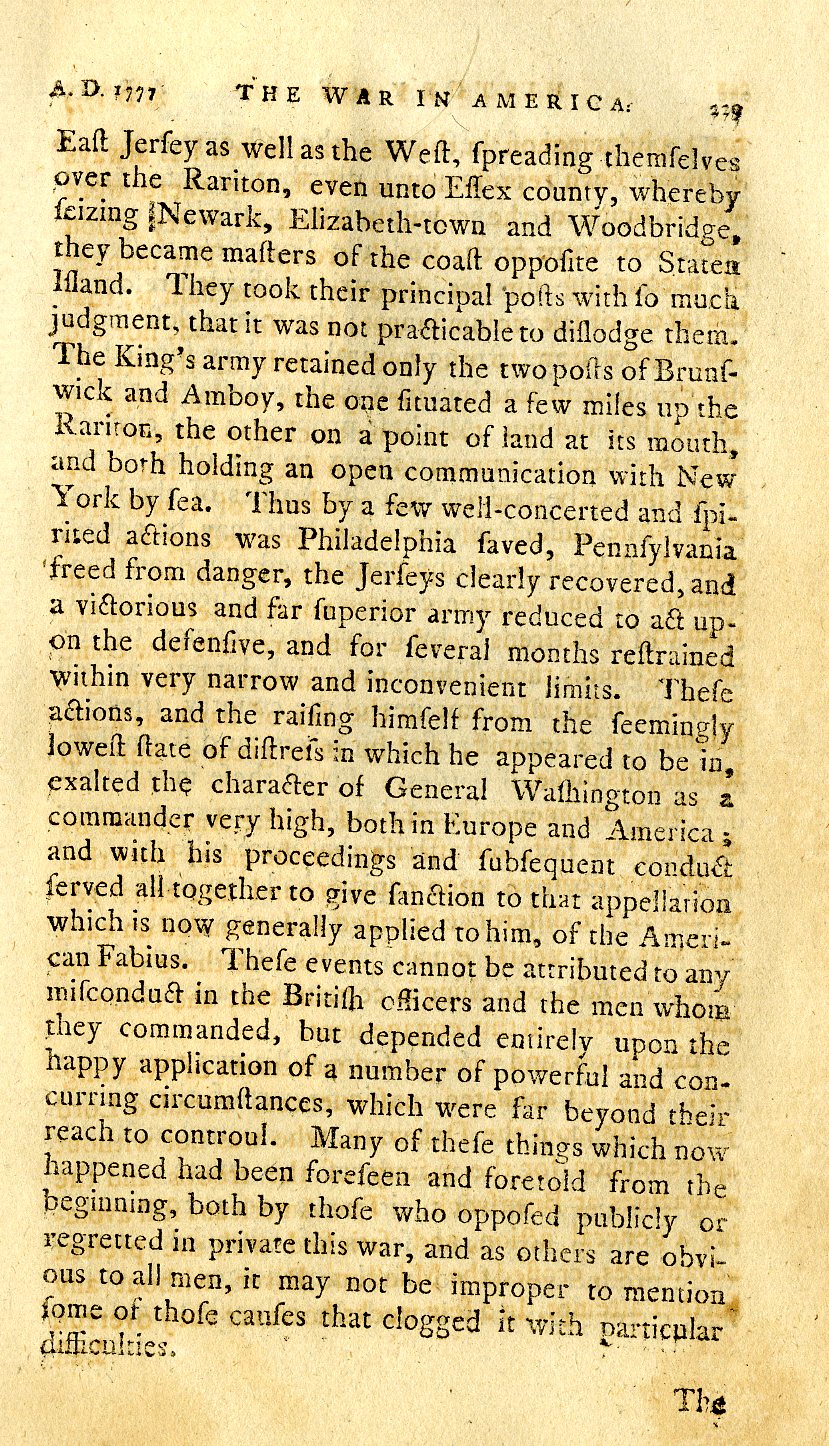
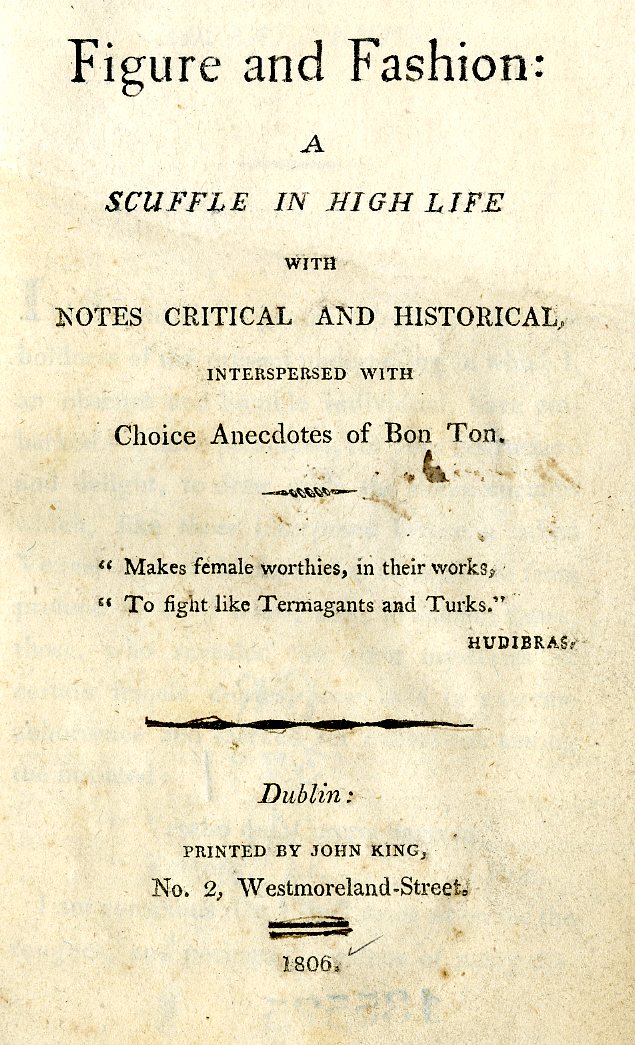
instructions for managing bees.             The war in America.             Figure and Fashion: a scuffle in high life

In honor of the example set by Aphra Behn combined with ties to this event, Professors Karen Gevirtz, Ph.D. of the Department of English and Kirsten Schultz, Ph.D. of the Department of History looked through our catalog of Rare Book holdings and have chosen various titles that reflected a growing depth and diversity of scholarship from the 17-19th century.  Some images from the public exhibit (viewable in our Reading Room) are included in this post, but a full list of titles can be found here – Aphra Behn Captions and requested for review by our research community.  Counted among the more interesting finds include an early guide to bee-keeping in Ireland, writings by St. Catherine of Siena, a French look at the history of nature, a British perspective on the American Revolution, and theological writings from a Portuguese perspective to name a few volumes chosen by Professors Gevirtz and Schultz to share with the public.

This conference provides an opportunity for participants to share in the study of different subject themes.  Along with the aforementioned public Rare Book display are a pair conducted jointly with the Walsh Library Gallery featuring books by and about Aphra Behn from our Main Library Collection (found in the exhibit case situated near the stairwell and elevator on the first floor of Walsh Library) and a larger window exhibit showcasing the cover artwork of authors in attendance at the event whose publications are found in the Seton Hall Universities Catalog.  A full listing of titles is available here – Aphra Behn Conference Authors  On Thursday, November 6th from 6-7:00 p.m. Professors Gevirtz and Schultz along with their colleagues Professors Mark Molesky, Ph.D. and Nathaniel Knight, Ph.D. from the Department of History will be discussing books related to their own areas of interest in a broader context for those in attendance at the conference.  More information about their selections can be found in the following flyer – Aphra Behn Event Brochure
autor lectori

For more information about Aphra Behn and Rare Book resources found in our collection please feel free to consult the following Reference Guide for more details – http://library.shu.edu/rare-books  Thank you in advance for interest and the discovery that rests in our timeless resources.
Historical records of the Order Sons of Italy in America Umberto Primo Lodge No. 750 now available for research!

Italian-Flag-Wallpaper-ImageOriginally called “Figli d’Italia” and later renamed “L’Ordine Figli d’Italia in America,” Order Sons of Italy in America (OSIA) was founded on June 22, 1905 in the Little Italy neighborhood of New York City by Dr. Vincenzo Sellaro and five compatriots who came to the United States during the great Italian migration of the late 19th and early 20th centuries. Initially established as a mutual aid society for early Italian immigrants, OSIA aimed to create a support system that would assist Italian immigrants with obtaining citizenship, provide health and death benefits and educational opportunities, and offer assistance with assimilation into American society.  So far reaching were the organization’s early efforts that the Italian government designated OSIA as its official representative of Italians in the United States in 1922. Today OSIA is the oldest service and advocacy organization for individuals of Italian heritage in the United States and is dedicated to preserving and promoting Italian American culture, heritage, and traditions.

The Umberto Primo Lodge No. 750 of Susquehanna, Pennsylvania, a now defunct lodge of OSIA, was established in 1920 as a local lodge under the jurisdiction of the Grand Lodge of Pennsylvania.  The lodge was active until 1991 when it merged with the Roma Madre Lodge No. 1342 of Sayre, Pennsylvania.

View the collection’s finding aid here.

La Hija del Caribe: The Activist

Written by Carly Miller, Special Collections Intern

Portrait of Trina Padilla de Sanz, 1956

When I began my internship at the Monsignor William Noé Field Archives & Special Collections Center, I knew that Trinidad Padilla de Sanz (La Hija del Caribe) was a Puerto Rican writer and poet who lived from 1864 to 1957. Although I was excited to dive into this historical project, I did not expect to connect on a personal level with La Hija’s work. As a twenty-something in the twenty-first century, I did not anticipate much common ground with a twentieth century poet. Different eras, different problems, different opinions. Or so I thought.

Sifting through La Hija’s work, my preconceived notions were quickly disproved.

While the topics that Padilla wrote about reflected the issues facing her generation, many would also comfortably fit today in the evening news segment or on the front page of the paper. She voiced her opinions on topics ranging from divorce and feminism to wealth disparity and the death penalty. She was an activist before it was vogue, using the power of her pen to speak on behalf of society’s most marginalized groups.

Padilla’s activism is just one facet of her diverse and extensive career. She also delved into history, music, the arts, and literature. She was a pianist, a literary critic, and a teacher. She was unfailingly devoted to her family. Yet, it was the activism that I was able to most indentify with. It constituted a large part of her life and defined not only her work, but her strong character as well.

For this reason, the online exhibit features works which highlight her activism as a writer. Specifically, the exhibit focuses on works related to patriotism, women’s issues, and social topics. While the exhibit cannot begin to encompass La Hija’s life and career, it hopefully provides a glimpse into the person I discovered this summer.

If you are interested in learning more about Trina Padilla de Sanz, please check out the online exhibit.

Continue to check back for updates on the Padilla de Sanz papers or stop by the archives to fully immerse yourself in her world.

Carly Miller Joins Archives as Summer Intern

Carly MillerCarly Miller is the Special Collections intern at Seton Hall University Libraries. She is currently working on the Trina Padilla de Sanz papers. The papers of Puerto Rican poet and activist Trina Padilla de Sanz are in the Msgr. William Noé Field Archives & Special Collections Center through the Unanue Latino Institute. Her responsibilities include outreach and publicity, translation of materials, and arranging exhibitions for the collection.

She holds a Bachelor of Arts in History and Spanish from The College of New Jersey. After graduating in 2013, she moved to Madrid, Spain for a year to teach English in a bilingual elementary school. This experience allowed her to challenge herself in a new environment, practice her language skills, and travel extensively. Since returning to New Jersey, Carly is employed as a Spanish interpreter for a claims adjusting company, facilitating communication between clients and their legal representatives.

Beginning in the fall of 2015, Carly will be attending Rutgers University to obtain a Master’s degree in Library and Information Science. She is interested in pursuing this degree in order to learn not only how to organize information in today’s digital age, but also how to connect people to information. With her current internship, she hopes to further nurture her passion for history and gain valuable, hands-on experience in archival work.

“We Must and Can be Independent”: La Hija del Caribe and Puerto Rican Liberation

Written by Carly Miller, Special Collections Intern
Since the arrival of Spanish explorers in the late fifteenth century, a defining characteristic of Puerto Rico has been colonialism. In one form or another, this tiny island has been subjugated by a larger power. After four centuries of Spanish rule came to an end in the late 1800s, Puerto Rico fell under U.S. control as a territory, a status that continues to the present day. As a result of this perpetual intrusion by foreign nations, a parallel theme throughout the island’s history has been the fight for independence.

Trina Padilla de Sanz was no stranger to this liberation movement. Although she wore many hats during her lifetime, it was her Puerto Rican pride that was most inextricably linked to her identity. Her devotion to her homeland, or “La Patria,” permeated all aspects of her life. Her nickname, “La Hija del Caribe,” was not only tribute to her father, but an acknowledgement of her cultural pride as well.

La Hija championed Puerto Rican independence and preservation of its culture and customs using the most effective weapon at her disposal, her pen. Throughout her lifetime she wrote harsh critiques of American influence in Puerto Rico, believing fervently in Puerto Rico’s right to self-govern. In an inquiry entitled “Apuntes sobre Puerto Rico,” La Hija boldly addressed the hypocrisy of a nation, predicated on the idea of democracy, denying another nation its independence.

“…y si Estados Unidos no quiere verse ante los pueblos del mundo como una irrisoria República, tiene que dar a Puerto Rico su Independencia…un derecho que nadie puede negar.”

Translation:

“…and if the United States does not want to see itself in front of the nations of the world as a laughable Republic, it has to give Puerto Rico its Independence…a right that nobody can deny.”

With this sharp declaration, Padilla de Sanz demonstrated that she did not passively observe with her pen, rather she actively fought for change with it. She was firm, vocal, and unwavering in her defense of Puerto Rico.

Part of her pro-independence stance included extolling Puerto Rican culture and language. She regularly called on her fellow compatriots to fight to preserve the Spanish language, understanding a language’s role in preserving a culture’s identity. She believed that cultures that let themselves be completely absorbed by stronger powers would simply cease to exist. She was quick to highlight the many accomplishments produced by Puerto Ricans in literature, the sciences, and the arts.

In addition to her writings, La Hija rebelled against foreign influence in other ways. Her granddaughter, Yolanda Fernández Sanz, recalled a time in which Padilla de Sanz, ignoring the law against displaying the Puerto Rican flag, hung it defiantly from her balcony. Although it was an illegal act, no one challenged La Hija (Fernández Sanz 158).

La Hija’s fight for independence was an unyielding constant throughout her life. Shortly before passing, she made the request to be buried with the Puerto Rican flag. Even in death, her devotion and loyalty to her treasured Puerto Rico was unequivocally on display.

The Trina Padilla de Sanz collection is now available for research at The Monsignor William Noé Field Archives & Special Collections Center.  Click here to view this collection’s finding aid.


Works Cited

Fernández Sanz, Yolanda. Trina Padilla de Sanz: La Hija del Caribe. Madrid: Talleres Gráficos Peñalara, 1996. Print.

Padilla de Sanz, Trina. “Apuntes sobre Puerto Rico.” Arecibo, 1945. Print.


A First Glimpse at the Trina Padilla de Sanz Papers

Written by Carly Miller, Special Collections Intern

It would be impossible to discuss Puerto Rican literature without mentioning the distinguished poet, Trina Padilla de Sanz. Born in 1864 in Vega Baja, Puerto Rico, Padilla de Sanz was the daughter of the poet, medic, and political activist José Gualberto Padilla, also known as “El Caribe.” Following in her father’s literary footsteps, Padilla de Sanz developed an impressive career in poetry, editing her father’s works as well as publishing her own collections. Writing under the moniker “La Hija del Caribe,” many of her poems were laced with powerful imagery of nature to celebrate the beauty of life, while her style reflected a harmonious and musical touch.

During her lifetime, La Hija’s passions extended beyond poetry. She was also a gifted pianist, a beloved and dedicated piano teacher, a writer, a suffragist, a social activist, and a crusader for Puerto Rican independence and cultural preservation. She was a regular contributor to many publications, writing essays on an array of topics including Puerto Rican politics, women’s rights, education, religion, the plight of the poor, and the defense of the Spanish language. In an era when expectations for women revolved around the domestic sphere, Padilla de Sanz was a woman ahead of her time, voicing her strong opinions without apology.

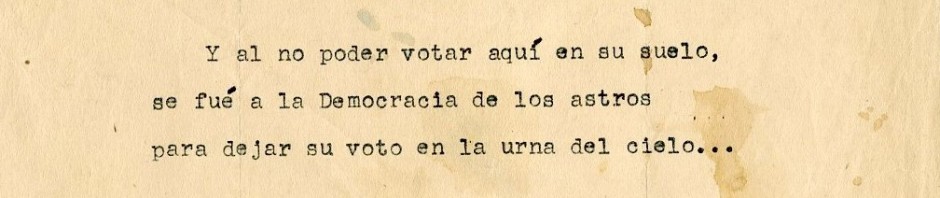
As a crusader for social justice, La Hija believed in fighting for change with her pen. In the poem below entitled “Ana Roque de Duprey,” she honors her recently deceased friend, the accomplished suffragist Ana Roque de Duprey. Although Roque de Duprey fought for decades for the women’s suffrage movement, she died without ever voting in her native Puerto Rico. As La Hija eloquently states:

“Y al no poder votar aquí en su suelo,

se fué a la Democracia de los astros

para dejar su voto en la urna del cielo…”

Translation:

“And upon not being able to vote here in her land,

she went to the Democracy of the stars

in order to leave her vote in the urn of the heavens…”

In just a few lines, she captures the essence of her friend and the supreme injustice of the exclusion of women from the voting process. Women’s suffrage was a long struggle, one that La Hija fought for with immense passion and dedication.

Padilla de Sanz expands upon the particular injustice suffered by Roque de Duprey at the end of her life in a note below the poem:

“…ya octogenaria, cuando éste se instituyó en la isla, salió ella a votar por primera vez y, aunque murió con la ilusión de haber votado, su voto fue anulado por ciertos tecnicismos…”

Translation:

“…now an octogenarian [Roque de Duprey], when this [women’s suffrage] was instituted on the island, she went out to vote for the first time and, although she died with the illusion of having voted, her vote was voided for certain technicalities…”

While it may be a blessing that Roque de Duprey departed this life thinking she achieved her lifelong goal of casting a ballot, the bitterness that La Hija feels for her friend is glaringly evident. It is not only a tribute to her friend’s suffering, but also reflects the struggle that women faced even after reaching major milestones in their movement.

Padilla de Sanz possessed an unparalleled passion for life, finding beauty and joy in every day despite various hardships. Well into her old age, she continued writing, playing and teaching piano, engaging with her community of Arecibo, and spending time with her cherished children and grandchildren. La Hija died at the age of 93 in Arecibo in 1957, leaving behind an impressive legacy, which cemented La Hija’s place among the most significant literary figures of the twentieth century.

The Trina Padilla de Sanz collection is now available for research at The Monsignor William Noé Field Archives & Special Collections Center.  Click here to view this collection’s finding aid.

Angling and Hunting Explored through Rare Books opens 6 May 2015

The Msgr. William Noé Field Archives and Special Collections Center, Walsh Library ground floor houses rare books that deal in particular subject areas. This is a small collection dealing with outdoor activities of fishing and hunting. These books are special in many ways from the beautiful leather bindings in some cases, to the signatures of the authors in others.

To begin with two beautiful leather volumes, both on fishing, we have The Compleat Angler by Izaak Watson, an 1876 fac-simile reprint of the first edition published in 1653. The preface says that “This was a book not to be placed in the safe companionship of worthy but unread books…” Rather, it was well used in stream and pond, necessitating this fac-simile reprinting. This volume is printed on “paper of the same shade”, and bound in the same brown leather with “red and blue sprinkling.” It is open to the Angler’s Song on pages 216 and 217. They are the reverse of each other so that one could sing from one side, and another from the other “with the book between them while standing face to face.”

angling song

The other leather bound book, Salmon Fishing on the Grand Cascapedia by Edmund W. Davis, number 7 of 100, was printed for private distribution in 1904 on Imperial Japan paper and sports an emerald silk fly leaf and gold embossed tooling inside the cover board.

Woodcock Shooting by Edmund Davis, number 99 of 100, was printed for private distribution in 1908. It features numerous photographs of peaceful-looking woods where the woodcock can be found, and more numerous shots of bird dogs as well as a lovely engraving of a Woodcock and Young.

The remaining books in this tiny special collection are limited editions dealing with hunting. Three are by Theodore Roosevelt, and two are signed by him.

Books displayed in angling and hunting exhibit

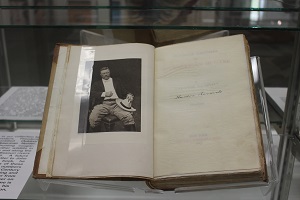
His Outdoor Pastimes of an American Hunter, 1905, recounts hunting cougar, bear, antelope and other wildlife in Colorado, the Rockies and along the Mississippi and Little Missouri rivers between 1901and 1905. A future conservationist whose letter to John Burroughs opens this book, he carefully notes the ranges of these animals and their reduced numbers from the latter part of the 19th Century when he spent 2 years ranching and hunting in S. Dakota to recover from the deaths of his wife and mother on the same day in 1884. The volume is open to a photo of T.R. with his signature on this limited edition, number 222 of 260.

Theodore Roosevelt, Outdoor Pastimes of an American Hunter

African Game Trails, An Account of the Wanderings of an American Hunter-Naturalist by Theodore Roosevelt is number 399 of 500 published in 1910. Volume II of African Game Trails is open to a photograph with the legend in T.R.’s own hand, “My boma when I camped alone.” Boma is a term used to describe a livestock enclosure, stockade, small fort or a district government office used in many parts of the African Great Lakes region.

Finally we have Hunting with the Eskimos by Harry Whitney, a signed limited edition number 141 of 150 from 1910. It boasts many black and white photographs of Eskimo, whaling and hunting musk ox and walrus, and of sled dogs, and is open to a plate of a painting of Aurora Borealis, Smith Sound, Greenland by F. W. Stokes.

This exhibit can be viewed from the hallway between the Walsh Gallery and Msgr. William Noé Field Archives and Special Collections Center during any hour the Library is open. It will run through May 20, 2015.

The Third Installment of WWI: A Centennial Exhibition

The third installment of our three-part series commemorating the 100th anniversary of the Great War is now on display in the Msgr. William Noé Field Archives and Special Collections Center, and will remain until 30 April 2015.

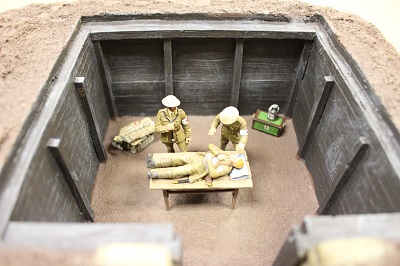
This final phase of the exhibit demonstrates the changes that had taken place by the end of the war. Figurines depicting German and British infantry show that despite the technological advances of the war, foot soldiers remained key on both sides. Dioramas and models show the state of medical facilities and care of the wounded, as well as the contribution of women to the war.

WWI diorama


Figurines of U.S. infantry and marines highlight U.S. involvement in the WWI. Antique “dime store” toy soldiers made of hollow-cast lead, which became popular after the war, are displayed alongside modern figurines and models. We continue to display rare books from the Archives, which feature photographs, illustrations, and poetry inspired by WWI.

The exhibit can be viewed any time the Walsh Library is open, in the display cases across from Walsh Gallery.

Book repair and conservation

As like any library, the Archives and Special Collection Center has a number of books in need of repair and conservation. Below are some examples:

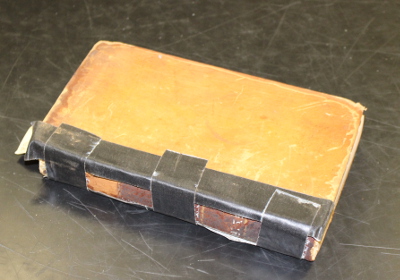
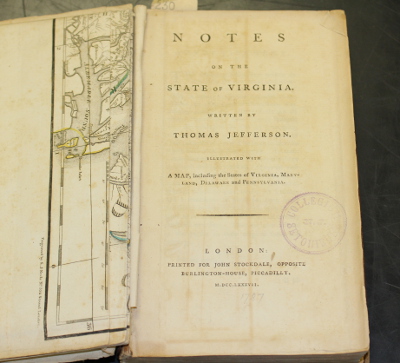
This 1787 edition of Notes on the state of Virginia by Thomas Jefferson is currently held together by black book tape and needs to be rebound. The book’s text block (book pages and inner binding) are intact but no longer attached to its front and back covers, the included map of Virginia and neighboring states also has some minor damage. This edition is one of the rare volumes published by Jefferson during his lifetime.

Notes on the State of Virginia, spine with book tape

Notes on the State of Virginia, opened to title page

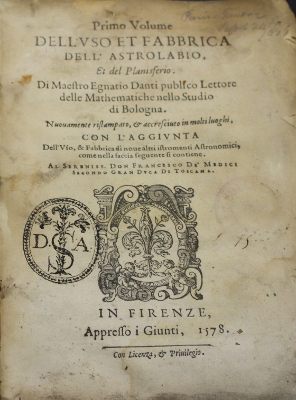
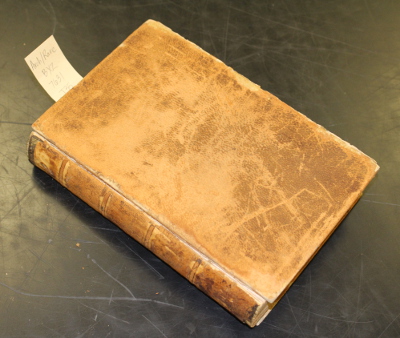
This rare 1578 volume by Ignazio Danti is one of the first Italian works that centers on astromony and the use of the astrolabe. The highly damaged cover and spin are made from vellum and needs to be conserved or replaced. The book has also survived previous water damage and the staining is visible throughout.

Ignazio Danti cover

Ignazio Danti title page

Another prevalent issue in rare book collections is ‘red rot,’ which is the degradation process of leather. If stored in the improper conditions the leather can degrade and weaken, producing a powder-like residue which transfers to other books, crumbles onto shelving and generally gets everywhere. The damage is irreversible, but can be somewhat stabilized through conservation. This example is an 1860 edition of the History of the religious Society of Friends by Samuel Janney.

History of the religious Society of Friends by Samuel Janney

If you are interested in helping the University preserve these irreplaceable works, please consider donating to the Friends of the Archive Fund, contact Director Kate Dodds for more information.

Seton Hall’s Madison Roots

With the advent of programs like Who Do You Think You Are produced by Lisa Kudrow and Henry Louis Gates’ Finding Your Roots on PBS, genealogy research has become even more popular than before, particularly with more and more resources available online. Did you ever wonder about the genealogical history of Seton Hall?
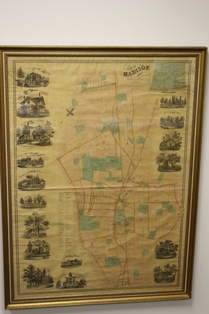
It may seem when one looks at the campus today as if the college was always here in South Orange. In fact, according to a history of Seton Hall College written in 1895 by then President Rev. William F. Marshall, printed in that year’s catalogue, “When James Roosevelt Bayley [Mother Seton’s nephew] was appointed Bishop of the newly erected See of Newark, New Jersey, October 30th, 1853, he found the diocese poorly supplied with priests and with no Catholic institutions of any kind… save a few scattered churches and chapels.” He decided to establish a college for the education of both secular students and theological students training to be future priests. He and Rev. Bernard J. McQuaid who would one day become both a bishop himself, and the first president of Seton Hall College searched to find a proper location for the college. They settled upon Madame Chegary’s Young Ladies’ Academy in Madison. Madame was relocating her school to New York City, vacating the white frame building that can be seen in a drawing on a sizable map from 1857 that hangs just inside the entrance to the Msgr. William Noé Field Archives and Special Collections Center in the Walsh Library.

Map of Madison, New Jersey

The inset drawing seen below of the building amid trees with a horse and carriage in the foreground notes the date Sept. 1856 when the first class of students began their studies – all five of them including Leo G. Thebaud, Louis and Alfred Boisaubin of Madison, John Moore of New York City and Peter Meehan of Hoboken.

drawing of Seton Hall College, Madison, Sept. 1856

Rev. Marshall tells us, “Before the end of the month twenty additional names were registered,” clearly showing that this new college was filling a need. Bishop Bayley named the college for his aunt, now St. Elizabeth Ann Seton, who preceded him in converting from the Protestant Episcopal Church to Catholicism, and who was the founder not only of the Sisters of Charity, but also of Catholic education in this country.
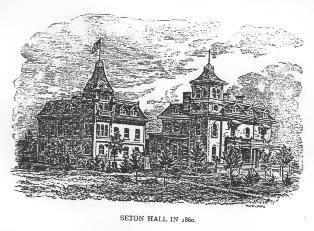
Bishop Bayley found traveling to his newly established college from Newark by horse and carriage too time consuming, and by 1859 the college had outgrown the small, white building in Madison. Returning from unsuccessful scouting for a new location along the South Orange and Newark Turnpike, Bishop Bayley spied a white marble villa on his right. A Catholic real estate dealer of Valisburg was commissioned to make the purchase of the Elphinstone Manor which stood where Presidents Hall does now.SHU 1860 Formal transfer was effected on 2 April 1860, and Seton Hall College moved from Madison to South Orange. The College of St. Elizabeth now occupies the site of the original Seton Hall College where the white frame building still stands.
To see the map of Madison, please drop in during our hours, M-F, 9-5. We are the Archive for Seton Hall University and for the Archdiocese of Newark, and have an extensive collection of manuscripts, photographs, rare books and artifacts. If you have a paper or project which requires primary source material on the history of Seton Hall University or the Archdiocese, or you wish to research your family history using local Church records, please make an appointment to come in to confer with our staff and use some of the materials we conserve. Contact archives@shu.edu   or 973-761-9476.