Announcing ArchivesSpace!

The Msgr. William Noè Field Archives & Special Collections Center at Walsh Library is excited to announce the launch of its new searchable archival database, ArchivesSpace.

ArchivesSpace searchable database

Researchers can now use ArchivesSpace to discover what the Center has in its holdings. Digital archival content will be available through ArchivesSpace in the coming months.

Begin your ArchivesSpace search!

Browse our digital collections!

Archives News: Conservation of Notes on the State of Virginia by Thomas Jefferson

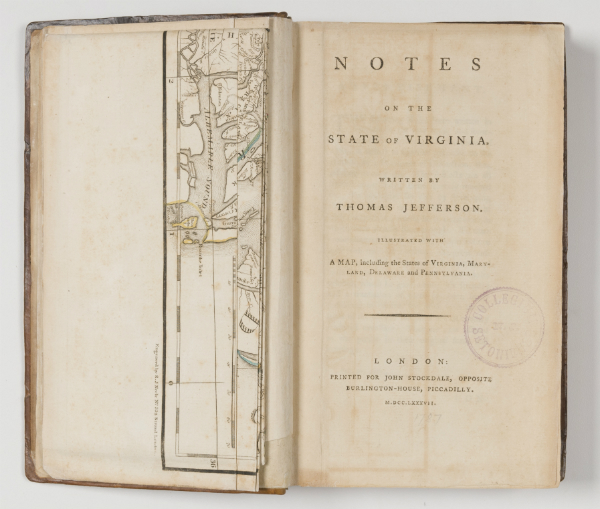
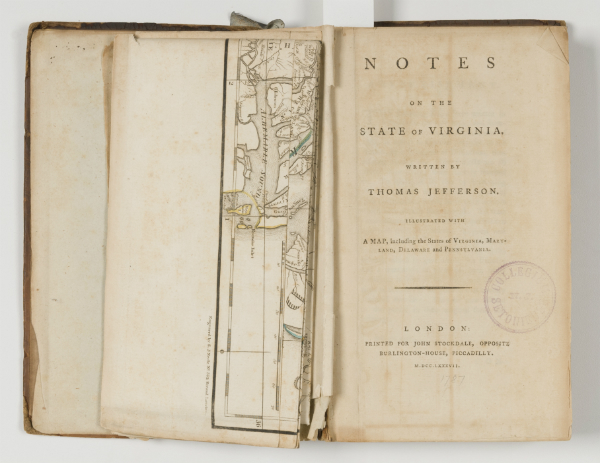
The Archives and Special Collections Center recently had conservation work performed on some important pieces from the collection. One of these is a 1787 edition of Thomas Jefferson’s Notes on the State of Virginia. This edition was the first English-language edition of the text that was made widely available. (Its very first printing in 1785 was a small run of only 200 copies, which Jefferson distributed himself to friends and colleagues.) Notes on the State of Virginia was the only one of Jefferson’s books to be published in his lifetime, under his supervision. The copy held by the Archives and Special Collections Center still contains the fold-out maps and tables, which were frequently removed from this type of work in the past and are rarely found intact.

Notes on the State of Virginia before treatment, showing the fold out map settled at a slight angle and damage to the leaves, especially near the bottom of the spine.
Notes on the State of Virginia after treatment, showing the leaves and cover attachment mended and the map re-attached to sit correctly in the volume.

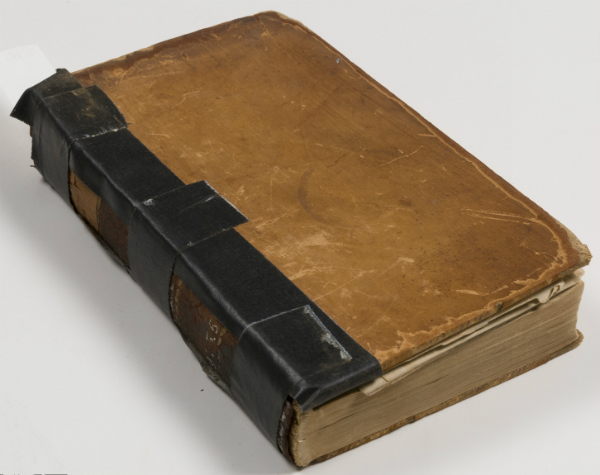
While the book is overall well-preserved, at 230 years old it was in need of some conservation treatment in order to make it stable enough for handling and display. In particular, the leather covers were desiccated and especially worn around the corners. The covers had detached from the text block, and were reattached at some point in the past with black cloth tape. These types of repairs can often do more damage than good, and in this case the tape had discolored the leather on the spine and left adhesive residue. The large map at the front of the volume had a tear running from its attachment to the text block to its first vertical fold, and many of the pages had small tears, creases, and surface staining. To address these issues, we took the volume to the Conservation Center for Art and Historic Artifacts (CCAHA) in Philadelphia.

Damage caused by the use of adhesive tape to reattach the book's covers.
Damage caused by the use of adhesive tape to reattach the book’s covers.

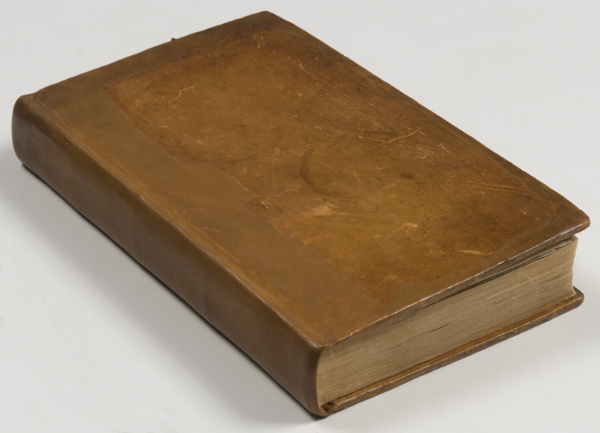
Conservators at CCAHA used a variety of techniques to correct the condition issues while preserving as much of the original binding as possible. The desiccated leather was consolidated—a technique in which a solution is used to penetrate the leather and adhere the leather fibers together. The black tape was removed from the book’s spine along with the spine leather, which was too damaged to salvage. The spine was then cleaned and re-covered with new leather dyed to match the existing covers. New endbands, additional sewing supports at the top and bottom of the spine, were also added to match the style of the old ones. They surface-cleaned accumulated dirt from the pages and mended the tear in the fold-out map. The covers were humidified and flattened, then re-attached to the text block. A custom clamshell-type box was created for the book, using archival materials.

Before treatment: abraded covers and amateur tape repair.
After treatment: leather consolidated and spine repaired, with the leather toned to match the new material to the original covers.

Now that the volume has undergone treatment, the book can be handled and displayed without fear of causing further damage to the volume. Since care was taken to match the original materials and style, the repairs made to the binding keep the original character of the volume while greatly improving the book’s stability. With these measures, we will be able to have this treasure of American history in our collection for the next 230 years!

Women of Setonia 1937 – Ever Forward . . .

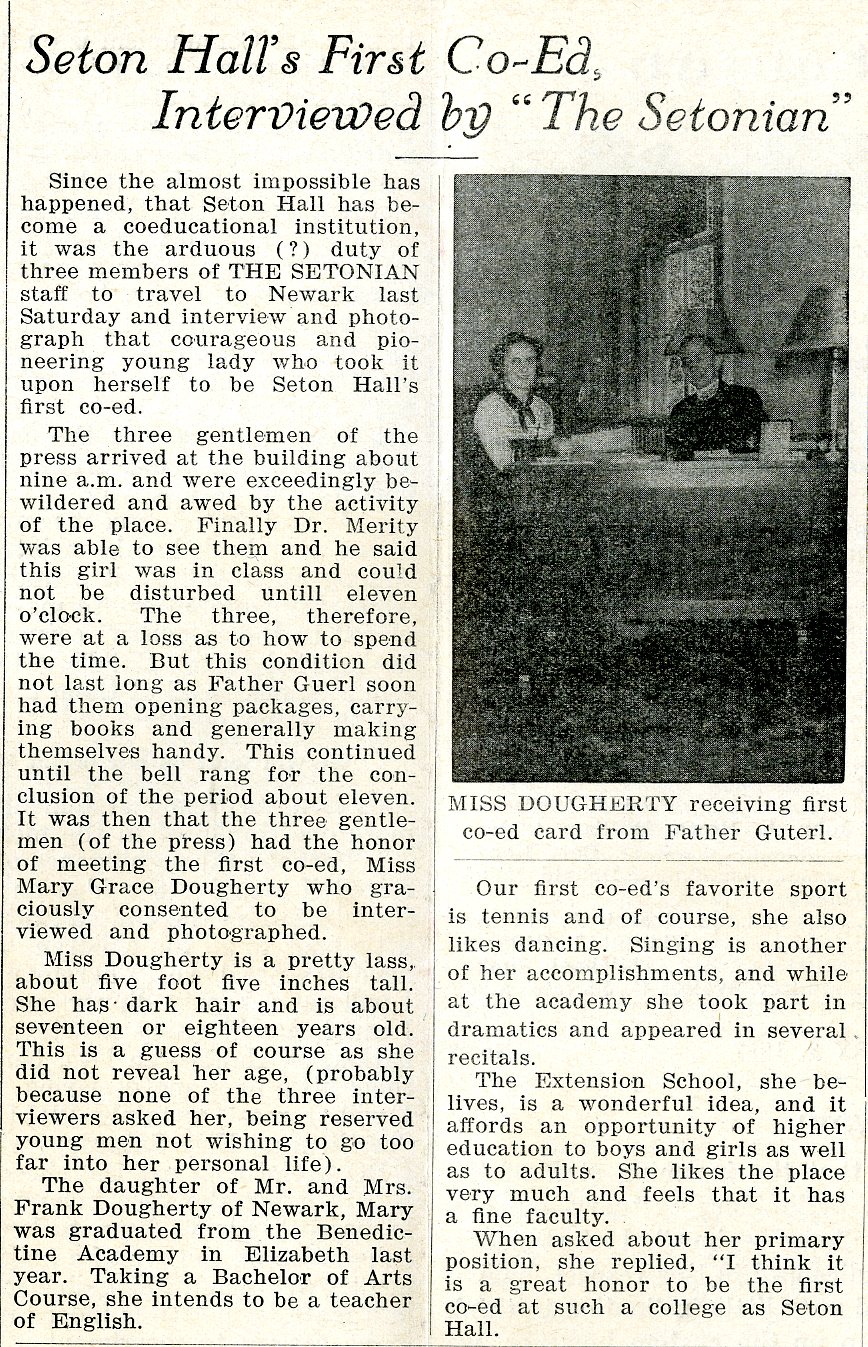
Women of SetoniaThis year marks the 80th anniversary since Women first attended lectures or taught courses at Seton Hall.  These trailblazers were part of the now defunct Urban Division established by then College President Monsignor James F. Kelley who provided a more inclusive educational experience for all qualified applicants.  Women became a fixture in the classroom from the start of the Spring 1937 semester onward at the extension schools in Newark or Jersey City.  In addition, students could opt to attend Summer School on the South Orange campus which served as a prelude to full Co-Education that began here in 1968 and has grown ever stronger to this day.  This exhibit showcases documentation from the Seton Hall University Archives & Special Collections Center in order to show the historical evolution and contributions made by the Women of Setonia from its origins onward.

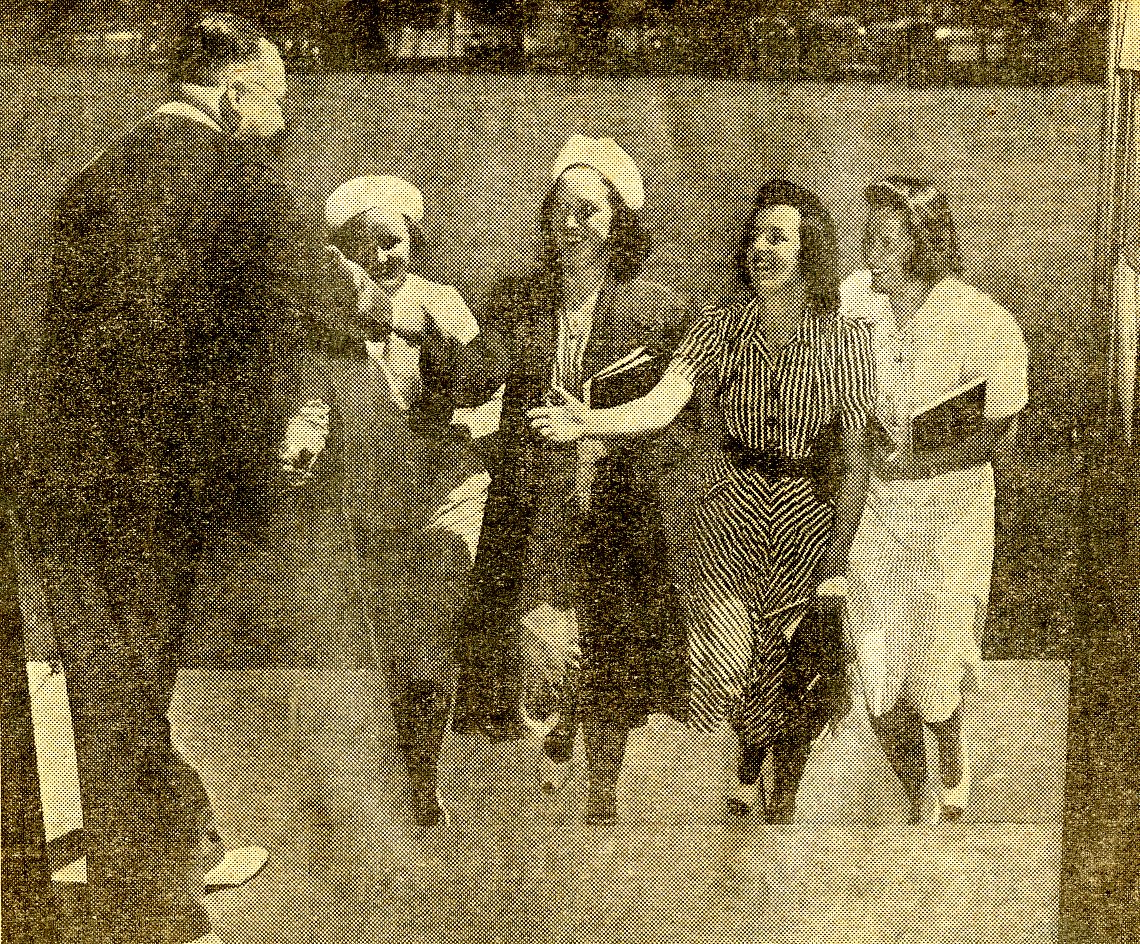
This new Extension Division was conducted under the provisions of the original Seton Hall College Charter of 1861.  From here, the first catalog(ue) and press coverage came soon thereafter to provide details of the educational plan that awaited the 321 new students and recently hired faculty that included Professors Blanche Mary Kelly (English), Dorothy I. Mulgrave (English), Mary C. Powers (History), and Aileen Reilly (English) among other instructors hired by the school. Mary Grace Dougherty was the first acknowledged co-ed, but she shared this distinction with others who attended the Newark (St. Patrick’s School) during the Spring of 1937.  This also included those who enrolled at the Summer School held in South Orange and/or those on site in both Newark or Jersey City (St. John’s School) from the Fall of 1937 over the next few decades.  The first graduates of the Urban Seton Hall's first co-ed, interviewed by The SetonianDivision were recognized during commencement exercises held in June of 1938.  Counted among those who received diplomas at this ceremony include: Virginia Farrell (Hoboken), Gertrude Isaacson (Bayonne), Catherine Netzel (Irvington), and Rita Murphy (Jersey City) [Pictured on the Right] who went on to be connected to Seton Hall for many years to come.

Women continued to succeed in the Urban Division through the 1940s-1960s in a wide range of fields from Academics to Nursing to Law and others.  Co-Education came in full to the South Orange campus in 1968 and from this point onward success has been proven through the student body, faculty, administrators, and alumni who have contributed to the benefit of the Seton Hall University community continue to make a difference.  The full exhibit will be on view in the Archives & Special Collections Center Reading Room from January-March, 2017.  For more information please feel free to contact Alan Delozier, University Archivist via e-mail at: <Alan.Delozier@shu.edu> or by phone: (973) 275-2378

Adopt a Book: I fioretti di S. Francesco

The Archives and Special Collections Center is launching a new Adopt a Book program! This program gives donors the opportunity to contribute to the conservation of specific items from our collection that interest them. Each month, we will feature a different adoptable book here on our blog. To learn more about the program, or to make a donation, please visit our Adopt a Book page.

I fioretti di S. Francesco, Il can del sole, Le considerazioni svlle stimmate by Duilio Cambellotti, 1926

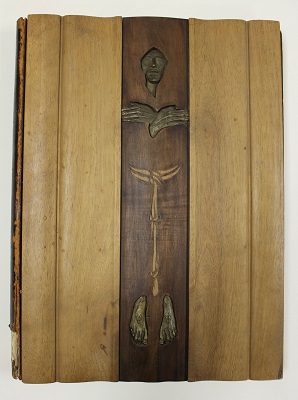
I fioretti di S. Francesco translates to Little Flowers of St. Francis. It is a collection of readings about St. Francis, compiled by an unknown author in the 14th century. The Archives and Special Collections Center holds a 1926 copy of Little Flowers that is one of a limited run of the text which features illustrations and covers created by Italian Art Nouveau artist Duilio Cambellotti. The distinctive wooden front cover is milled to give it a curving shape, and is inset with metal decoration. Striking, brightly colored illustrations depict scenes from the text.

Wooden front cover with metal inset design.

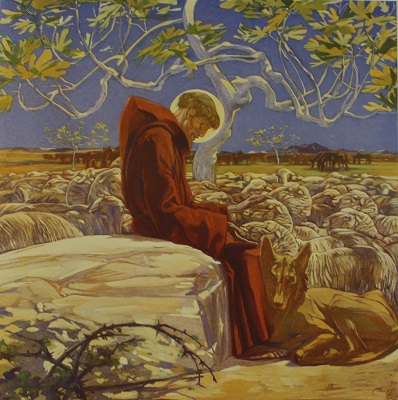
Duilio Cambellotti was born in Rome in 1876. He originally studied accounting, but soon turned to the arts. He became involved in many aspects of the arts, including painting, sculpture, theater, and design, and was influential in the Italian Arts & Crafts and Art Nouveau movements. Cambellotti was especially well known for his Art Nouveau style illustrations and his furniture design.

Illustration depicting St. Francis surrounded by animals and nature.

The Archives’ copy of I fioretti is in need of conservation work to repair damage to the spine resulting from stress on the heavy wooden cover, and mending of minor tears and losses to the leaves of the volume. You can help support the conservation of this important work! Any donation toward preservation of this rare volume would be gratefully accepted. To donate, please visit our Adopt a Book page.

Adopt a Book this Giving Tuesday!

This Giving Tuesday, consider making a gift to support the conservation of rare books in our collections. Our new Adopt a Book program gives donors the opportunity to contribute to the conservation of specific items from the collection that interest them. Adopting a book is a great way to honor a loved one or commemorate an occasion while supporting the preservation of rare materials for generations to come. To learn more about the program or to make a donation, please visit our Adopt a Book page.

Primo volume dell’vso et fabbrica dell’astrolabio, et de planisferio by Ignazio Danti, 1578

Ignazio Danti (1536-1586) was an Italian priest, astronomer, mathematician, and cosmographer. Born to a wealthy family in Perugia, Italy, he grew up surrounded by artists and scholars. His father and grandfather were both architects and engineers, and his older brother Vincenzo Danti became a famous sculptor.

Raised in an environment that fostered his love of science and mathematics, Danti went on to make significant contributions to those fields. At the age of 18, he entered the Dominican Order and began studying philosophy and theology, but also continued learning about mathematics, astronomy, and cartography.

danti_illustration_cropped_blog
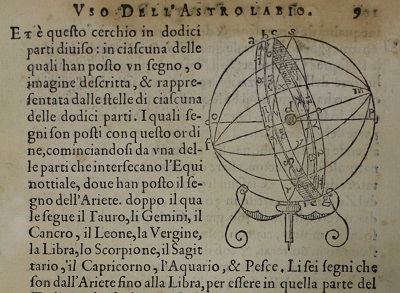
Illustration from Primo volume dell’vso et fabbrica dell’astrolabio, et de planisferio

In 1562, he moved from Perugia to a monastery in Florence and began to work on many scientific and cosmographic projects. He painted maps and globes, created architectural plans for various buildings, and published over a dozen scientific treatises. These include Trattato del’uso e della fabbrica dell’astrolabio which was the first Italian work on the astrolabe, an early scientific instrument that enabled astronomers to calculate the position of the Sun and prominent stars with respect to both the horizon and the meridian.

danti-cover_cropped_blog
Front cover of Primo volume dell’vso et fabbrica dell’astrolabio, et de planisferio, showing losses and water damage.

The Archives and Special Collections Center holds a rare copy of Primo volume dell’vso et fabbrica dell’astrolabio, an expansion of Danti’s first work on the astrolabe. This important work is an early example of instruction in the use of scientific instruments in Italian, and it provided an important resource for Italian astronomers. This copy is in need of conservation treatment to clean and repair its leaves, replace its badly damaged cover, and reinforce its binding. You can help support the conservation of this important work! Any donation toward preservation of this rare volume would be gratefully accepted. To donate, please visit our Adopt a Book page.

Adopt a Book: Roma Sotterranea: opera postuma by Antonio Bosio

The Archives and Special Collections Center is launching a new Adopt a Book program! This program gives donors the opportunity to contribute to the conservation of specific items from our collection that interest them. Each month, we will feature a different adoptable book here on our blog. To learn more about the program, or to make a donation, please visit our Adopt a Book page.

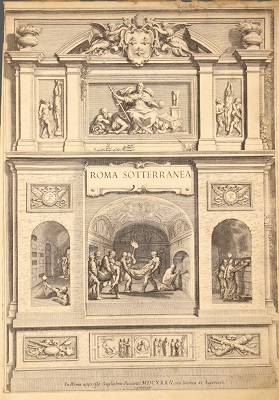
Roma sotterranea: opera postuma

The vast catacombs of Rome provide a critical link to the past. Because they were shielded from the elements and remained nearly untouched for centuries, they have yielded spectacular examples of early Christian art, insight into the culture and burial practices of Rome, and stunning architectural elements. These catacombs were nearly lost to history, but were accidentally rediscovered in 1578 by laborers working in a field on the outskirts of Rome.

Shortly after the rediscovery, a number of scholars took interest in the catacombs and made explorations of them. However, none of these early explorers saw fit to fully document and publish their findings, leaving only scattered notes and oblique references to the catacombs as their legacy. One man, Antonio Bosio, is responsible for initiating serious and thorough archaeological study of the catacombs, earning him the nickname “Columbus of the Catacombs.”
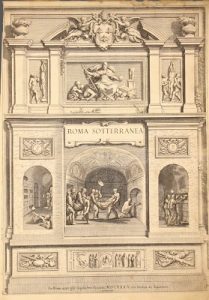
roma-sotteranea_illustration_blog

Antonio Bosio was born in Malta in 1575, and spent most of his life in Rome. He became interested in the catacombs at an early age, and read any text which he thought might give him some insight into the subject, including ancient records in Greek and Latin, ecclesiastical histories, lives of the saints, and theological treatises.

His determination to learn about the catacombs extended far beyond the study of books and manuscripts, and led Bosio to explore the underground structures himself—an undertaking that was often difficult and even dangerous. On one of his first exploratory trips, Bosio was so enthralled by the monuments before him that he had soon progressed so far through the twisting passageways that he could not remember the way back. He had lingered longer than expected, and his lights began to burn out. Eventually, he was able to feel his way back to the entrance and avoid joining the martyrs in their final resting place. That experience did not deter him in the slightest in his pursuit of knowledge of the catacombs, and he made many more investigatory trips in his lifetime. (Although thereafter he made sure to carry an ample supply of lights, food, and water on his expeditions.)

Bosio continued his work for 36 years. He devoted his life to it, and was one of the first to apply systematic methods of the newly forming science of archaeology to the study of the catacombs. In 1629, Bosio died at the age of 54 without finishing his work and bringing it to print. For a short time, it seemed that Bosio’s life’s work might never see publication. However, the Knights of Malta, to whom he had left his estate, recognized the importance of his research and entrusted Oratorian Giovanni Severani with editing and compiling the work. It was finally published in 1632, three years after Bosio’s death, in a large folio volume titled Roma sotterranea: opera postuma di Antonio Bosio.

Bosio dedicated his life to discovery, scholarship, and above all advancing our understanding of the archaeology of ancient Rome. While Bosio never saw his work come to fruition, it still lives on over three centuries later. No archaeological study of the catacombs can commence without paying homage to Bosio.
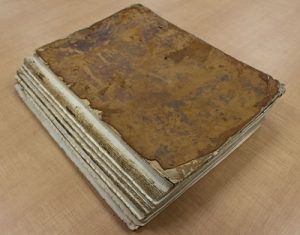
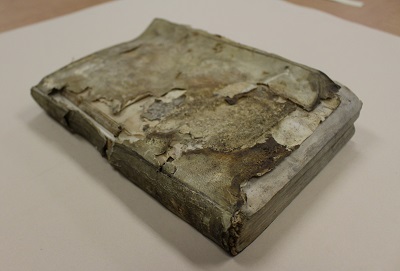
roma-sotteranea cover

The Archives and Special Collections Center holds a rare 1632 edition of Roma sotterranea. The book is showing its age (384!) and is badly in need of conservation treatment to ensure its preservation for years to come. You can help support the conservation of this important work! Any donation toward preservation of this rare volume would be gratefully accepted. To donate, please visit our Adopt a Book page.
Trina Padilla de Sanz: A Woman Ahead of Her Time

Trina Padilla de Sanz: A Woman Ahead of Her Time
by Carly Miller, curator

Currently on display through September 20th at the Msgr. William Noé Field Archives & Special Collections Reading Room are items from the Trina Padilla de Sanz papers (Mss 0020). The exhibit showcases published works by the Puerto Rican writer, poet, composer, and social activist Trina Padilla de Sanz (1864-1957).

Portrait of La Hija del Caribe, 1956.

Writing as La Hija del Caribe, Padilla de Sanz was a prominent literary figure in the twentieth century, penning numerous articles, poems, and essays on a wide variety of topics such as history, literature, poetry, music, politics and culture. In a period when expectations for women were mostly confined to the domestic sphere, Padilla de Sanz represents an important deviation from the norm. Breaking free of society’s narrow view of a woman’s place in the world, Padilla de Sanz was an outspoken, unrelenting voice for change.
This exhibit focuses on one very prominent aspect of La Hija’s writings: her activism. She focused on progressive topics such as women’s rights, the preservation of the Puerto Rican culture and identity, and protection and compassion for those most often marginalized and ignored. La Hija’s feminism, patriotism, and drive for social justice are represented in the displayed works. From advocating for compassion on behalf of the incarcerated to calling out the United States for its aggression to highlighting women’s role in wartime, Padilla de Sanz did not shy away from controversial topics.

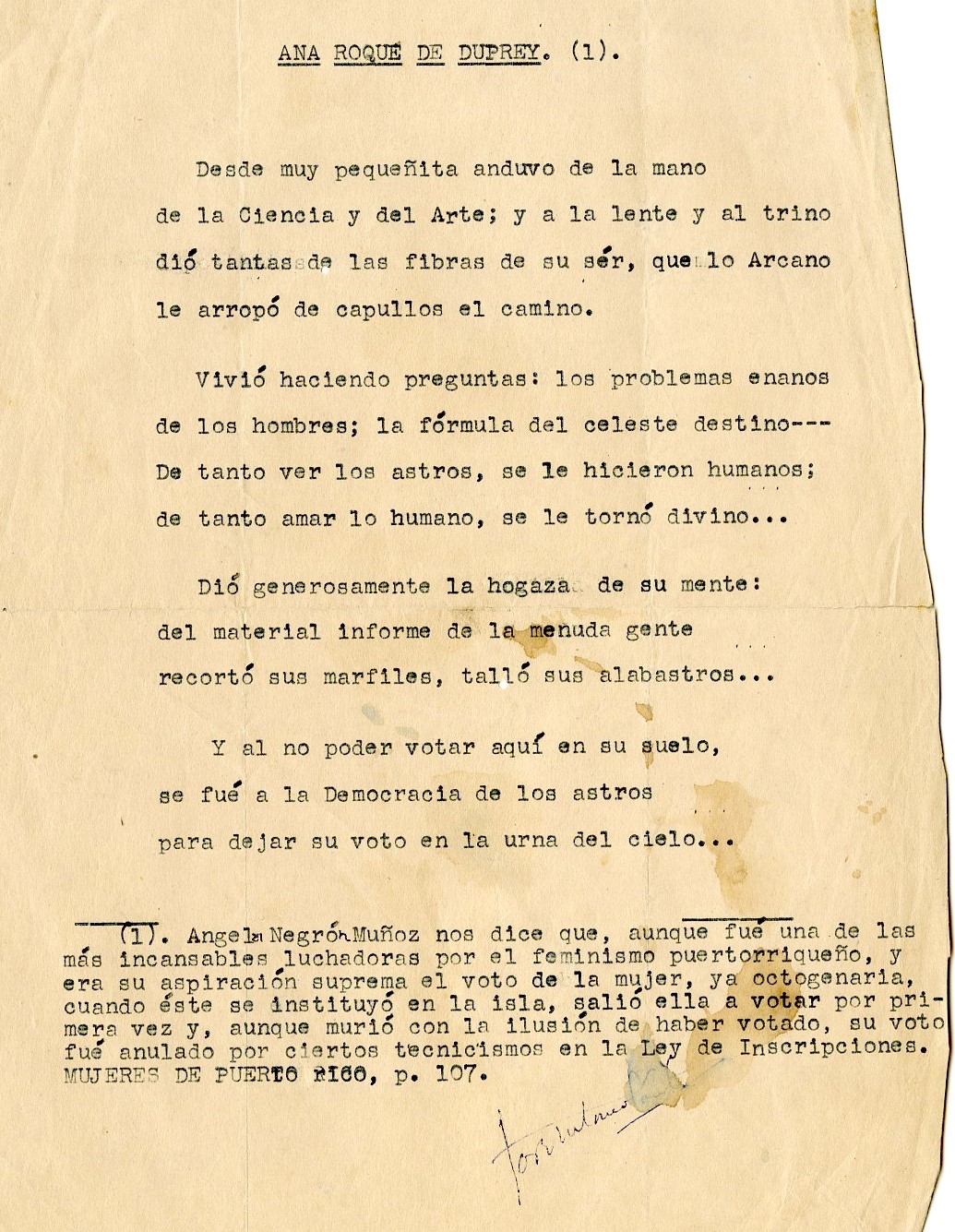
"Ana Roque de Duprey," a poem by Trina Padilla de Sanz. Undated.
“Ana Roque de Duprey,” a poem by Trina Padilla de Sanz. Undated.

While the exhibit represents only a small portion of her extensive writing career, it fittingly demonstrates the essence of Padilla de Sanz. Her desire to see society improve formed not only the basis of her writings but also of her life. La Hija was actively involved in community affairs so that she could encourage the type of change that she so often wrote about in newspapers and magazines. Not content to sit on the sidelines, Padilla de Sanz unabashedly ignored the societal expectation of women in the twentieth century. Instead, she carved out a diverse and fulfilling career. She was a woman ahead of her time, paving the way for future generations of women and inspiring progress and reform within society.
For more information about this exhibit or to make an appointment to view the Trina Padilla de Sanz papers, please contact 973-761-9476 or archives@shu.edu.

Winand Wigger and 19th Century Conciliar Connections

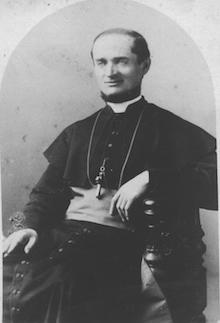
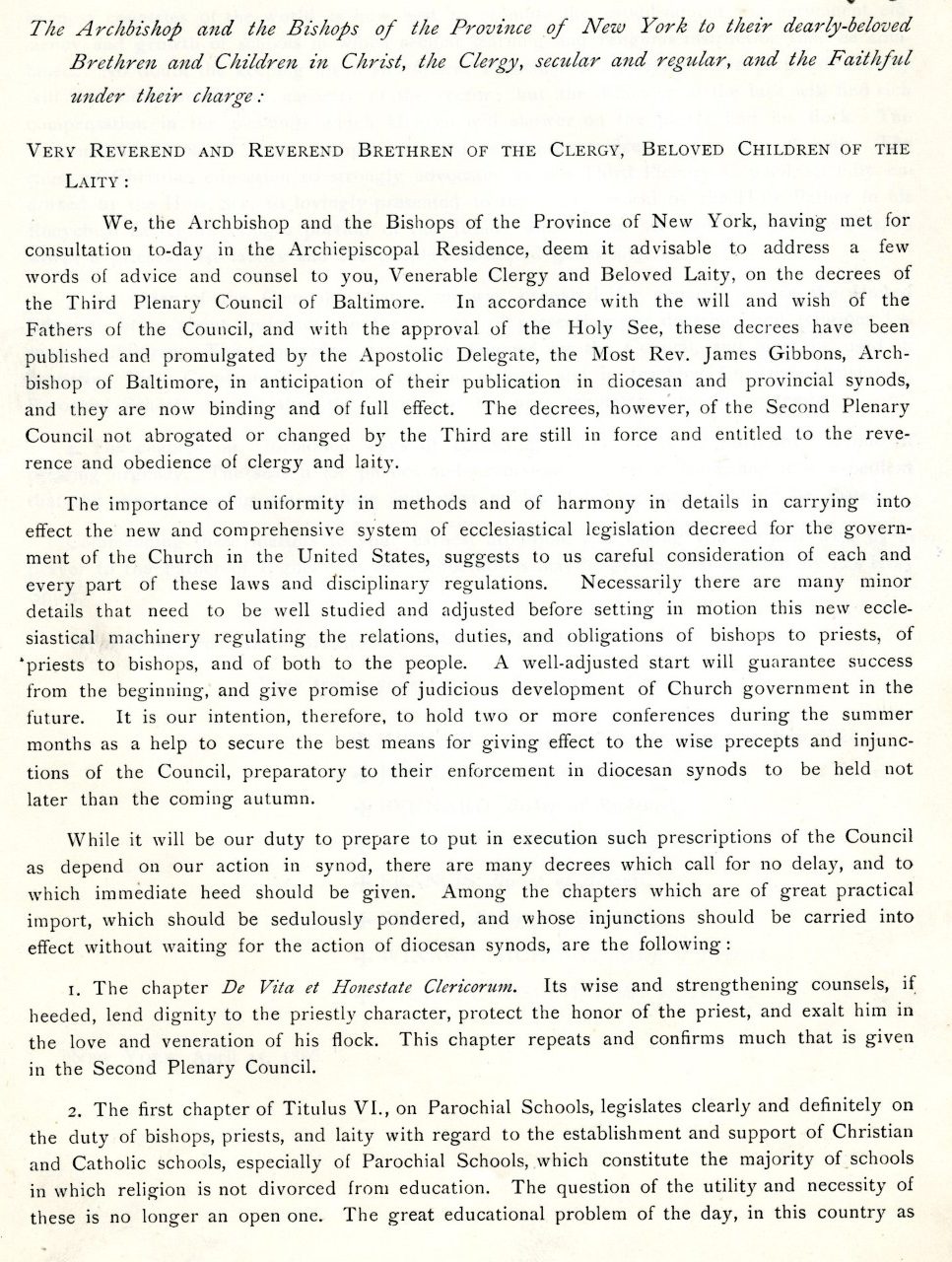
Portrait of Winand WiggerThe life and legacy of Winand Michael Wigger (1841-1901), the third Bishop of Newark and first of German extraction was elevated to leadership of the largest Catholic see in New Jersey by 1881 at a time when the Diocese of Trenton was formed to serve the faithful in southern New Jersey.  On a wider scale, the Church was undergoing various changes as a result of nation-wide meetings among the Catholic hierarchy known as the Plenary Councils of Baltimore held in 1852, 1866, and 1884 during the time of Bishop Wigger.  Baltimore was the first Catholic Diocese of the United States (formed in 1789) and as more geographical provinces were made (Newark christened in 1853 being a part of the Province of New York established in 1808) the leadership met to discuss and adopt standard policies and “discipline” based on proper Church teaching and mission meetings and decrees that came out of Maryland would be enacted locally including the Diocese of Newark.  These councils yielded interesting ties to New Jersey including the creation of a standard “Baltimore Catechism” written by Father Januarius De Concilio, a priest of the Diocese of Newark (1885) and consideration of Seton Hall as the official national “principal seminary or university” for the United States, but ultimately the Catholic University of American (founded in 1887) became the ultimate choice.  Aside from these key historical footnotes on a local level Bishop Wigger working with Michael Augustine Corrigan, Bishop of New York (and second bishop of Newark previously) worked together with other church leaders within the New York Province to draft recommendations based on the Baltimore debates.  Among the documents found in the Wigger Collection include the following examples include various circulars fro the spring and summer of 1886 including one from April 15th which reads in part . . .

“We, the Archbishop and the Bishops of the Province of of New York, having met for consultation to-day in the Winand Wigger documentArchiepiscopal Residence, deem it advisable to address a few words of advice and counsel to you, Venerable Clergy and Beloved Laity, on the decrees of the Third Plenary Council of Baltimore.  In accordance with the will and wish of the Fathers of the Council, and with the approval of the Holy See, these decrees have been published and promulgated by the Apostolic Delegate, the Most Rev. James Gibbons, Archbishop of Baltimore, in anticipation of their publication in diocesan and provincial synods, and they are now binding and of full effect . . . A well-adjusted start will guarantee success from the beginning, and give promise of judicious development of Church government in the future.  It is our intention, therefore, to hold two or more conferences during the summer months as a help to secure the best means of giving effect to the wise precepts and injunctions of the Council, preparatory to their enforcement in diocesan synods to be held not later than the coming autumn.”

Bishop Wigger also sought to stress attention to academics throughout the Diocese of Newark from grammar school through Seton Hall College . . .

“The first chapter . . . on Parochial Schools, legislates clergy and definitely on the duty of bishops, priests, and laity with regard to the establishment and support of Christian and Catholic schools, especially of Parochial Schools, which constitute the majority of schools in which religion is not divorced from education. The question of the utility and necessity of these is no longer an open one.  The great educational problem of the day, in this country as in most countries of the world, is how best to promote the establishment and permanent efficiency and growth of schools in which secular learning and religious instruction shall be combined . . .   The cause of Christian education so strongly advocated in the Third Plenary Council, so fully endorsed by the Holy See, so lovingly presented to the whole world by the Holy Father in his Encyclical Letter directing a portion of the Jubilee aims to be set aside for such schools, is worth a priest’s best labors and the people’s unstinted generosity.”


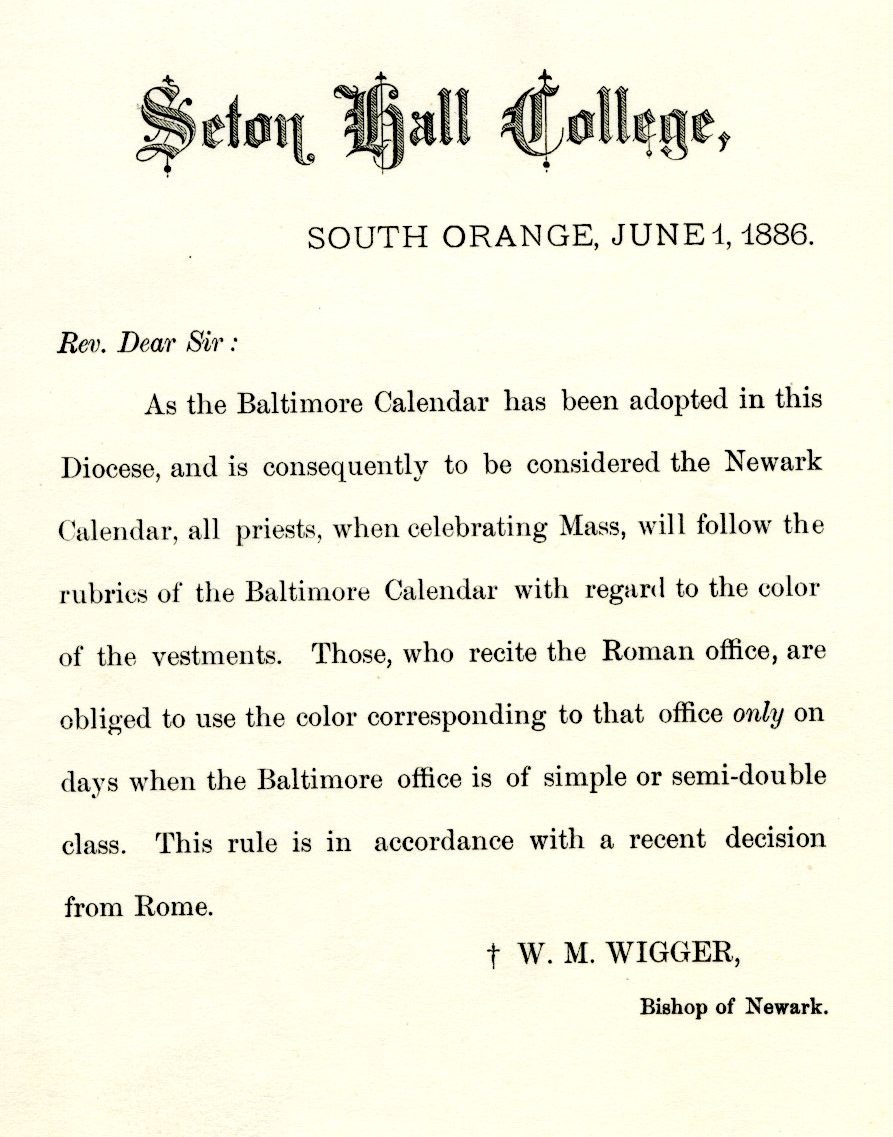
Seton Hall College, South Orange, June 1, 1886These and other pronouncements issued by way of circulars to the clergy of the diocese, Seton Hall College, other institutions, and expressed to parishioners was part of the chain of messaging that kept the work and vision of the Church connected during the time of Bishop Wigger with the Councils being among the last major conferences aside from various diocesan synods and periodic intiatives that defined the American Catholic Church that arose above mission status by 1908 in the eventual wake of the Baltimore Councils.  More information about the administration and legacy works of Bishop Wigger as a church leader can be found within the following collection, the Winand Wigger papers, 1864-1919.

For more information about Bishop Wigger, or other queries regarding Catholic New Jersey please feel free to contact us by e-mail:Alan.Delozier@shu.edu  or via phone at: (973) 275-2378.  Thank you in advance for your interest.

A Rare Accession: New Additions to our Rare Book Collections

The Archives has recently acquired some new materials to add to its rare book collections, which will strengthen our holdings in some of our key focus areas, such as Catholic Studies, Ireland and Irish-American Studies, Immigration, and local Newark and New Jersey history. Some notable additions to the collection include:

Directorium inquisitorum: A guide for inquisitors written as early as 1376 by Nicholas Eymerich, the inquisitor of the kingdom of Aragon. The text became the most influential handbook for inquisitors, and it was widely used until the 17th century. This copy, printed in Rome in 1578, is one of the first printings of the Directorium Inquisitorum to contain extensive commentary by Francisco Peña, a Spanish canon lawyer.


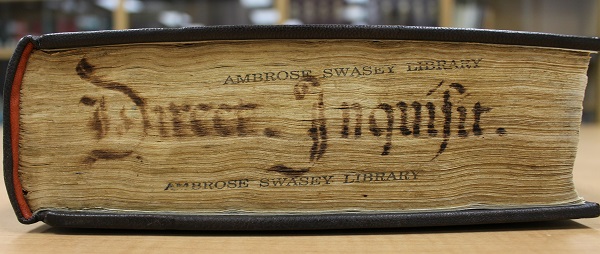
Directorium inquisitorium bottom edge blog
Bottom edge of the Directorium inquisitorium, showing the title inked on at an early point in the book’s history, and ex-library stamps from a previous owner.
Directorium inquisitorium page blog
Page from the Directorium inquisitorium.


Platform of Principles of the New York Know Somethings: A broadside defining the Know-Something Party, a group that separated from the Know-Nothing party in 1855. While they shared the Know-Nothing Party’s anti-immigrant and anti-Catholic beliefs, the Know-Somethings differed by taking a strong anti-slavery position.

Opinion of Assistant Vice-Chancellor Sandford, Nov. 5, 1844 : Citizenship by birth in the United States, –although of alien parents temporarily residing here. In chancery. Bernard Lynch vs. John Clarke and Julia Lynch. [Reported for the Albany Argus].: A pamphlet detailing Sandford’s landmark decision defining United States citizenship. He determines that Julia Lynch, a child who was born in New York City to Irish immigrants but lived in Ireland for most of her life, was a natural born citizen of the United States and therefore able to inherit property left to her by a family member who died in New York State. He rendered this decision 24 years before the 14th Amendment to the U.S. Constitution was passed, declaring that children born in the United States are citizens regardless of the citizenship of their parents.


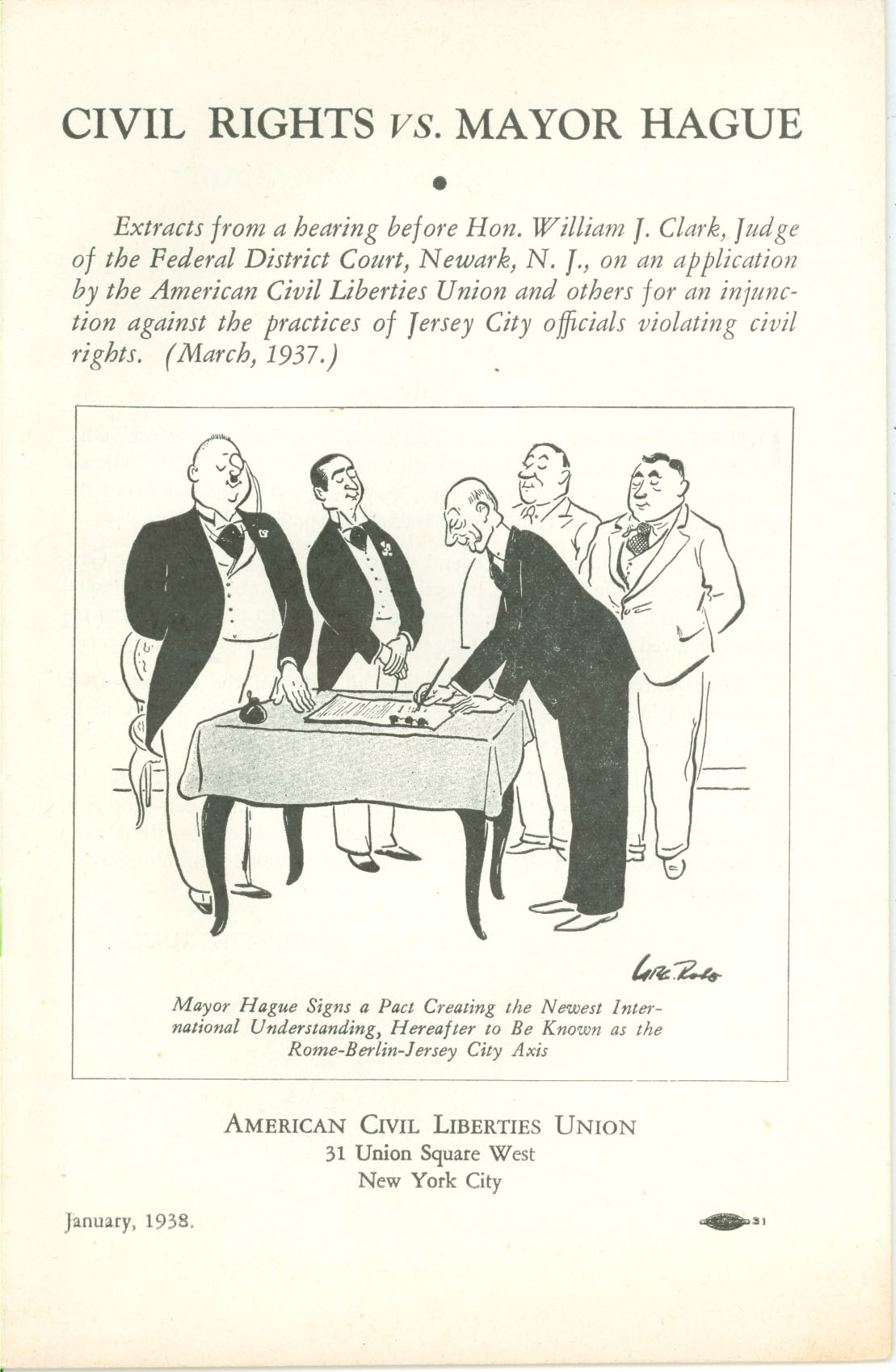
Civil rights vs. Mayor Hague : extracts from a hearing before Hon. William J. Clarke, Judge of the Federal District Court, Newark, N.J., on an application by the American Civil Liberties Union and others for an injunction against the practices of Jersey City officials violating civil rights, (March 1937).: Excerpts from a hearing charging Frank Hague, Mayor of Jersey City from 1917-1947, of violating civil rights by using the police to prevent labor union members from striking.

Civil Rights vs Mayor Hague cropped
The cover of the Civil Rights vs. Mayor Hague pamphlet shows a political cartoon with the caption: “Mayor Hague signs a pact creating the newest international understanding, hereafter to be known as the Rome-Berlin-Jersey City Axis.”


Travels of an Irish gentleman in search of a religion. With notes and illustrations: The poet Thomas Moore’s controversial defense of Catholicism in which an Irish man searches for reasons to become a Protestant but fails to find justification for converting.

Foreign Pauperism in Philadelphia: A memorial to the legislature of Pennsylvania, exhibiting reasons for the amendment of certain laws in relation to the poor and to Foreign migrants, with the bill annexed.: A treatise by the American Emigrants’ Friend Society proposing the use of tax money to send immigrants entering the port of Philadelphia to the west, in order to relieve overcrowding and unemployment in Philadelphia.
A full list of the acquired books is available in our Rare Books Research Guide.

Materials from our rare book collections may be viewed by appointment in the Archives and Special Collections Center Reading Room. To make an appointment, please contact 973-761-9476 or archives@shu.edu.

Perspectives on Israel: the Cantor Morris Levinson pamphlet collection

The Cantor Morris Levinson collection consists of 28 pamphlets relating to Israel and the 1967 Arab-Israeli War. Also known as the Six Day War, the 1967 Arab-Israeli War was fought between Israel and the Arab states of Egypt, Jordan, and Syria. It resulted in the capture of new territories for Israel: the Sinai Peninsula, the Golan Heights, the Gaza Strip, and the West Bank of the Jordan River, which have proven to be strategically important and hotly contested. The collection is small, but represents a number of voices and attitudes toward Israel in that tumultuous period, with the majority of the collection dating from 1967-1969.
Many of the pamphlets, such as Julius Stone’s legal analysis of the conflict “No Peace—No War in the Middle East: Legal Problems of the First Year,” address the legal and political implications of the war. Others, such as “Christian Churches in Israel: Recent Developments in the Relations between the State of Israel and the Christian Churches” focus on interfaith relations. For a full list of the pamphlets, visit our research guide for the collection.

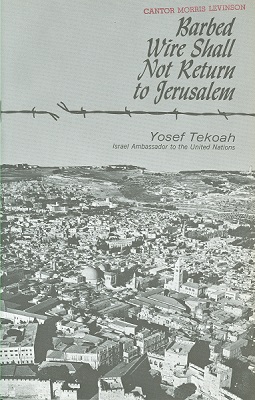
CantorMorrisLevinson pamphlet
This pamphlet contains excerpts from the addresses delivered before the Security Council on the subject of Jerusalem.

This collection is an excellent supplement to the archives’ holdings in the area of Judeo-Christian studies. Other collections which address the Arab-Israeli conflict include:

  • The Msgr. John M. Oesterreicher papers: John M. Oesterreicher founded the Institute of Judeo-Christian studies at Seton Hall. His collection contains extensive subject files relating to Israel.
  •  The Sister Rose Thering papers: Sister Rose Thering was a professor in the Judeo-Christian studies program at Seton Hall, and an activist for Jewish-Christian relations throughout her life. Her collection contains a series on interfaith and international relations, which includes letters of protest that she wrote to the United States government regarding their policies on Israel.
  • The Nancy Forsberg papers: Nancy Forsberg was an educator and a reverend at First Congregational Church in Union, NJ. She was a strong advocate for interfaith cooperation, and gave many lectures on the Middle East, Israel, and Jewish-Christian relations. Her collection includes subject files on Israel and interfaith topics.

The collection is available for research in the Archives and Special Collections Reading Room, open 9am-5pm, Monday-Friday. To make an appointment, contact 973-761-9476 or archives@shu.edu.