Seton Hall Football – Still Undefeated!!!

“Touchdown for Old Setonia!” was an exclamation that was cheered on by players, cheerleaders, supporters in the grandstands, and all who followed the fortunes of Seton Hall College football throughout its earliest days in action.  Joining both Baseball and Basketball as a signature sport during the earliest years of intercollegiate competition at Seton Hall, Football was also included as one of the most prolific and successful athletic teams on campus.

American Football celebrated its Sesquicentennial last year with the game being created in New Jersey in 1869, and as colleges and universities discovered the sport they introduced it to their respective student bodies in turn.  This ultimately led to wide-spread popularity of this game which quickly became synonymous with Fall Saturdays and captured the imagination of the overall sporting public.  This is especially true during the nineteenth century when Football was developing itself as a unique and unifying force around the country.  The attractiveness of this sport especially among the immigrant sons and first generation of college students at Setonia at first and as it became the “American Game” (as a parallel to Baseball as the “American Past-Time) built in popularity over the century plus.
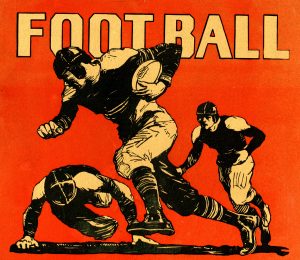
Football Poster Illustration, c. 1923

Seton Hall can share in a chapter of College Football history through the posting of several memorable seasons, players, coaches, and milestones that make this story a memorable on in various ways beyond the “gridiron” alone.  In retrospect, the days of Seton Hall Football is a case of fond memories, regular inquires about the research aspects of the sport, and many wistful questions about if it will return as a sport on campus at some point in the future?  Time and circumstances will tell if we can kick-off once again, but for now let us reflect on a sport that at one time gripped the imagination of the campus and its fandom.

Seton Hall campus back in the day when the school fielded a competitive football eleven at various junctures from the late nineteenth century through the early 1980s.  An auspicious moment came when looking at the “kickoff” of the sport at the college, it is recognized by various scholars that Seton Hall played in the very first football contest between two Catholic institutions of higher education when they matched up against St. John’s (later known as Fordham and not to be confused with St. John’s of Queens) during the Autumn of 1882.  Although this seminal moment resulted in a loss, the following December when the Setonia Eleven posted their first victory as a program over St. John’s by a score of 2-0 (This was measured in “goals” as different scoring rules were in vogue during the nineteenth century and would later change as the game expanded and modernized over time) which helped to solidify the sport and show it had the potential to succeed.

Illustration of Football Player, 1931 White & Blue Yearbook

Between 1885 and 1886, Seton Hall posted undefeated campaigns, had a five game winning streak, and were unscored upon and handily defeated St. John’s in particular by scores of 14-0, 36-0, 12-0, 32-0, and 63-0 before dropping the sport in 1887.  The squad resumed play the following season with a new nickname – “The Alerts” (with a Junior Varsity or Freshman team nicknamed – “The Senators” or “Crescents” at various times over the next few years) and boasted a 2-1 record after playing St. John’s three more times before diversifying their scheduling by the end of the 1880s.

By 1889, The Alerts played a more diverse set of opponents when they matched up against a number of independent Northern New Jersey-New York City metropolitan based club teams in particular including the Oritani Field Club and Bedford FC, defeating them both 28-0 and 18-4 respectively that year.  Additional athletic organizations and high school contingents were played during the 1890s including such entities as the Newark AC, Palma Club of Jersey City, Varuna Boat Club, Brooklyn Poly, Hoboken HS, Iron Cross of Jersey City, Willet’s Point Engineers Corp , Motor Team of Brooklyn, Crescents of Harlem, and the Morristown Field Club, etc.  Conversely, Seton Hall also started to play other collegiate squads aside from St. John’s alone including Hackettstown Institute (later known as Centenary College), St. Francis Xavier, Trenton State Normal School, St. John’s (Queens), College of New Jersey (later known as Princeton) Frosh, City College of New York (CCNY) Juniors, St. Peter’s College (Jersey City), and  Manhattan College among others who had campuses around the region.
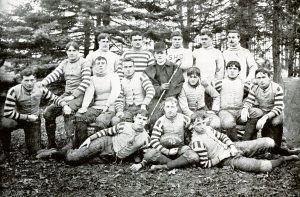
Undefeated Seton Hall College Eleven, 1893

In terms of coach guidance, Seton Hall relied on James P. Lee (Harvard, ’90) who was an All-American selection for the Crimson in 1889 and enrolled at the Columbia Law school earning his LL.B. degree while simultaneously employed by Seton Hall during the 1890s.  Counted among the standout players during this era included such “gridders” as Gene Kinkead, John Phelan, Jim Smith, Tom Reilly, Tom Walsh, Richard Kane, Gene McDonald and the first of many members of the McDonough family who donned the White and Blue sweaters of Setonia.  Under the guidance of Coach Lee and company, winning seasons were attained in 1892, 1893 (undefeated), 1894, 1895, 1896, 1897, 1898, 1899 were earned and Setonia amassed a combined record between 1883 and 1899 of 63-13- 5 (with various cancelations and forfeits) to end the century on a high note.

Moving into the early twentieth century, more action was in play at different levels for the Setonia Football teams and fans as an Alumni squad was formed to compliment the Varsity and “Frosh” contingents and a more structured scheduling trend emerged as more collegiate elevens and fewer club or prep school teams were played, but not entirely eliminated from the opponent list altogether. Counted among those squads Seton Hall played included such squads as the Seton Hall Alumni, Nassau Club of Princeton, Knickerbocker AC, 5th U.S. Artillery, Dreadnaught AC, Willet’s Point Engineers Corp, Robert Davis Association at St. George Cricket Ground, Hoboken.  Fort Hancock (Sandy Hook), Eaton Business College, New Jersey State School, Columbia College of Physicians and Surgeons, New York , University & Bellevue Medical College, and others.
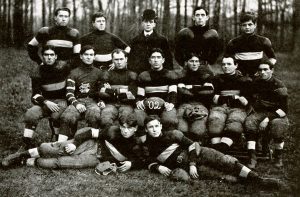
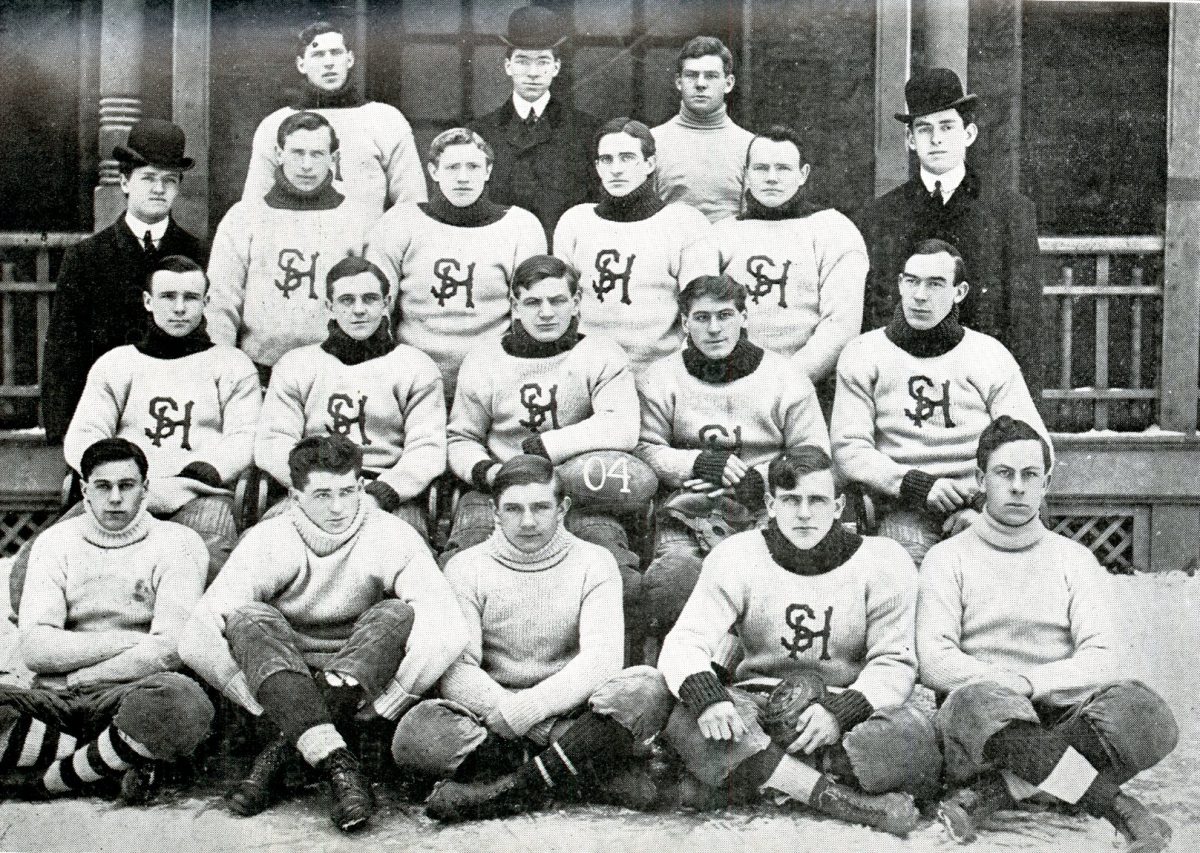
Seton Hall College Football Team, 1902

In 1900, Seton Hall posted a 7-3 record and improved to 9-2 a year later.  Perfection came in 1903 when The Alerts went 8-0 and the point total for the year was an amazing 174-2.  A majority of home games were scheduled for the first time and through this memorable season Seton Hall defeated such opponents as Philadelphia Dental College, Manhattan College, Villanova, Columbia Law, and Pratt Institute.  By 1904, Seton Hall had another winning campaign at 7-2 when they defeated a number of higher profile institutions including the University of Maryland (17-0), Fordham (6-0), and Delaware (26-0).  In 1905, The Alerts defeated St. Francis-Brooklyn (71-0) and Rutgers (22-10) which served as a high water mark to cap the first decade of the twentieth century.

Beyond the “Golden Age” of Seton Hall Football, the presence of records become somewhat sketchy as there is no existing log of results from 1906-1912.  The last pre-Great War documentation shows that Setonia went 5-1 in 1913 and defeated among others the Fordham “B” team, St. Francis-Brooklyn, and St. Peter’s College by a differential of 212 points for Setonia to 27 for their opponents.  By this time, Jack Fish (who later coached Baseball and at Seton Hall Prep) scored 48 points and James “Honey” Dugan 47 of his own which contributed to this successful season and marked the last major success during the “Golden Age” as the college dropped football for the duration of World War I and the administration would not sponsor the sport again until the Fall of 1922 when they registered a 3-2 record.

During the 1920s, football at Setonia was short-lived, but highlights included the renewed emergence of Junior Varsity Football with more prominence among the star players during this period included John J. Dougherty (later an Auxiliary Bishop and President of Seton Hall from 1959-69) who was a guard on the 1926 team which went 5-2-1 and Bud Conlan a starting center and team captain for three years.  This era included a mix of highs and lows as they played such schools as Trenton Normal (later Trenton State and presently the College of New Jersey), Upsala, Pennington School, University of Pennsylvania Frosh, Cooper Union, Temple, Albright, CCNY JV and Villanova Frosh among others as Football at Seton Hall was doomed to pause again after 1928.
Seton Hall Football Squad, 1931

A serious move was made to create a successful tradition with the hire of Richard Paul “Red” Smith (1904-1978) an alumnus of the University of Notre Dame and protégé of legendary coach Knute Rockne.  After playing for the Irish, Smith also played professional football with the Green Bay Packers, New York Giants, and New York Yankees in the National Football League (NFL) and baseball with the New York Giants of the National League (NL) prior to serving as Head Coach of the Seton Hall eleven during the early 1930s before going back to the professional leagues as an assistant coach for the Packers and Giants in the NFL and also the Chicago Cubs of the NL.

The last appearance of the team during the Great Depression era came from 1930-33 with little success although they did not have any winning records, they did post singular wins over Moravian, Brooklyn College, East Stroudsburg State, Canisius, and others. Nearby Upsala of East Orange was a natural rival and in 1931 they played a benefit game to help aid the destitute during this time in what was billed as the “Championship of the Oranges” in a memorable community encounter.  Setonia also played its first documented night game (a rare occurrence during the 1930s) against Davis & Elkins of West Virginia held in Municipal Auditorium, Atlantic City before a crowd of 5,000.  Otherwise, Seton Hall played a spotty schedule during the 1940-47 seasons including a gap during World War II, but an undefeated 2-0 campaign where they defeated the 1941 – 2-0 Scranton Frosh and the Marianopolis Club.
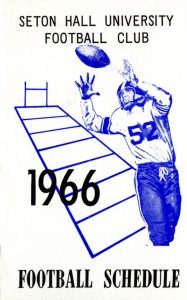
Many Catholic colleges disbanded their long standing football teams including St. Bonaventure, Manhattan, University of San Francisco and others during the late 1940s and early 1950s as a cost saving measure and to invest in their basketball teams for success and Seton Hall was no exception to this trend.  However, in moving forward to the mid-1960s and the desire to have Football back on campus once again a vision shared not only in South Orange proper, but also by various Eastern schools in the Newark-metropolitan area in particular who wanted to feature the sport once again.  As a result of this promise of fielding Football and linking into the wishes of student and alumni fan based in particular, a new Club league that was structured among higher educational entities that were similar sized, many being peer institutions, and geographically balanced formed in 1965.  Seton Hall would eventually play the following schools through the remainder of the decade into the early 1970s including Fordham Iona, St. peter’s, Jersey City Sate, King’s College (PA), Georgetown, Providence, Adelphi, Scranton, Manhattan College, Rutgers-Newark, Fairleigh Dickinson, American University, William Paterson State, St. John’s, Concordia, Pace, Upsala, Army “B” squad, etc.

The first Club-based season of 1965 included the inaugural game, a night contest that led to a victory v. Marist at Newark Stadium by a tally of 28-6 and contributed to a season record of 3-1 wins that included a second win over Marist and St. Peter’s College at Roosevelt Stadium in Jersey City.  Subsequent memorable moments followed in 1966 (4-2-1), 1967 (5-2), 1968 (5-3), and 1971 (6-2).  The highpoint of the Club-era came in 1972 (9-1) Eastern Club Bowl/Empire Bowl Championship.  The Schaeffer Bowl at Jack Coffey Field (Fordham), the Pirates (new nickname adopted by the school in 1931) defeated Marist by a count of 20-18 with 3,000 in attendance.  This also aided the selection of Ed Madigan as Coach of the Year honors for head man and success for the team as a whole.
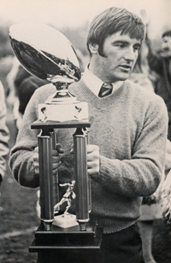
The success of the 1972 squad and the consistency of the program during the 1960s led them to advance a notch upward in the College Football hierarchy when they became a non-scholarship, program within the ranks of NCAA Division III (Division I being the highest) and they would encounter some victories in their first year (3-5) of 1973 including shutout wins over Rutgers-Newark (42-0) and Rochester Tech of New York (24-0).  In 1974  7-2.  Overall winning records would come in 1978 (5-4) and 1979 (4-4-1 with a forfeit in favor of Seton Hall).  However, the rest of their time playing within the NCAA ranks led to consecutive losing seasons.
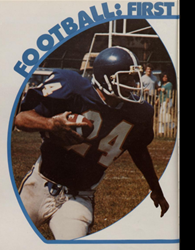
Football Image, 1981

Although a high point in terms of venue came via playing select Saturday home and away games at Giants Stadium in the New Jersey Meadowlands from 1977 through 1981.  In addition, Seton Hall played in the annual “Pride Bowl” of 1980 against Cheyney State although in a losing effort (0-26) a benefit contest of note for that time period.  The final years included contests played against Catholic University of America, Hofstra, Pace, Montclair State, Coast Guard Academy, Rochester, Wagner, C.W. Post, Kings Point MMA, Kean, and others.
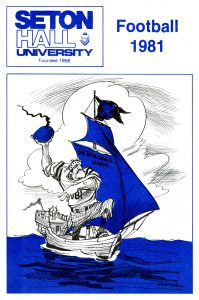
Despite being competitive and hopes of improved records, 1981 marked the last season of Seton Hall Football to date as the school discontinued the sport in 1982.  Despite its absence, the legacy of the sport lives on in the heart and memories of Seton Hall alumni and local football fans in particular.

More information on College Football in general and particular can be found within the following Internet links along with many other sources that can be referenced upon request . . .

Original Rules of Football – https://www.espn.com/college-football/story/_/id/27356104/the-original-rules-college-football

Rules Update – https://www.profootballhof.com/football-history/history-of-football/1869-1939/1876-first-rules-for-american-football-are-written/

College Football – https://en.wikipedia.org/wiki/College_football

For more information regarding the History of Football and other Seton Hall Athletics History topics please feel free to contact Alan Delozier, University Archivist via e-mail at: Alan.Delozier@shu.edu or by phone at: (973) 275-2378.
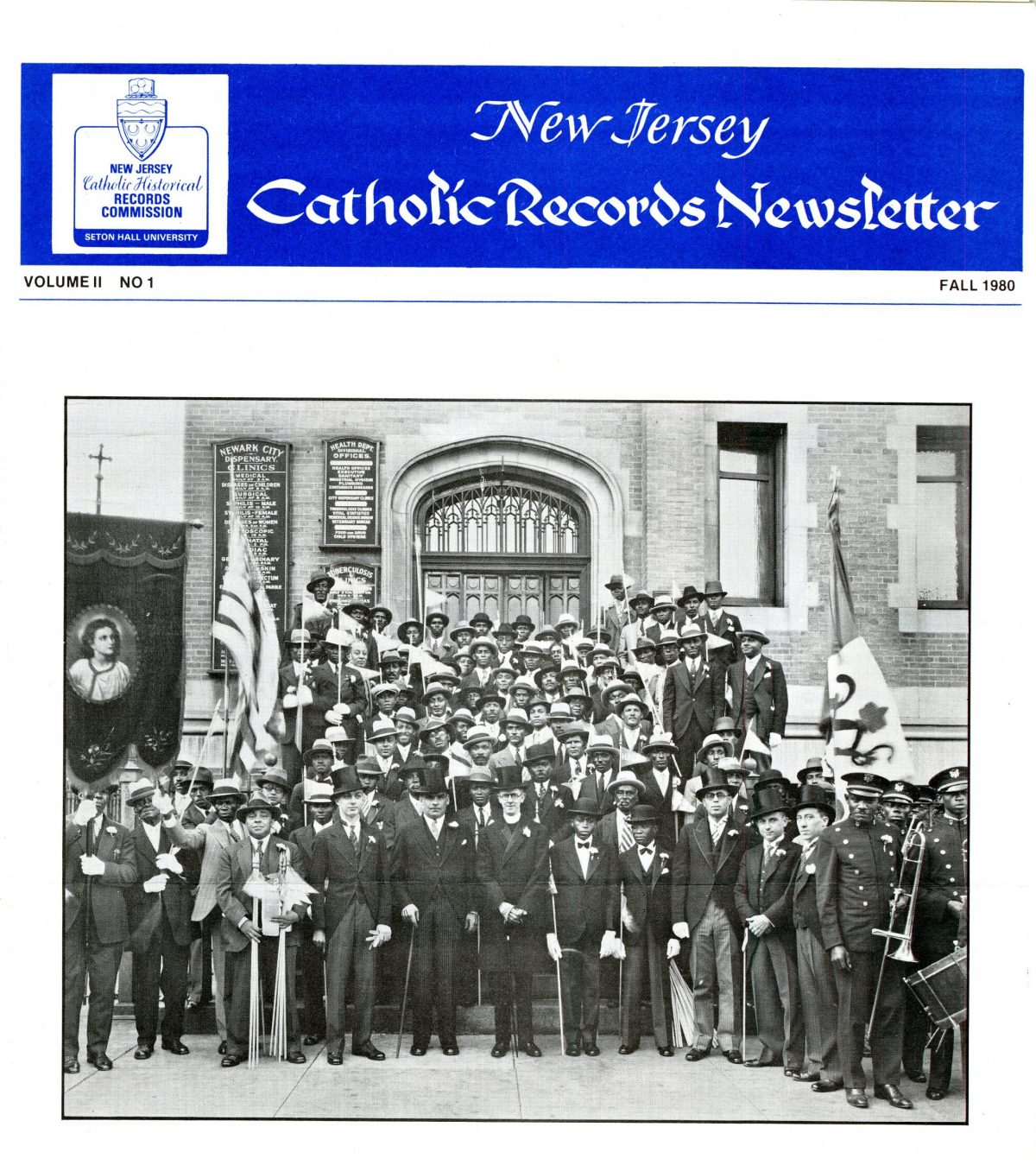
African American Catholic Month &; Archival Resources

November is National Black Catholic History Month and the Monsignor William Noé Field Archives & Special Collections Center honors this legacy by preserving long-term holdings and continually acquiring relevant resources in order to provide our research community with valuable primary source materials for consultation purposes year round. With this in mind, our Research Center celebrates the contributions of the three million plus African American Catholics on a national and local level alike in providing depth to this ongoing story that directly reflects upon our main collecting areas and research constituencies especially in this time of celebrating the importance of diversity.

The historical legacy of African Americans who adhere to the teachings of Catholicism within the United States has a proud history despite having to overcome obstacles to establish a respected presence within the Church.  With this in mind, our Research Center celebrates the contributions of the three million plus African American Catholics on a national and local level alike in providing depth to this ongoing story that directly reflects upon our main collecting areas and research constituencies especially in this time illustrates the importance of diversity in all its forms.

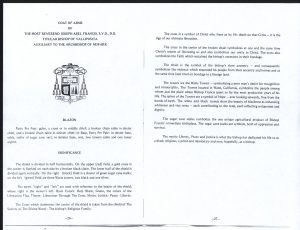
Coat of Arms Significance – First African American Bishop, Joseph Francis, SVD (1923-1997)

In specifically theological terms, African American faithful typically adhere to conventional Catholic doctrine.  However, this often connects with ties to traditional and honored practices dating back to the days of Pre-Emancipation and beyond through the development of various African-based Protestant traditions that celebrated close community ties and sought to worship God while also promoting the need for combating prejudice and establishing wide-spread social justice among their congregants.

Black Catholics went on to attain a higher status with the USCCB pastoral letter of “Brothers and Sisters to Us” in 1978 along with the publication of various historical tracts including the trailblazing: The History of Black Catholics in the United States, by Rev. Cyprian Davis (New York: Crossroad, 1990) [BXZ1407.N4 D38 1990] along with others connected to this subject that can be found within our University Libraries Catalog from the Main Collection and/or Turro Seminary Library in particular.  These two milestones combined with academic life and coursework linked to the Black Catholic Movement from the Late 1960s to the present has been beneficial to establishing understanding of the many spiritual and symbolic contributions made by African Americans within the Church as a whole.

The Venerable Pierre Toussaint (1766-1853)

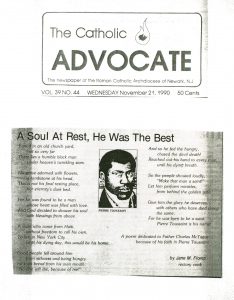
Counted among our most relevant collections include the “Cause for Pierre Toussaint Collection” [MSS 0036] which reflects on one of the earliest and most notable Black Catholics who lived during the Early American Republic and lived by all accounts a holy and selfless life of service.  As the abstract to this collection highlights:  “Pierre Toussaint was born into slavery in 1766 in what is now Haiti. He moved with his family and master to New York where he lived until his death. He spent his life helping the sick, homeless, and orphaned. He died in 1853 (The year the Diocese of Newark was founded). The Pierre Toussaint Guild was created to advocate his induction into sainthood. His body was exhumed in November of 1990 as part of the investigation into the cause for his sainthood.”

The Collection proper is broken down in the following manner within the Scope and Content Notes section:  “This collection primarily consists of newspaper clippings describing the life and cause for sainthood of Pierre Toussaint, as well as photographs, correspondence, and mass cards related to Pierre Toussaint. Many of the news clipping focus on the exhumation of the Pierre Toussaint’s body in 1990. Photographs are generally reproductions of illustrations of Pierre Toussaint or of Jane Flores at places and events related to Pierre Toussaint.”  More information on these Papers can be found via the following link: https://archivesspace-library.shu.edu/repositories/2/resources/203

In addition the New Jersey Catholic Historical Commission (NJCHC) has various resources that have been written and maintained by membership over the years.  From various publication extracts to NJCHC symposium data for “New Jersey’s Black Catholic Heritage: Discovering Our Past in the Present” (January 31, 1991). The link to this organizational homepage can be found via the following site: http://blogs.shu.edu/njchc/  Specific examples include back issues of the NJCHC available in full-text pdf form including the following issues:

NJCHC Newsletter – https://scholarship.shu.edu/njchc/24/

New Jersey Catholic Records Newsletter, Vol. 9, No.3

New Jersey Catholic Historical Commission

Document Type – Newsletter,  Publication Date – Summer 1990

Abstract – The “Birth of Christ The King Parish, Jersey City” looks at some of the first establishments of African-American Catholic parishes in the Diocese of Newark.  https://scholarship.shu.edu/njchc/22/

New Jersey Catholic Records Newsletter, Vol. 10, No.2

New Jersey Catholic Historical Commission

Document Type – Newsletter,  Publication Date – Winter 1991

https://scholarship.shu.edu/njchc/34/

New Jersey Catholic Records Newsletter, Vol. 10, No.3

New Jersey Catholic Historical Commission

Document Type – Newsletter,  Publication Date – Spring 1991

https://scholarship.shu.edu/njchc/37/

New Jersey Catholic Records Newsletter, Vol. 13, No.2

New Jersey Catholic Historical Commission

Document Type – Newsletter,  Publication Date – Winter 1994

https://scholarship.shu.edu/njchc/36/

New Jersey Catholic Records Newsletter, Vol. 13, No.3

New Jersey Catholic Historical Commission

Document Type – Newsletter,  Publication Date – Spring 1994

Imani Newsletter of the Office of the African American Apostolate of the Archdiocese of Newark, c. 1996

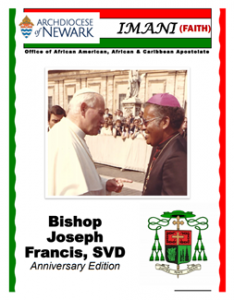
Another figure connected to the NJCHC, but to the Archdiocese of Newark in particular is the first African American prelate for the See, Most Rev. Joseph Francis, SVD (1923-1997) who was made an Auxiliary for the Archdiocese of Newark in 1976 and retired in 1995 had a lasting impact on the spiritual impact on the Northern New Jersey community and beyond.  More information on his life and activities can be found within the following published compilation published by the Archdiocese of Newark . . .  https://www.rcan.org/sites/default/files/files/Newsletter%2C%20Bishop%20Francis%20Edition(1).pdf

Other important sources of note include, but are not limited to various Seton Hall-related resources (going back to c. 1912), but other Special Collections (including ones that require permission to review) can be found via the link to our ArchivesSpace site catalog can be found here . . .  https://archivesspace-library.shu.edu/

In addition, the University Libraries Catalog features the following titles in relation to the wider African American Catholic experience . . . https://setonhall.on.worldcat.org/search?clusterResults=off&queryString=african+american+and+catholic and the search sequence of Black Catholic(s) . . . https://setonhall.on.worldcat.org/search?databaseList=283&queryString=black+and+catholic&clusterResults=false  In addition, here are specific titles covering the African American Catholic community and Newark . . . https://setonhall.on.worldcat.org/search?databaseList=283&queryString=african+american+and+catholic+and+newark&clusterResults=false

Within the University Libraries Homepage is a Research Guide Section that also ties into key documents that highlight and explain African American Catholic highlights from the Vatican and other important resources in general and particular . . .

https://library.shu.edu/collections-guide/african-american-studies

For more information related to African American/Black Catholics found within our repository and research resources in general can be requested and research appointments scheduled by reaching out to us via e-mail: Archives@shu.edu or by phone at: (973) 275-2378.
Irish Superstitions and Rituals

From Friday the 13th and black cats to tossing salt over one’s left shoulder to ward off evil spirits, superstitions and rituals are rooted in a mixture of religion, mythology, and folklore. They have the power to ward off evil, bring good luck, cure sickness, even stop people from performing certain activities on certain days.

However, every culture is different and what is unlucky in one may be lucky in another. Instead of Friday the 13th, it is Tuesday the 13th that is thought to be unlucky in Chile, Colombia, Costa Rica, Cyprus, Ecuador, Greece, Mexico, and Serbia. For Italy, it is Friday the 17th.

Where a black cat can be thought to mean bad luck, in Ireland it may lead to fortune as “several of the great lake serpents and water-cows of our Irish Fairy Mythology are supposed to guard treasurers; in some instances black cats are similarly employed” (Wilde, 98).

Some of Ireland’s other superstitions and rituals revolve around fairies and goblins, stating,

“…if you cast the dust that is under your foot against the whirlwind at the instant that it passes you, “them that’s in it” (that is, if they have any human being along with them) are obliged to be released” (Wilde, 130).

Then there are those that involve fire, most notably on days of celebration such as May Day and St. John’s Eve or Midsummer’s Eve:

“If a man was to perform a long journey, he leaped backwards and forwards three times through the fire to render himself invulnerable” (Wilde, 49).

“When the fire has nearly expired, and the dancing, singing, and carousing are over, each individual present provides himself with a braune, or ember of the fire, to carry home with him, which, if it becomes extinguished before he reaches his house, it is an omen of impending misfortune” (Wilde, 49).

“Walking around a burning flame during St. John’s Eve or Midsummer’s Eve spares one from being sick the whole year” (Putzi, 196).

Other curious Irish rituals include keeping spiders in a bag to be worn as a pendant or necklace to cure fever. However, if the bag is opened it will cause back luck. To remove a sty on one’s eyelid, the person should point to the direction of a gooseberry thorn nine times while chanting “Away, away, away!”.

But if things still go awry, you find your milk has curdled, you can always blame the fairies!


Other superstitions and rituals can be found in:

Putzi, S. (Ed.). (2008). To z world superstitions & folklore : 175 countries – spirit worship, curses, mystical characters, folk tales, burial and the dead, animals, food, marriage, good luck, and more. ProQuest Ebook Central https://ebookcentral.proquest.com

Wilde, W. R. (1852). Irish popular superstitions. J. McGlashan.

Seton Hall in the World War II-Era

Contributed by Mr. Edward Wightman, Former Research Intern and Student at Rutgers, The State University of New Jersey

The World War Two era was a period of great change not only in the United States but in the world. The war itself directly impacted the world with massive destruction and innumerable lives lost. The aftermath of the war saw the return of thousands of soldiers to the United States all hoping to take advantage of the G.I. Bill and its benefits and pursue higher education at universities throughout the country and Seton Hall was one of these many Universities that experienced this influx of new students returning on the G.I. Bill.

Cover Page of the Veterans Information Guide, c. 1946

The Seton Hall student newspaper The Setonian gives us insight into the impact of the war on students and student life on campus although this source is limited as The Setonian was not running during the years of American involvement of the war despite the university being open. Despite this limitation The Setonian does provide excellent information about the period before and immediately after the war at Seton Hall. In the years leading up to the war there were a number of articles published that ask students about the threat of the rise of Communism, and if students think there will be another large scale global war. The Setonian also has a number of articles detailing the many different student organizations that are promoting peace among world powers including the Pax Romana organization and the Catholic Student Peace Federation. The articles tell us that there were many groups of students in the years between the two World Wars who were advocates of peace and hoped their movement could prevent another great war.

Seton Hall College Bulletin Announcement & World War II, 1942-45

One of the other interesting areas that is briefly mentioned in The Setonian is the opinion of then Seton Hall the Rev. Msgr. James F. Kelley on the rise of both Communism and Facism throughout Europe.  An article in The Setonian dated to March 23, 1937 describes President Kelley’s address at the Eighty First Feast of St. Joseph, during this address Re. Msgr. Kelley expresses his opinion as well as the opinion of the Catholic Church on Communism and its rise. There also is an article documenting a movement by students supporting the Catholic War Veterans of America’s campaign against communism in the United States. The pre war years at Seton Hall as documented by The Setonian depict a level of concern among students about the growing threat of Communism and the fears of another global conflict that were fears shared by many Americans at the time.

The Second World War began September 1, 1939 with the Nazi German invasion of Poland followed by the declaration of war on Germany by France and Britain on September third. The United States would later enter the war following the December 7, 1941 Japanese attack on Pearl Harbor and the subsequent declaration of war on the United States by Nazi Germany on December 11, 1941. As many universities would experience Seton Hall saw a vast majority of its students leave to serve in the war. It was at this time that The Setonian did not run as there were not enough students to run the paper so we have a very limited knowledge of what student life and activity was like at Seton Hall during the years of the war.

Post World War II Veterans Day Parade, c. 1946

The end of World War Two on September 2, 1945 led to the return of the many thousands of soldiers to the United States. These soldiers would be given many benefits under the Servicemen Readjustment Act of 1944, also known as the G.I. Bill. This bill provided returning soldiers with a number of benefits and among these was the ability to pursue a degree at a college or vocational school with tuition paid for by the government. This section of the bill led to an influx of new students at universities throughout the United States and Seton Hall experienced this first hand. The return of students to Seton Hall also brought the return of the student newspaper The Setonian which documented the impact of the students returning to school and those who were pursuing educations on the G.I. Bill. In the aftermath of the war a new column was started in The Setonian called “veteran’s corner” which was a dedicated column providing information for all veterans on campus regarding all manner of topics. We also see a number of articles that describe some of the issues faced by Seton Hall in the post-war period such as shortages of housing and food for the increasing numbers of students among other issues.

College President, Monsignor James Kelley talks with Veterans, c. 1946

The Setonian is a very valuable resource for understanding the aftermath of World War Two and the impact of the G.I. Bill on universities. The many articles published at this time especially those in the “Veteran’s Corner” column are invaluable in providing information about what life was like for returning veterans, and what they were provided with while attending Seton Hall. We also see other articles outside of the “Veteran’s Corner” column discussing the influx of veteran students one such article is titled “Plan For Vets” from March 13, 1946 which is an article that discusses the plan by Seton Hall to manage the influx of veterans at the school and its plans to assist them. Another article is found in the “National College News” column which on November 3, 1946 published an article discussing the problems faced by universities throughout the nation including housing shortages as well as food shortages due to so many new students on the G.I. Bill and those students bringing their families to school with them.

“The Four Freedoms & Seton Hall” Seton Hall Tower, 1944

The World War Two era was a time of great flux for universities throughout the United States as student attendance numbers rapidly decreased during the years of American involvement in the war, and then rapidly increased to all time highs in the years following the war. Seton Hall was among these universities who experienced this impact tremendously, as it faced the challenges of losing many students to the war, and then the challenges of the large number of students pursuing education on the G.I. Bill.

All Saints &; All Souls Days – Early Texts from the Rare Book Collection

The liturgical commemorations that distinguish the feast days of All Saints (November 1st) and All Souls (November 2nd) that are both important times of reflection and veneration by many adherents who believe in the spirit of Christianity.  Along with iconography and dedicated prayers, the most evident means of honoring the memories of those who came before us can be found in the bibliographic record created over time.  This encompasses various accounts, sermons, pronouncements, and legacies of innumerable individuals have recorded relevant declarations throughout the past several centuries and preserved for the ages.

Calendar of Holy Days for November Including All Saints and All Souls, 1723

Within the Monsignor William Noé Field Archives & Special Collections Center, a number of theological-based volumes have been collected by our past and present clergy that honor the prayers of the faithful along with titles on individual saints who have been memorialized over time.  All Saints Day (or All Hallow’s Day) is a time of dedicated solemnity to honor all blessed individuals who have attained canonization especially blessed individuals who do not have their own respective feast day within the calendar.  The start of formal celebrations in regard to sainthood possibly began in Antioch and the inspiration for present day commemoration of November 1st as the Feast of All Saints was first documented by 800 AD within such manuscripts as the Martyrology of Tallaght and Martyrology of Óengus from Éire and spread forward to Bavaria, Nothumbria (England), the Frankish Kingdom (a day of total obligation even prior to its emergence as part of the Holy Roman Empire) along its present-day presence.

First page of the Sermones de t(em)p(or)e et de sanctis: cu(m) omelijs Beati Bernardi Abbatis Clareualle(n)s(is) (1495)

When it comes to individual titles on those canonized located in our stacks, the oldest text devoted to a saint is a compilation of sermons and devotions created by Bernard of Clarivoux. Bernard of Clairvaux (1090-1153 AD) was a native of Burgundy and spent his life as a monastic abbot within the Order of Cistercians (Trappists).  He later became the first Cistercian placed on the Christian Calendar of Saints and was canonized on January 18, 1174 and over half a century later was bestowed with the title: “Doctor of the Church” in honor of his contributions to the faith.  The volume that celebrates his legacy found within our collection is entitled (in the Latin): Sermones de t(em)p(or)e et de sanctis: cu(m) omelijs Beati Bernardi Abbatis Clareualle(n)s(is) ordinis Cisterciensis; cu(m) no(n)nullis ep(isto)lis eiusde(m) (English: Conversations about t [em] p [or] of the holy places [m] omelijs St. Bernard Abbot Clareualle [n] [is] a Cistercian [m] no [n] with no ep [this] issue eiusdë [m]) (Impressi Venetijs : Per Iohannem Emericu[m] de Spira Alemanu[m], sub anno I[n]carnatio[n]is D[omi]nice, 1495).  [Call Number is: BXZ890.B5377 1495]

Preface page to Sermones de t(em)p(or)e et de sanctis: cu(m) omelijs Beati Bernardi Abbatis Clareualle(n)s(is) (1495)

When it comes to the commemoration of All Souls Day (LatinCommemoratio Omnium Fidelium Defunctorum also known as the: “Commemoration of All the Faithful Departed” or the “Day of the Dead”) in celebration of the faithful who are counted among the deceased.  In terms of textual origins, the practice of praying for the corpus dates can be traced back as far as the Book of Maccabees 12:42–46.

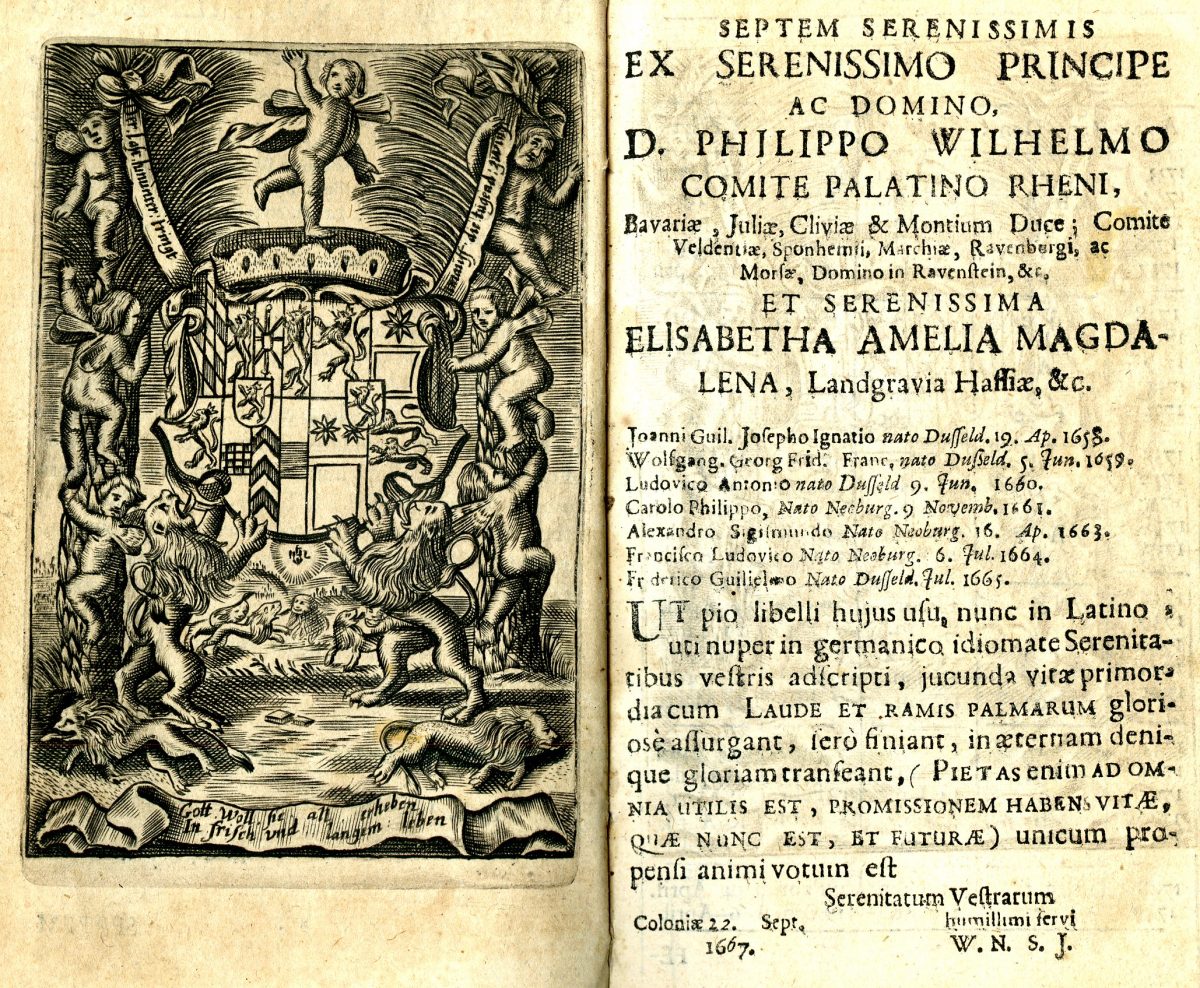
Frontispiece of Coeleste palmetum variis officiis, litaniis, precibus, & psalmis poenitentialibus (1723)

Within our own library there are a number of works that relate to meditation and devotionals can be found within the book (in Latin) entitled: Coeleste palmetum variis officiis, litaniis, precibus, & psalmis poenitentialibus, &c. : nec non vitis sanctorum per annum, cum orationibus adjunctis : ad ubertatem & sacras delicias excultum, ornatum, munitum : opera (Coloniae Agrippinae : Sumptibus Petri Putz, 1723) (English: Sixto offices litanies, prayers, instructions, explanations of Psalms, meditation controversy, Sec. Nor does the holy lives a year with prayers in the circumstances, choice of Scripture and the Fathers admitting the evidence and opinion to the richness and holy . . . developed, given assumed.) [Call Number: BXZ2184.N34162 1723] written by Wilhelm Nakatenus, S.J.  Reverend Nakatenus (1617-1582) was a Jesuit priest, author and preacher who is considered “one of the important prayer book authors of modern times” by several theologians throughout the years. This particular edition is one of only six found within different libraries globally which adds to its uniqueness for those read this valuable work.

For more information on titles by and about various Saints (1300-1800 AD) found within Archives & Special Collections Center Catalog please consult the following link . . . https://setonhall.on.worldcat.org/search?sortKey=RECENCY&databaseList=&queryString=Saint*&changedFacet=year&overrideStickyFacetDefault=&selectSortKey=RECENCY&expandSearch=on&overrideGroupVariant=&overrideGroupVariantValue=&scope=wz%3A3042&subformat=Book%3A%3Abook_printbook&year=custom&yearFrom=1300&yearTo=1800&author=all&topic=all&database=all&language=all&materialtype=all

Additionally, a number of works about All Souls Day and its symbolism can be located within the University Libraries Catalog . . . https://setonhall.on.worldcat.org/search?databaseList=283&queryString=all+souls+day&clusterResults=false

For more information on Church Feasts, Saints, Rare Books, and other related topics please feel free to contact our Center by e-mail: Archives@shu.edu or via phone at: (973) 275-2378.


United Nations & Seton Hall Connections

“It’s Your World” serves as the maxim for the United Nations (UN), an organization that has been active in the promotion of fundamental human rights issues along with countless altruistic pursuits across the globe since the adoption of its charter in 1945.  The work being done by the UN on a community-wide level encompasses the importance of fostering peace and positive social relations, eliminating illiteracy, and supporting the need for wide-spread and sustained educational initiatives.  Each of the concepts also mirror the academic mission of Seton Hall and its impact upon the campus community in a myriad of ways.

Promotional flyer of the United Nations, c. 1950s

With October 2020 marking the 75th anniversary of the United Nations this is an opportunte time for Seton Hall to recognize their relationship with this worldwide association to build public awareness of its goals, sponsoring special thematic programs, and offering academic-centered links to classroom instruction and research opportunities among other activities.  In recent years for example, Seton Hall has sponsored a Model UN team, UN Summer Program, the Center for UN and Global Governance Studies and a Certificate Program in UN Studies among other connected endeavors.  This trend of advocacy has also been strengthened through the present-day work of the School of Diplomacy and International Relations and those connected with this entity, but the story of UN and SHU collaboratives can be traced back a number decades ago.

From the post-World War II period forward, Seton Hall has been actively involved with various aspects of world affairs and issues that impact the planet in general, and the UN in particular, with the creation of an International Relations Club during the late 1940s.  In addition, the administration of Setonia has been very active in promoting the UN with regular correspondence between organization officials and event planning in tandem with frequent instances of faculty and connected student work.  This outreach began in earnest under the leadership of Monsignor John McNulty during the 1950 and heightened further throughout the presidential term of Bishop John Dougherty (1959-69).  Bishop Dougherty himself personally, or jointly sponsored a number of different symposia and philanthropic events that connected with UN causes both around Newark, and across most of Northern New Jersey during the 1960s.

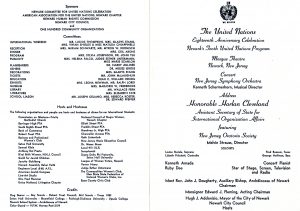
Program From A Special UN-Centered Event in Newark, 1963

Counted among the affiliated organizations with the UN that have established close bonds with Seton Hall include the United Nations Association of the United States of America (UNA-USA) which has enjoyed a productive partnership over the last several decades. The UNA-USA (formerly known as the American Association for the United Nations, or AAM during the 1940s) bills itself as a unique alliance constituted of Americans who devote themselves to aid through action to the UN and its mission. With a membership that numbers over 20,000 (across 200 chapters across the nation), those who belong to any UNA-USA chapter are cohesive in their commitment to positive global engagement based explicitly on the goals set forth within the UN Charter proper.

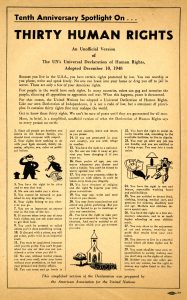
UN Human Rights Overview Produced By The AAM, 1948

In 2011, Seton Hall acquired the bulk of UNA-USA archival records from its then-national headquarters in New York City and includes materials that date back to the AAM years (the first iteration of the UNA-USA) into the previous decade (c. 1943-2011).  Individual file entries include: Board Minutes, Members’ Day (i.e. UN Day), National Convention Transcripts, Members’ Day (i.e. UN Day), Policy-Iran Dialogue, and various Chapter Files from across the entire United States.  In addition, these holdings have been further enhanced by a number of UN and other UNA-USA produced journals and promotional materials including: The Interdependent, Global Agenda, Vista, and the Washington Weekly Report among others.

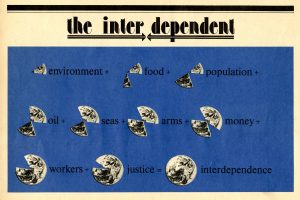
Inaugural Edition Cover of the Interdependent, 1970s

October and early November also mark milestones in the lives of prominent women who are noted for their long-standing advocacy work and have an enduring presence within our various UN-related collections.  The first is Eleanor Roosevelt (October 11, 1884 – November 7, 1962) who served as former Presidential First-Lady, Delegate to the UN General Assembly, and was commissioned as the first Chairperson of the UN Commission on Human Rights during the 1940s.

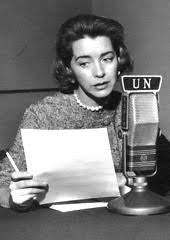
A number of materials within our UNA-USA files and contextual reference holdings bear her imprint and influence which has aided our research community in looking at the overall scope of the United Nations and its founding documents.  Another important figure is Ms. Marsha Hunt (b. October 17, 1917) who just celebrated her 103rd birthday.  Ms. Hunt is a retired actor, model, and activist who appeared in many acclaimed films including Pride and Prejudice (1940) among many others during her time in Hollywood.  During the early 1950s, Ms. Hunt became deeply involved with UN-centered projects including the elimination of world hunger, building homeless shelters, awareness of climate change, and support of universal peace activism among other related causes.

Ms. Marsha Hunt at the UN Microphone, c. 1950s

In an interview conducted with the author in 2018, Ms. Hunt noted that she began her life of advocacy after a return journey from around the world in 1956 that resulted in her credo that: “. . . we’re all a part of the planet.”  From here she served in a number of capacities including an affiliation with the National Board of the UNA-USA along with a stint as their Vice-President while simultaneously engaging in numerous other activities on behalf of regional chapters in California and New York City that also complimented frequent speaking engagements across the country.  Among her most effective contributions to the cause of UN involvement came with her producing and co-writing a documentary film entitled: “A Call From The Stars” released in 1960 that features a number of famous actors that have worked with Ms. Hunt including Bing Crosby, Paul Newman, and Harry Belafonte among others along with various radio programs and composing the words and music to the song: “Cry of a Refugee Child” during that same decade.  When asked about the value of researching UN and UNA-USA activities, Ms. Hunt concluded that the importance is: “To learn about all the UN specialized agencies . . . to give audience members literature so that they might learn more.  I never spoke of politics but only of helping people who were hungry and in need . . . Be a part of the planet, not the politics . . . “ continues to serve as her overall message.

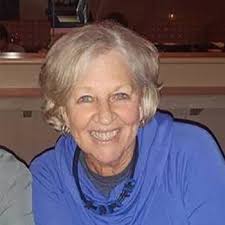
Other individuals including Ms. Toby Gati (former U.S. Assistant Secretary of State for Intelligence and Research, 1993-97 and former Senior Vice President of the UNA-USA) who have supported the collection, Professor Courtney Smith of Seton Hall who facilitated the donation of materials to our repository, Mr. Edward Elmendorf (President and Chief Executive Officer of the UNA-USA) and many others including Ms. Sarah Burns, a friend and associate of Marsha Hunt who has served on the Boards of the National Women’s Political Caucus and the National Council of UNA-USA among other organizations has been very supportive of our efforts at Seton Hall on behalf of the UN and its lasting significance.

Ms. Sarah Burns, c. 2000s

Ms. Burns in an interview done in conjunction with the author in 2018 provides additional and important context as a long-time advocate of the UN and UNA-USA especially from her grade school days when she learned of the organization in the Weekly Reader along with an early visit to the UN building in New York City.  These seminal events led her to reflect that: “I was immediately mesmerized. I became fascinated by the UN and fell in love with it: I wanted to become a part of it and its important mission. Thus it became my professional goal to become a part of the United Nations and to help carry out its important work.”  This involvement escalated further to include a major appointment as the Committee for Non-Governmental Relations (NGO) Liaison and later the Deputy Director for the Washington Office of the UN Development Programme (UNDP) where she headed this important agency for many years.  This focus included extensive collaboration with the UNA-USA National Office while also serving as a representative to various governmental agencies while also engaging with media outlets including radio, television, international symposia and other means of communication to share needed information updates.  When it comes to the need for continued research with UN and UNA-USA documentation, Ms. Burns noted that: “I hope researchers who come to see and work with this collection at Seton Hall University will discover the invaluable work that the UN does to protect refugees, eradicate poverty, support family planning and keep the peace. I hope that researchers and students will understand the importance of the UN and the meaningful role that those who support it can play, in particular those who can shed a public spotlight on the UN and its work, such as actors, performers and artists.”

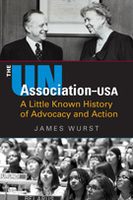
Cover of the Book – The UN Association-USA: A Little Known History of Advocacy and Action (2016)

A number of researchers have already availed themselves of UNA-USA holdings in particular as long-time author, Mr. Jim Wurst wrote a detailed study of the organization in his book entitled: The UN Association-USA: A Little Known History of Advocacy and Action (Boulder, CO: Lynne Rienner Publishers, 2016), Mr. Wurst spent a number of years reviewing the UNA-USA collection and this work drew in large measure upon resources within UNA-USA Papers located within our repository combined with research collaboration efforts made with the School of Diplomacy and International Relations on campus.  As the preface in this volume noted in effect: “The issue of international welfare combined with historical preservation offers our research community the opportunity to learn more about how the UNA-USA developed over time and continues to move forward into is seventh decade of activity.” Even today the work of Mr. Wurst has inspired others to collaborate with us on research projects that connect to the UNA-USA including a doctoral student from the Netherlands who is communicating with the Center via e-mail during the Fall 2020 semester at this time of Covid quarantine precautions and international travel restrictions in mind.

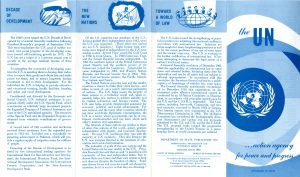
UN Promotional Brochure, c. 1960s

Along with the UNA-USA holdings, Seton Hall features a number of collections that connect to the UN and also others which have unique and specialized content. These include, but are not limited the following Manuscript Collections . . .

Nancy Forsberg Papers (Mss 0022) Nancy Elizabeth Forsberg was an expert in Hebrew culture and education. She was ordained in June 1951 and became pastor of the First Congregational Church in Union, New Jersey in 1967.  This collection includes various files related to UN activities including the following topic areas: American Association of the United Nations (AAUN), Church Center for the United Nations; Israel and the UN; Middle East Affairs, 1954-67; Music and Prayer; Plays; Speaker Services; Specialized Agencies of the UN; United Nations 1952-62; UN Charter and Declaration of Human Rights; and Visual Aids among other content.

Thomas and Margaret Melady Papers (Mss 0072) Ambassador Thomas P. and Dr. Margaret B. Melady have been involved in diplomatic and international affairs since the 1950s, particularly on the continent of Africa along with multiple diplomatic posts for the United States.  Former ambassador and SHU faculty.  This collection includes various files related to UN activities including the following geographical areas: Angola, Botswana, Cameroon, Equatorial Guinea, Nigeria, and Sengal along with the Africa Service Institute among other entities abroad.

Donald M. Payne Papers (Mss 0078) Donald M. Payne was New Jersey’s first African American congressional representative and served as New Jersey’s 10th district representative from 1989-2012. During his time in Congress, Congressman Payne served on a number of important committees and was a leading advocate for education, democracy, and human rights. He has various files and photographs related to the United Nations within his collection holdings during his time in Congress.

Other prominent figures in our Manuscript Collections area from Rev. Edward Flannery to Msgr. John Oesterreicher to Sister Rose Thering also have UN-related content in their respective papers especially in regard to Israel.  Additionally, New Jersey legislator Mr. Marcus Daly has an original manuscript of lecture notes entitled: “The Second Period of Collaboration: The United Nations” from the 1950s that focuses on the state of organization and the world in honor of its 15th anniversary of works.  Further information on these and other UN references found within our Manuscript Collection can be provided via the following link – https://archivesspace-library.shu.edu/search?q[]=%22United+Nations%22&op[]=&field[]=keyword&from_year[]=&to_year[]=&page=1

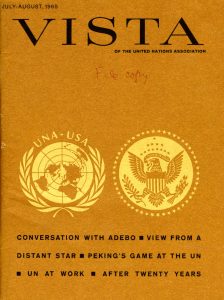
Cover of the Journal – Vista produced by the UNA-USA, 1960s

For more perspective on our academic partner, background details on the History and Mission of the Seton Hall University School of Diplomacy and International Relations can be found here – https://www.shu.edu/diplomacy/mission-history.cfm

In addition, Professor Lisa DeLuca of the University Libraries has produced a well-developed Reference Guide on the United Nations which can provide the researcher with relevant resources related to the United Nations and its operations.  The site can be accessed here – https://library.shu.edu/un

For more information on documents related to the United Nations and the UNA-USA and other international or local queries alike please feel free to contact the Monsignor William Noé Field Archives & Special Collections Center via e-mail at: Archives@shu.edu or by phone at: (973) 275-2378.
Sister Rose Thering – A Centennial Remembrance

“No one who ever brushes shoulders with Sister Rose can forget the experience.  Her unique charism, blending warmth with idealism, moves everyone she meets.  She is also a team player who serves on many teams, all with the same fervent ideals.”

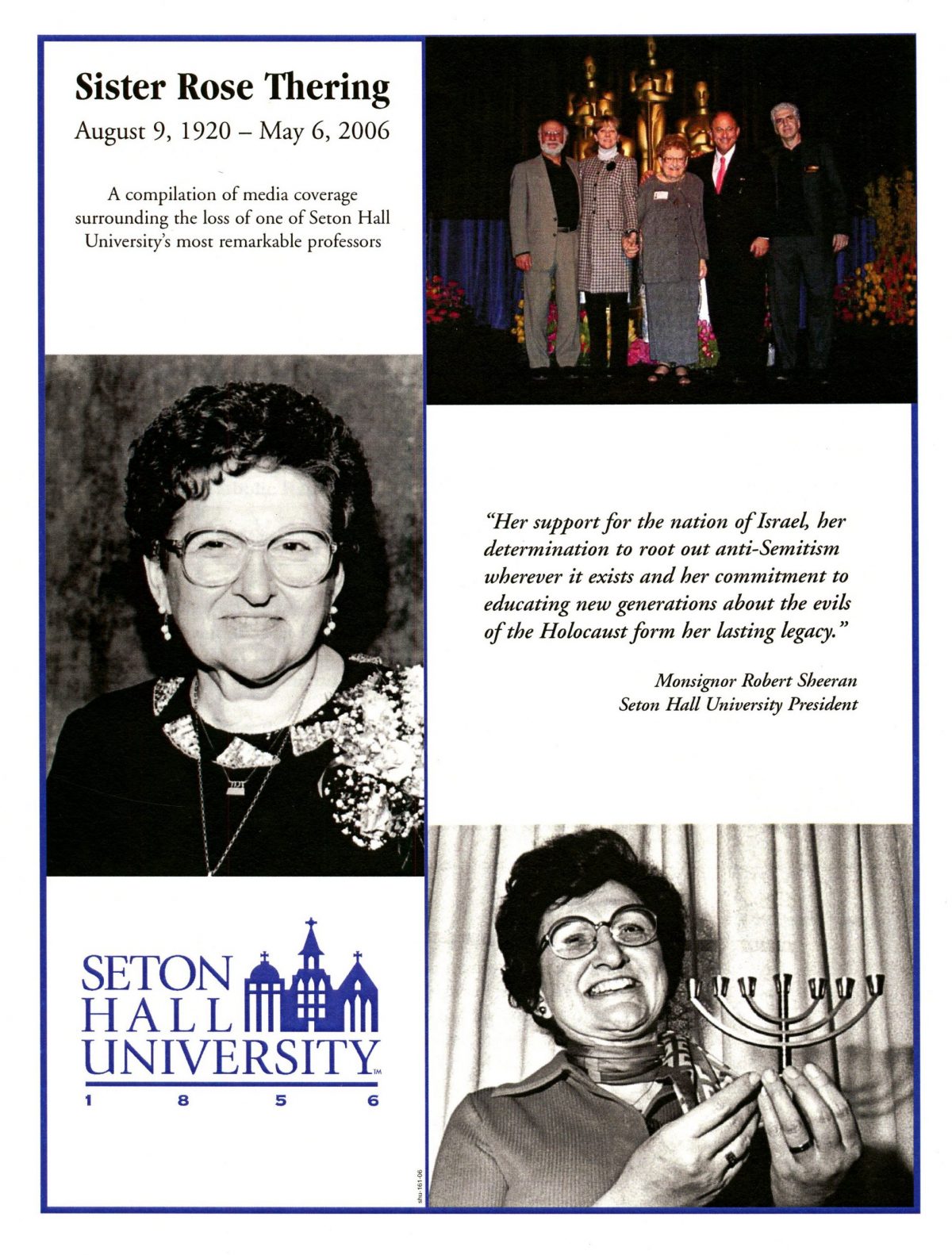
This passage was written to summarize the legacy of Sister Rose Thering upon the receipt of an honorary degree bestowed by Seton Hall University in 2000. These remarks show that the esteem she was shown in life was profound and remains ever strong even a decade after her death six years later.  Her life and works are diverse and continuously honored not only on the campus, but also on a global level alike. Sister Rose (as she was affectionately known) was most widely noted for her advocacy of Israel and promoting the spiritual and educational importance inherent within Christianity and Judaism.  Her respect for each religious tradition entailed a perpetual celebration of the uniqueness found within each faith and fostering respectful dialogue between both religious traditions whenever possible.  This became one of her most lasting contributions to humankind.

Tribute to Sister Rose Thering, Memorial Card, 2006

Rose Elizabeth Thering was born on August 9, 1920 in Plain, Wisconsin and entered the order of Racine Dominican Sisters at the age of 16.  She later earned her academic credentials that included an undergraduate degree from Dominican College (1953), master of arts from the College of St. Thomas (1957), and a doctorate from St. Louis University (1961) before embarking on her long-standing work as an educator.

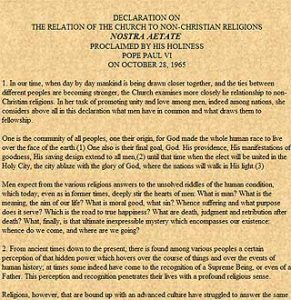
The doctoral dissertation written by Sister Rose focused upon the negative treatment of Judaism found in Catholic-produced textbooks.  The findings of this study were utilized by Cardinal Augustin Bea, a German Jesuit priest who during the Second Vatican Council used the work of Sister Rose for perspective that resulted in the 1965 document: Nostra Aetate (“In Our Age”), A Declaration on the Relation of the Church with Non-Christian Religions, which came down to the following major pronouncement in regard to the Crucifixion of Christ: “. . . what happened in his passion cannot be charged against all the Jews, without distinction, then alive, nor against the Jews of today”. As regarding how this issue was to be handled in catechetical instruction, it added, “The Jews should not be presented as rejected or accursed by God.”

Text of Nostra Aetate, 1965

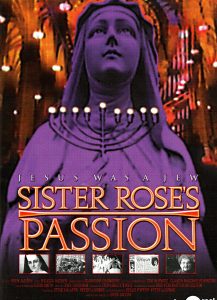
This adherence to Nostra Aetate in turn became a lifelong cause for Sister Rose where she advocated for Christians to understand and embrace this message of toleration and bring the principles from print to real life recognition.  Her activism resulted in fighting Anti-Semitism and becoming more involved in community initiatives where she was one of the founding forces behind the National Christian Leadership Conference Leadership Conference for Israel, United States Foreign Relations Committee, and the United Nations Educational, Scientific and Cultural Organization (UNESCO) among many others.  In addition, Sister Rose became a charter member of the New Jersey Commission on Holocaust Education where her work led to required instruction of the Holocaust and Genocide throughout all New Jersey Public School systems.  Her outreach was so widely known that a film about her activism entitled: Sister Rose’s Passion released in 2004 was later nominated for an Academy Award.

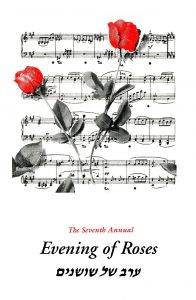
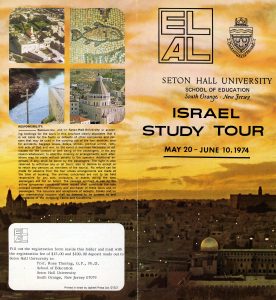
Even though she was a citizen of the world, Sister Rose made an important and lasting mark on Seton Hall when she arrived on campus in 1968 through her work as a faculty member in the College of Education.  She advanced to the rank of Professor and was elected Chair of Secondary Education before her official retirement in 1989.  Sister Rose further helped to enhance the Institute of Judaeo-Christian Studies, conducted over 50 tours of Israel and countless workshops on Judaism that helped lead to the origin of the Menorah Studies Program that led to the Graduate Department of Judaeo-Christian Studies founded in 1974.  She later became a Professor Emerita at Seton Hall and the Sister Rose Endowment Center named in her honors continues to the sponsor the annual “Evening of Roses” event where leaders in both the Jewish and Christian communities were honored for their contributions to mutual religious understanding.


Publications Celebrating the Work of Sister Rose Thering, 1974-2000


In addition to the memories and testimonials that remain, the Monsignor William Noé Field Archives & Special Collections Center houses the Sister Rose Thering Papers (MSS 0016) consisting of various works that show more detail on her life and work over the last century.  The following abstract provides an overview of this collection which is available for research consultation . . .

The Rose Thering Papers (1944-2005) consist of the professional and personal papers of Sister Rose Thering. The collection includes writings, correspondence, speeches, travel information, and subject files. Most of the material dates from Sister Rose Thering’s time in New Jersey working for the Institute for Judaeo-Christian studies, and documents her teaching and scholarly activities, her work for the state of New Jersey in creating legislation for the teaching of the Holocaust, her international activism, and her travel to gives talks to a wide variety of audiences. The materials also demonstrate the varied research interests of Sister Rose that are located in specialized subject files.

More details on this collection can be reviewed via the following link . . .

https://archivesspace-library.shu.edu/search?utf8=%E2%9C%93&op%5B%5D=&q%5B%5D=thering&commit=&field%5B%5D=&from_year%5B%5D=&to_year%5B%5D=

In addition, the Archives & Special Collections Center along with the University Libraries of Seton Hall contains a number of books authored by and about Sister Rose along with various articles that highlight her research and varied pronouncements . . .

https://setonhall.on.worldcat.org/search?databaseList=283&queryString=Rose+Thering&clusterResults=false

For more information regarding Sister Rose Thering along with other figures related to the Judaeo-Christian Studies program and its history please feel free to contact us via e-mail at: Archives@shu.edu or by phone at: (973) 275-2378.
 

Family History Month

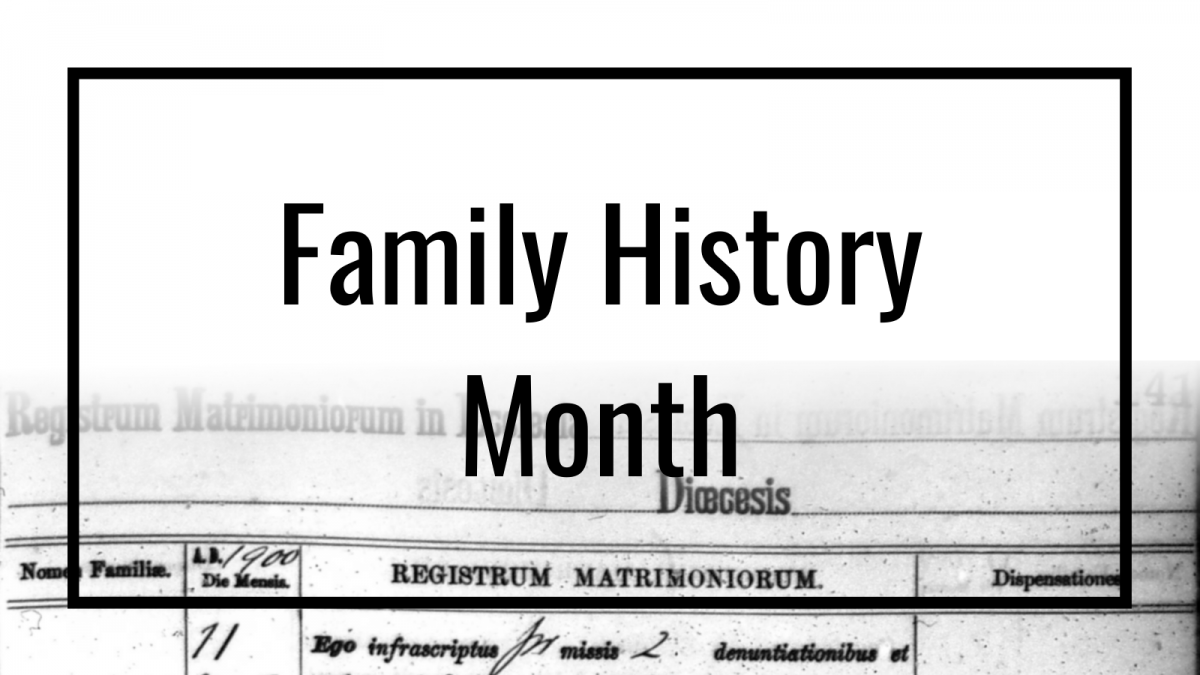
This October, in celebration of Family History Month, explore the Genealogy Resources the Archives & Special Collections has from Catholic parishes and various Catholic cemeteries in the Archdiocese of Newark, comprising of Bergen, Essex, Hudson, and Union Counties. Find your ancestors and discover clues about their life! While we encourage researching family history with our collections, we do so by asking you to submit a Genealogy Research Request Form where we will perform a FREE 1 HOUR search on your behalf. Please note we do not search for baptismal, communion, confirmation, or marriage records post-1930 because of privacy concerns.

If you have further questions about our collection, or your family history research, please contact Jacquelyn Deppe, the Special Collections Assistant, via e-mail: jacquelyn.deppe@shu.edu or by phone at: (973) 761-9476.

Pope Saint John Paul II & The Silver Anniversary of His Journey to Newark

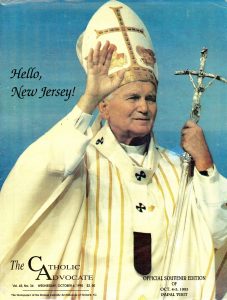
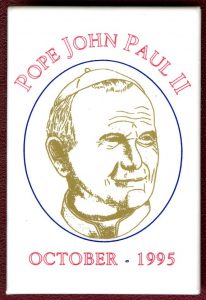
Sto Lat! This was a typical greeting shared by Pope Saint John Paul II whose words and outreach touched millions of individuals around the world during his lifetime and beyond.  This week marks a milestone for the local community when Pope Saint John Paul II visited the Eastern United States between October 4-8, 1995 with a special excursion to Newark and surrounding communities during the first two days of this much anticipated spiritual pilgrimage.

Cover of the Catholic Advocate heralding the arrival of Pope Saint John Paul II – October 4, 1995

The choice to visit Newark was well-summarized by Mr. Jerry Filteau, a columnist for the National Catholic Reporter who offered the following prospectus for those unfamiliar with the deep-rooted diversity found within the city and surrounding communities:

“Newark viewed as place of hope,” In visiting the Newark Archdiocese, Oct. 4 and 5, Pope John Paul II will find a microcosm of the church and the nation . . . the archdiocese has 11 distinct offices just for racial and ethnic apostolates — Hispanics, African-Americans, Chinese, Filipinos, Haitians, Irish, Italians, Koreans, Poles, Portuguese and Vietnamese.  The Newark Archdiocese’s Catholics are the local teachers and retail clerks, police and meat cutters, homemakers and shop owners.  They’re the airline employees, truckers, railroad workers, shippers and dockworkers of Newark, Jersey City, Elizabeth and Bayonne, one of the nation’s busiest transportation hubs. They’re the professionals and corporate executives who live in affluent Bergen County suburbs . . . “

In regard to the first chapter of the journey, Pope Saint John Paul II arrived at the Newark International Airport and met with various dignitaries prior to his first major talk before the United Nations General Assembly as a prelude to his day of activities in the “Brick City’ and environs.

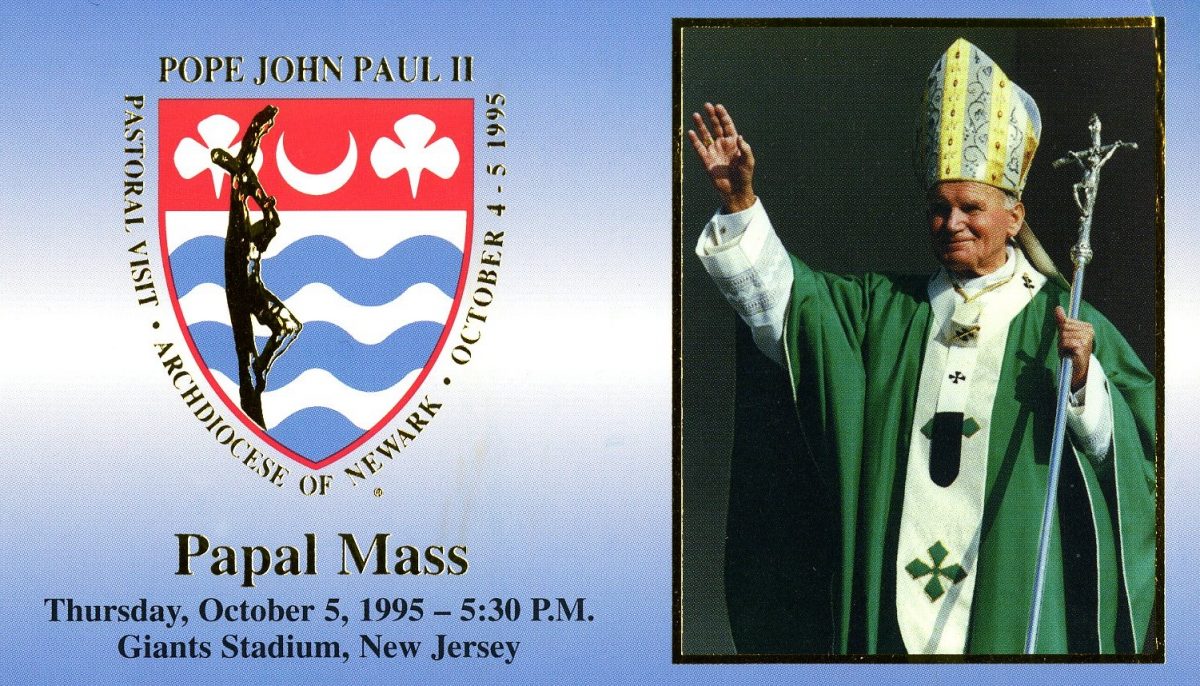
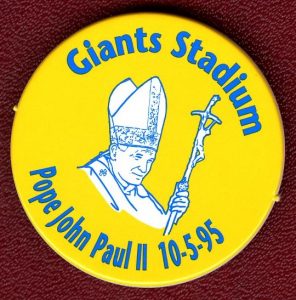
The morning of October 5th Pope Saint John Paul II celebrated Mass at Giants Stadium in East Rutherford before 85,000 individuals where Pope Saint John Paul II in his homily expressed those present and millions watching on television that “Today we are celebrating the Good News of God’s Kingdom here in Giants Stadium, in the Archdiocese of Newark in New Jersey – ‘The Garden State’ . . . “ which was greeted with enthusiastic applause.  Moreover, he reminded the assembly of the ways in which the church has “made a home” in this country, embracing people of many different cultural and ethnic backgrounds. Pope Saint John Paul II delivered his sermon during an unforeseen downpour in which he quipped to the assemblage that: “I see the people of New Jersey know how to praise God in joyful praise and song, even in the rain.” . . . “water drenched faithful that “water is a sign of life, a sign of God’s blessing!”  This provided a graceful note upon which to end the ceremony and inspire the crowd.

That evening, Pope Saint John Paul II celebrated evening prayer at the Cathedral of the Sacred Heart located in downtown Newark. On this occasion, the edifice was elevated to Minor Basilica status to henceforth be known as the Cathedral Basilica of the Sacred Heart.  This marked an enduring monument to the brief, but memorable time that Pope Saint John Paul II spent in our neighborhood.


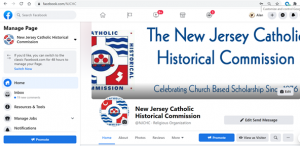
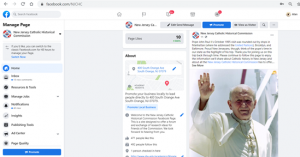
The New Jersey Catholic Historical Commission (Headquartered within the Monsignor William Noé Field Archives & Special Collections Center) is also celebrating this occasion during early October with commemorative posts that are archived for reference and found on our Facebook Page via the following link: https://www.facebook.com/NJCHC

Screenshots of the New Jersey Catholic Historical Commission Facebook Page & Pope Saint John II, October 2020

In addition, along with our Manuscript Collection on the Visit proper there are more resources related to Pope Saint John II (along with other Pontiffs over the centuries) can be found here via our ArchivesSpace holdings catalog . . .

https://archivesspace-library.shu.edu/search?utf8=%E2%9C%93&op%5B%5D=&q%5B%5D=%22John+Paul+II%22&commit=&field%5B%5D=&from_year%5B%5D=&to_year%5B%5D=

For further information on Papal History and any aspect of Catholic New Jersey please contact us by e-mail at:  Archives@shu.edu or via phone at: (973) 275-2378.
Working with Seton Hall’s Audiovisual Collections

by Kyle Brinster, MS-MLIS candidate at

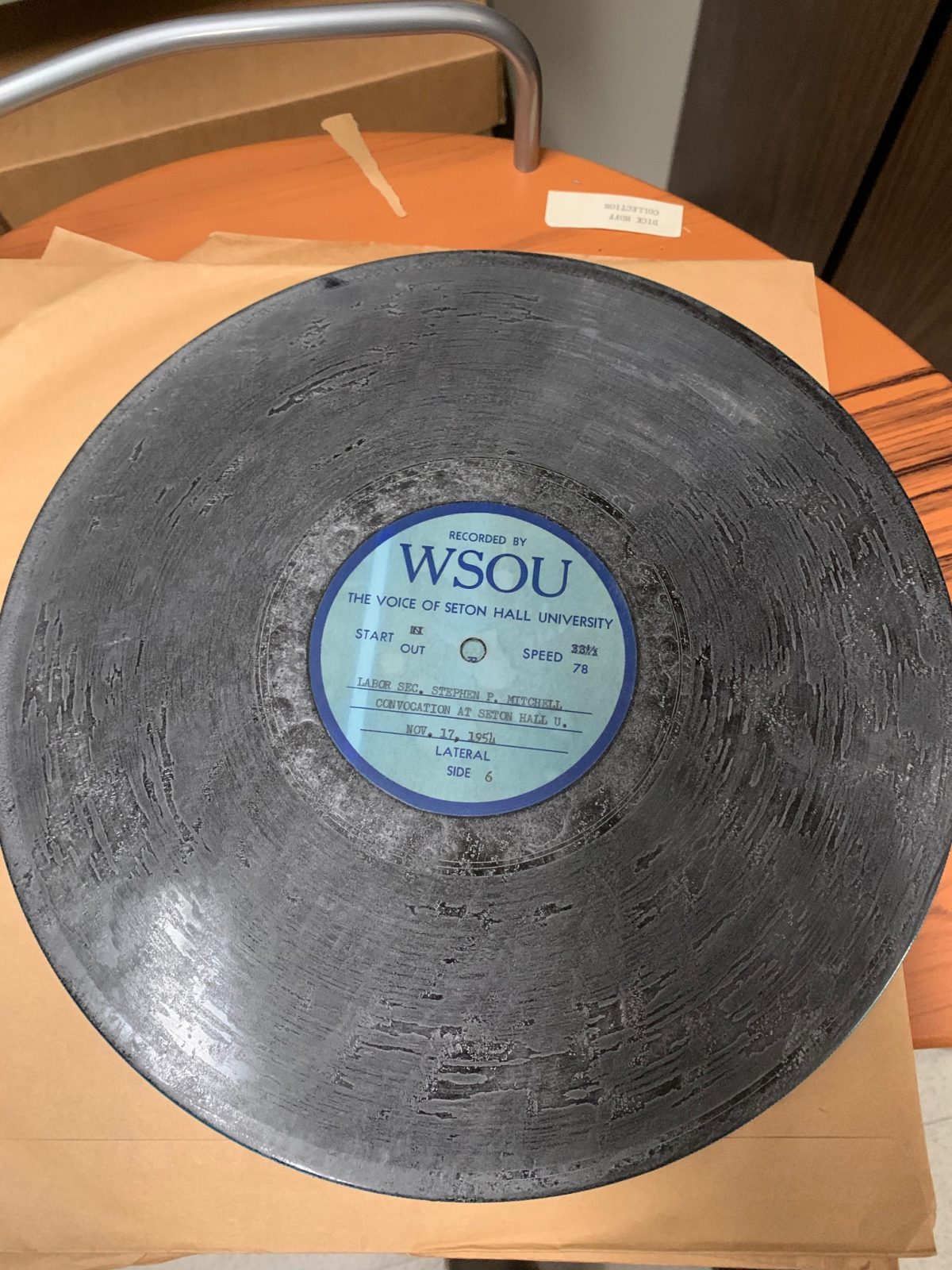
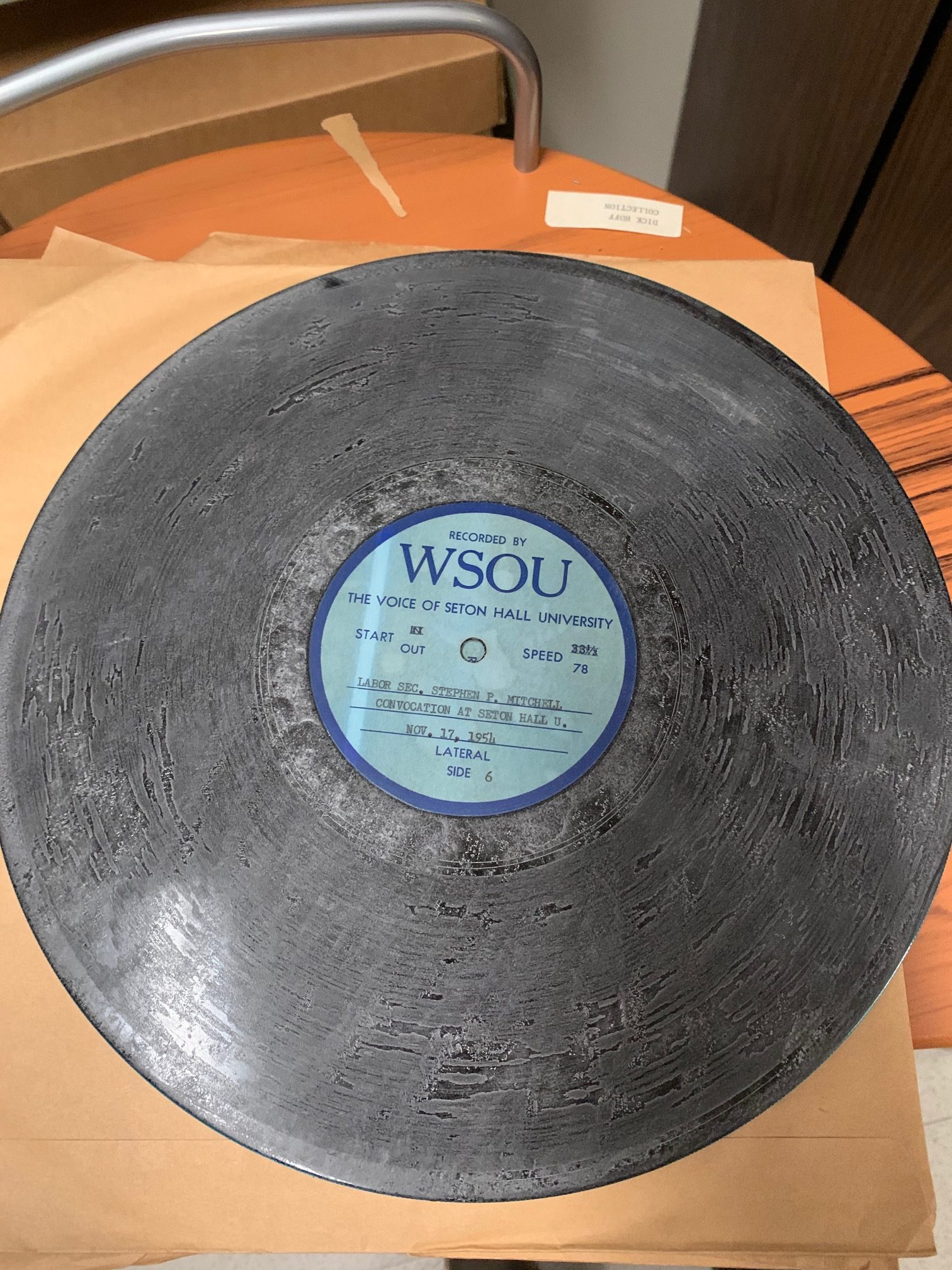
photo of damaged record
A laquer disc with deterioration of the plasticizer

St. John’s University

During the Winter-Spring 2020 semester I served as an intern at Seton Hall where I worked in the Archives and Special Collections Center under Walsh Library. They house a number of collection areas including institutional records, New Jersey history, Irish and Irish-American history, and additionally serve as the repository for records regarding the Archdiocese of Newark. But over the next few months my work was focused on SHU A, or the university’s audio-visual records. 

One thing I have learned during my fledgling archival career is that the real world is very different from coursework. Although this may seem obvious the differences manifest in surprising ways. Often archivists are not part of an organization’s record keeping plan from the outset; they enter the scene well after one or several people have compiled records deemed important. In the past the same has been true of Seton Hall. Books and records were dutifully kept but without full consideration as to whether they fell under the archives’ purview. Similarly, the decision was made to separate out certain record types from their original collection. This is the case with SHU’s photograph collection, and before this semester was true of SHU A. When Technical Archivist Sheridan Sayles pointed out the 3 shelves full of boxes my first day in late January, I thought perhaps I was in over my head. There were boxes full of VHS and cassette tapes, many of which were blank or confusingly labeled. On the shelves beside the boxes were rows of record albums. These came in their commercial boxes and homemade sleeves, with a books of multi-disc albums rounding out the row of records.

I took part in several different AV projects during my semester at SHU. Initially, I consolidated and organized the array of VHS tapes. This consisted of surveying what was in the collection, weeding out commonly produced or off-focus tapes, and rehoming objects with their original existent collection. Separating taped episodes of The Sopranos from the collection was easy, but categorizing the wide range of news clips, Seton Hall TV spots, filmed lectures, and other miscellaneous tapes was something of a challenge. Many were also lacking much or any descriptive information, so they were viewed in order to try and find context so they could be better sorted.

I then set to work capturing the existing collections where the tapes belonged. These areas included the Athletics, College of Business, Poetry in the Round, and WSOU, just to name a few. I created spreadsheets outlining the new additions to the collections, including metadata information like the title, date, and format for easier search and organization in the future.

The process was then repeated with record albums: they were surveyed, weeded, rehoused, and reassigned to their original collections. In this way over the course of a few weeks we transformed SHU A from over a dozen linear feet of shelving into 3 neat boxes.

The archives welcomes undergraduate interns and has a variety of appropriate projects suited to different interests.  Current Seton Hall students interested in working in the archives who are eligible for federal work study, please send an inquiry to sarah.ponichtera@shu.edu.