New Polish Government Moves to Control Public Media
In response to the backlash, the government explained that the party plans “to go further with its media reform, to transform public TV and radio into ‘national institutions of culture.'”
Read More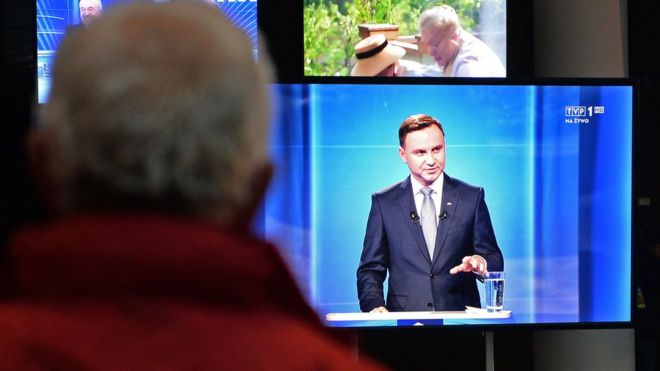
In response to the backlash, the government explained that the party plans “to go further with its media reform, to transform public TV and radio into ‘national institutions of culture.'”
Read MoreThe ECJ ruling does not explicitly end communications for companies without model contracts, but simply puts judicial oversight in the hands of national regulators. In the United States, the question has arisen about the effect of the ruling on American data privacy rights.
Read MoreHollande commended a high-level meeting with his German, Russian, and Ukrainian counterparts. The meeting was held in September, prior to the inauguration of the United Nations’ General Assembly in New York City. “I’m not for the policy of attaining goals by making things worse,” Mr. Hollande expressed in an interview on France’s Inter Radio. “I think that sanctions must stop now.”
Read MoreBy Keith Barnes Staff Writer Considering the degree of integration among European states and the Schengen Agreement, movement by one
Read MoreEuropean Union Heads of State met for an informal meeting on September 23, focusing on the Syrian refugee crisis with the goal of attaining asylum for refugees and ending the war in Syria. German Chancellor Angela Merkel called for the summit with Chancellor Werner Faymann of Austria.
Read MoreEven through this period of unrest and turmoil, the people of Greece continue to support Tsipras, Time Magazine reports. Many say that his reelection shows the people’s support of the bailout and indeed they do. Many citizens were pleased with the outcomes of the elections. One voter said, “He’s one of the best politicians to renegotiate the memorandum,” with another saying, “Tsipras is strong in his game.” Many voters believe that Tsipras is saving Greece and that he will bring back stability to the country.
Read MoreRecently, the numbers of migrants coming into the Schengen area has reached severe new heights with Europe’s largest economy, Germany, expecting 800,000 asylum applications for 2015. Yet the question in most observers’ minds is “What are they doing about it?” or better yet “What are they going to do about it?”
Read MoreBy Gabriela Taveras Staff Writer Amidst a whirlwind of confusion that arose from the bailout negotiations between Greece and its
Read More