U.S.–Iran Conflict & Global Energy Disruption
Iz Lucero
Staff Writer
Since the start of the U.S.-Iran conflict in late February, there has been a global disruption to energy supply chains. According to the World Economic Forum, 25 percent of the world’s crude oil passes through the Strait of Hormuz, which is located on the north coast of Iran. Iran and the United States are enforcing a double blockade in this region. Al Jazeera reports that on April 25, 2026, 19 commercial vessels passed through the Strait of Hormuz. This a significant decline in comparison to an average of 129 vessels passing through the Strait of Hormuz daily before the U.S.-Iran conflict. The United States failed to hold ceasefire negotiations with Iranian Minister of Foreign Affairs Abbas Araghchi in Islamabad, Pakistan, as discussed by Al Jazeera. Araghchi instead went to Saint Petersburg, Russia, to meet with Russian President Vladimir Putin with the purpose “of continuing close consultations between Tehran and Moscow on regional and international issues.” As reported by Trade Arabia amid the failure of ceasefire negotiations, Benchmark Brent crude oil prices rose to $107.97 per barrel on April 27, 2026. Furthermore, investment banking company Goldman Sachs, discussed in the same article, says it predicts a steep drop in the oil market from a surplus of 1.8 million barrels per day in 2025 to a deficit of 9.6 million barrels per day in the second quarter of 2026. This disruption to energy supply chains has not only affected Iran and the United States but also the entire globe.
International institutions are voicing concern over the worldwide consequences of the U.S.-Iran conflict. In United Nations News, the Secretary-General of the United Nations, António Guterres, stated when discussing the blockade in the Strait of Hormuz that “even if restrictions on shipping and trade were lifted immediately, supply chains will take months to recover” and spoke of how this has caused a 4.4 percent increase in inflation and a major decrease in trade. Continuing in statements, he says, “We confront the specter of a global recession.” On direct worldwide impacts, Southeast Asia and South Asia were the first world regions to be heavily hit by the energy crisis caused by the conflict, with the Philippines being the first country to declare an energy emergency as a direct result of the conflict. A domino effect has been taking place, as reported by The Guardian, with the central banks of Canada, Japan, Britain, and the Eurozone all having raised their borrowing costs as energy prices continue to increase, as the war continues.
On a broader global scope, the International Monetary Fund (IMF) has released predictions on how the global economy will be impacted by the U.S.-Iran conflict. The IMF reports global economic growth is projecting to be reduced by 3.1 percent in 2026 and 3.2 percent in 2027. On further destabilization of the financial market, the IMF said that indicators would be: a longer/broader conflict, increasing geopolitical division, artificial-intelligence-driven productivity being reassessed as not matching original expectations, renewed trade tensions, increased public debt, and a loss of institutional credibility. To counter this, the IMF said that faster artificial-intelligence-driven productivity and reduced trade tensions could provide some relief from an increasingly destabilizing financial market due to the U.S.-Iran conflict.
The repercussions of the U.S.-Iran conflict are being felt across the globe. A continued war in the region and disruption to energy supply chains could push the world even closer towards a global economic crisis.
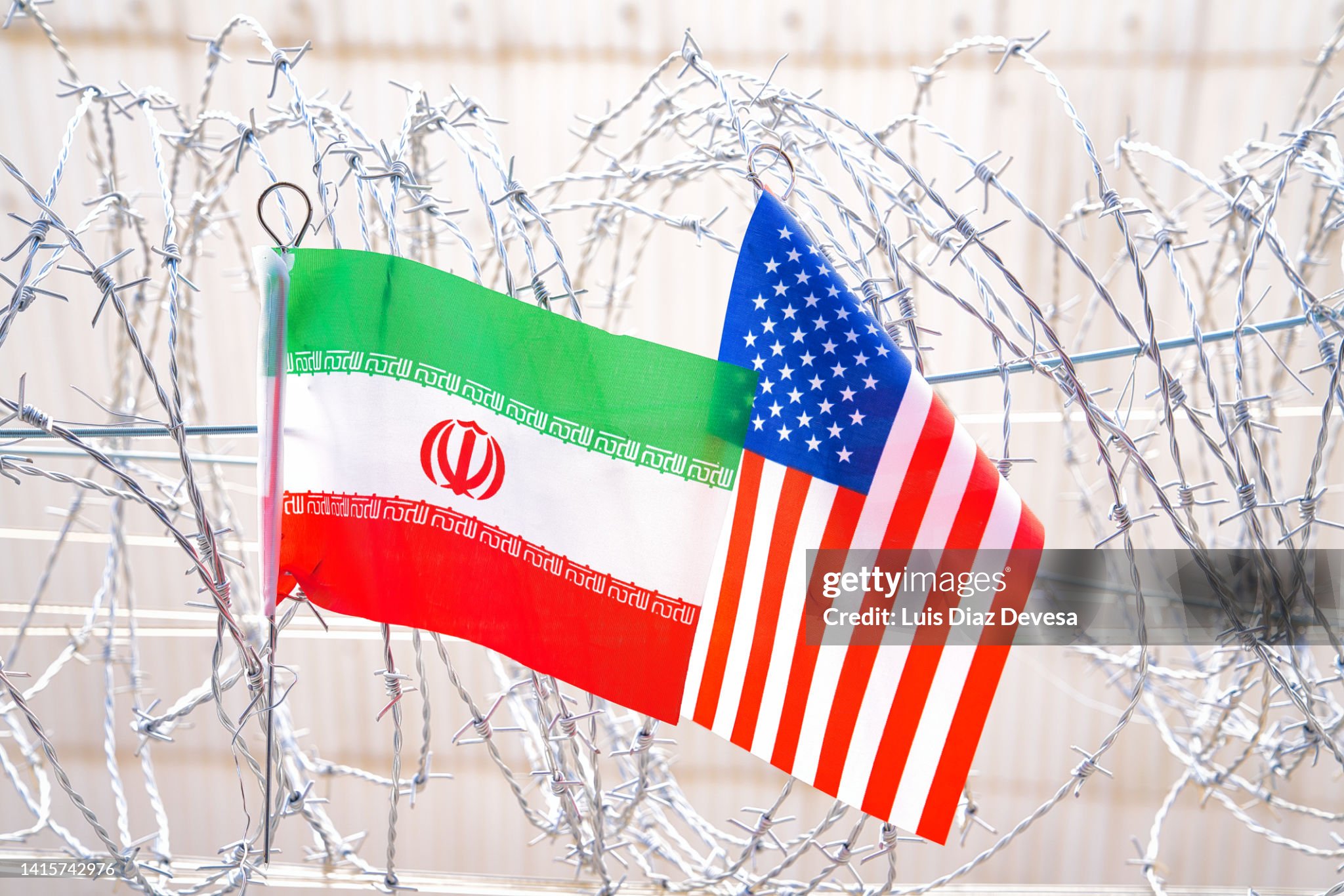
Image courtesy of Getty Images.