How the EU-Mercosur FTA Balances Climate and Economic Interests
Julia Brown
Staff Writer
May 1st saw the provisional beginning of the European Union-Mercosur Interim Trade Agreement (ITA), a historic success for multilateralism after nearly three decades of trade talks.
According to AP News, the new free trade zone links 700 million people who generate approximately 25% of global gross domestic product. The deal is intended to reduce tariffs, create an alternative to U.S. and Chinese markets, and boost the trade of automobiles, spirits, critical minerals, sugar, Argentine beef, and other agricultural staples.
The deal was successfully ratified by Mercosur members Argentina, Brazil, Paraguay, and Uruguay, and signed by President Ursula von der Leyen of the European Commission (EC), who represents 27 countries. Bolivia, who became an official member of Mercosur in July 2024, may be incorporated in the future.
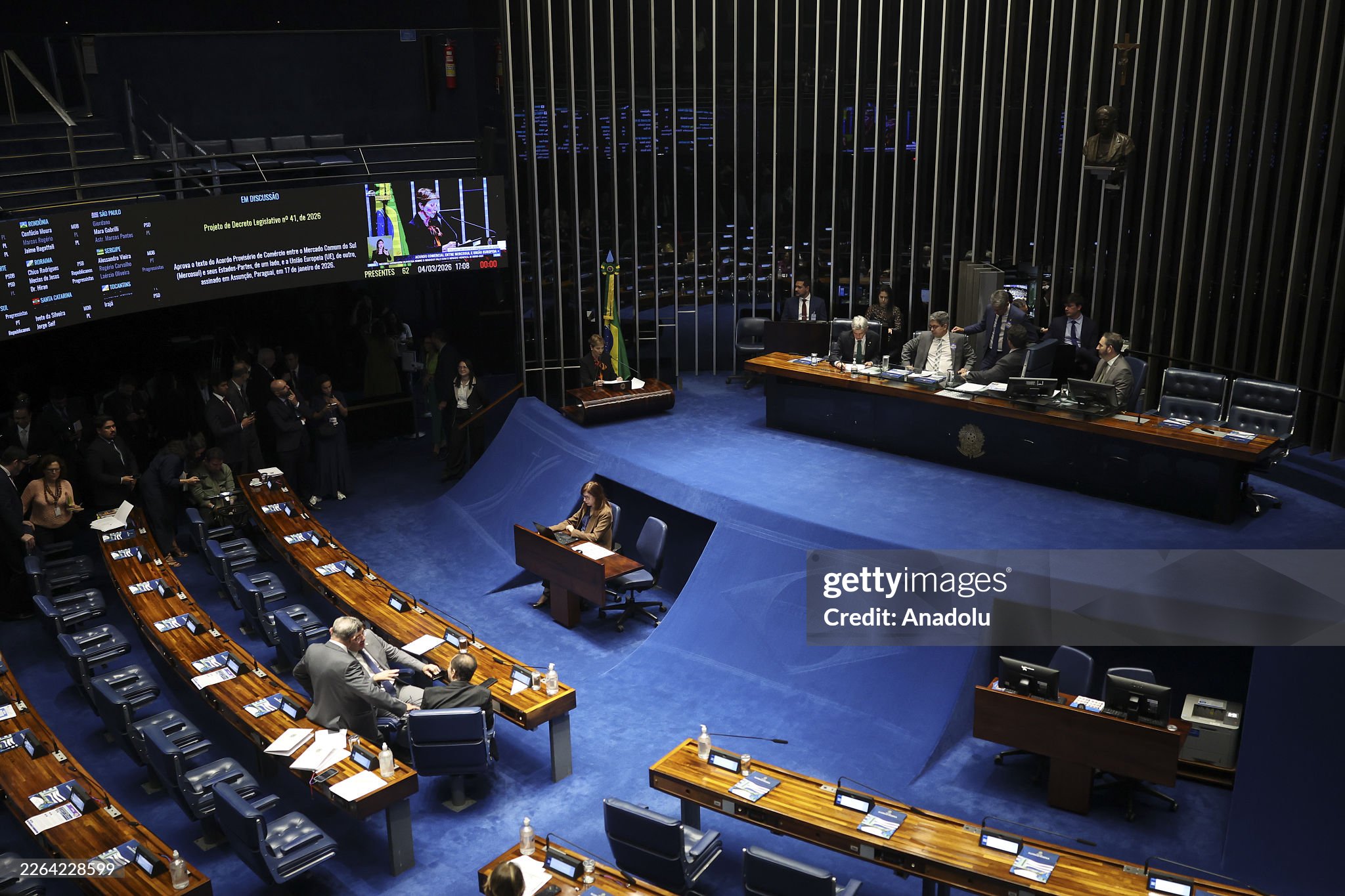
While the ITA has gone into effect, the European Parliament, composed of 720 directly elected representatives, must vote in favor for it to be legally finalized.
In January, the European Parliament voted for the pact to be referred to the European Court of Justice (CJEU) to review its legality, which may delay final voting for potentially 2 years, reports Politico. If the CJEU or European Parliament fail to approve the agreement at any point, it will cease immediately.
Farmers across Europe have gathered to protest the deal, concerned that the cheap prices of Mercosur commodities would “flood Europe’s markets,” reports Al Jazeera. France, the EU’s primary agricultural producer, is seeking compliance with stringent safety protocols and market protections in the case that South American imports fall below a certain price point.
Al Jazeera reports that several EU countries, like France and Austria, share concerns that the agreement would advance the deforestation of the Amazon, violating the terms of the 2015 Paris Agreement.
The Paris Agreement is a legally binding treaty signed by 196 countries, including all Mercosur members. The primary goals are to reduce greenhouse gas emissions and build international capacity to address climate change.
Deforestation of the Brazilian Amazon has already risen greatly over the past decade. Al Jazeera reports that under President Jair Bolsonaro, deforestation increased by 75.5 percent. However, current President of Brazil, Luiz Inácio Lula da Silva “pledged to reduce deforestation to zero by 2030” and drastically reduce greenhouse gas emissions in his 2025 climate plan update, according to Le Monde.
Greenpeace, an international organization dedicated to preserving biodiversity and combatting climate change, says that “European automotive and chemical industries” will gain the most from the ITA. Harmful pesticides, increased CO2 emissions from cars, and expanding deforestation for cattle will certainly worsen global warming.
According to the EC, EU trade agreements ensure that trade partners implement climate change agreements and enforce existing environmental policies. The Trade and Sustainable Development chapter of the EU-Mercosur Trade Agreement asserts that economic and environmental agendas must reinforce sustainable development. As all parties recognize “the urgent threat of climate change,” they must “effectively implement the UNFCCC and the Paris Agreement.” If a party fails to fulfill their duties, a dispute settlement process will take place subject to expert oversight.
The EU Deforestation Regulation also applies to Mercosur, requiring companies that sell products to the EU to be deforestation-free.
While climate experts express their concerns related to weak enforceability, the EC reaffirms their commitment to responsible trade and assures European farmers that additional safeguards will be put in place if the market requires them.
Despite setbacks, members of Mercosur and the EU alike applaud the trade agreement’s progress as evidence that international cooperation and rules-based trade can be built on shared values and benefit all parties.
Image Courtesy of Getty Images.