Latin America. Just Like the Simulations
David Gomez
Staff Writer
As the growing geo-political and economic pressures across the globe become more apparent, the School of Diplomacy is actively taking steps to teach students about the handling and deliberation behind global crises in one of the most innovative and effective ways which the university can offer; with simulations meant to test students’ ability to cooperate and manage nations through scenarios based on current world issues. The most recent simulation, taking place on April 18, focused on the region of Central and South America and targeted the longstanding and pervasive conflict of cartels and rebel groups within the region
Criminal violence has long been an issue in nations across the span of Latin America, reaching beyond the bounds of law enforcement, and those who they pursue. Reuters has reported on the process by which civilians and journalists have often found themselves placed in the center of a conflict which has now persisted for two decades.
While the causes behind the prevalence of criminal organizations are undoubtedly complex, no less complex is the multi-pronged approach which the nations of Latin America, and their allies, must employ to whittle away the deep holds which criminal enterprise has over social, economic, and political institutions.
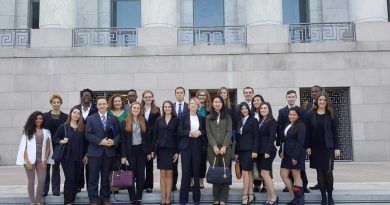
The simulation, primarily hosted by the School of Diplomacy’s Brendan Balestrieri, Ph.D., focused on the present realities of several Latin American nations, alongside two non-state groups. Students assumed the roles of Mexico, Panama, Costa Rica, Colombia, Mexico, and because of its longstanding historical ties to the nations of the region, the United States of America.
As the simulation aimed to address the issue of specific non-state groups, those groups were also included as live actors within the simulation. According to InSight Crime, the National Liberation Army (ELN), located primarily along Colombia’s border regions along Venezuela, has a long history as a guerilla group active within the nation, with their formation dating as far back as Colombia’s great period of political turmoil in the 1960s.
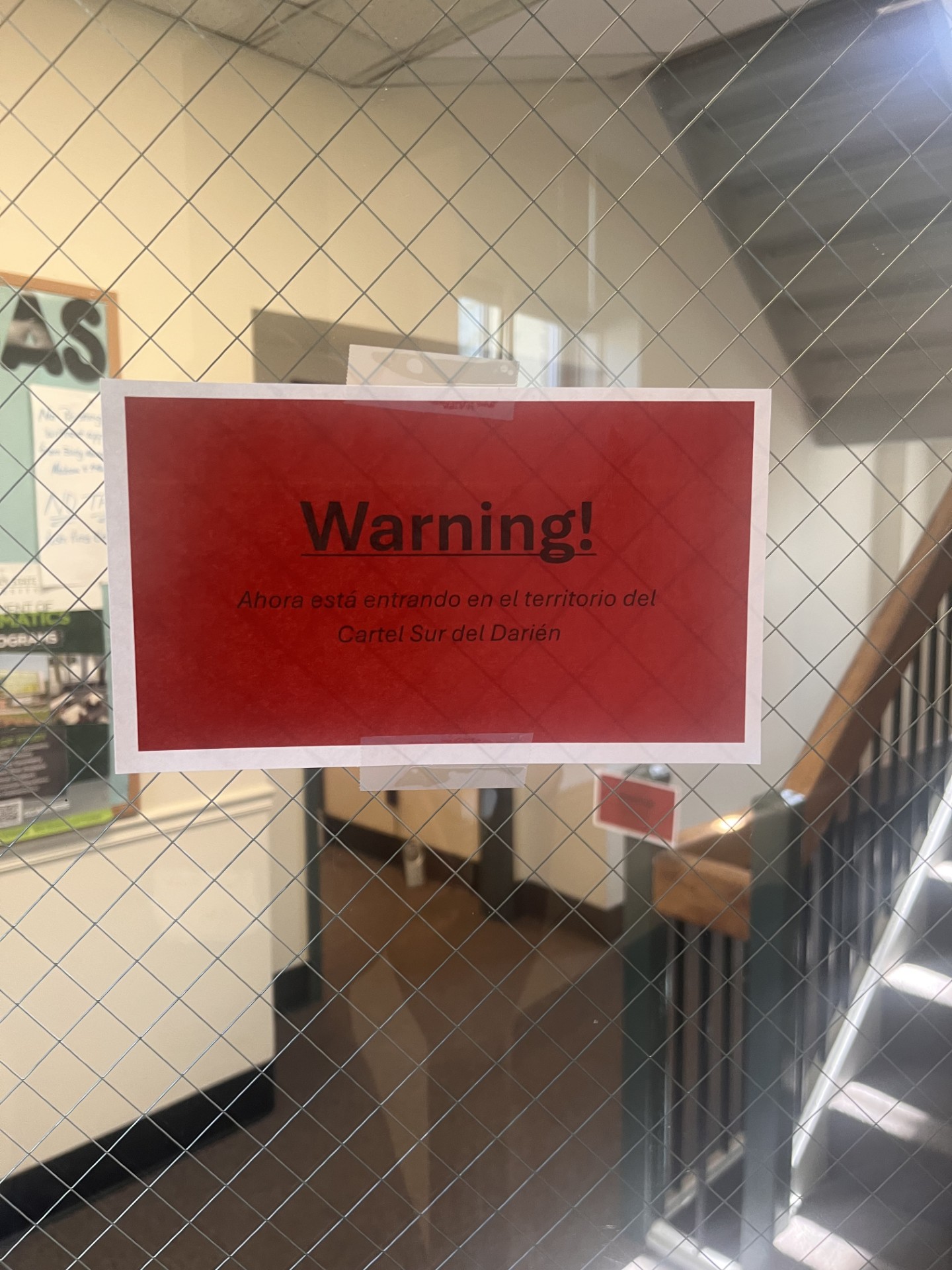
Acting as an additional agent within the simulation was the Cartel Sur del Darien, a fictional criminal organization which was meant to act as a representative for its real counterparts.
Complicating the simulation was the fact that each participant did not just act as an abstract embodiment of their assigned nations. Students were given named roles and positions to play, including presidents, vice presidents, various cabinet members, and that of high-ranking military officials. Through reasoned debates and deliberations, students played the roles of governments in crisis, having to use the powers and resources at their disposal to see their nations through, or, in the case of rebel groups and criminal organizations, to prevent those nations from unifying.
Corruption within governments as a result of criminal influence is not an unseen occurrence within the highest echelons, as written about by Al Jazeera. Where there is money, there are often those willing to accept it for service. To simulate how this might factor into a crisis scenario, certain participants were given the hidden designation of “compromised characters.” Due to arrangements their character had engaged in prior to the simulation, they had the balancing act of attempting to maintain the cover of a legally upright official, while attempting to avoid the possibility of their dealings being uncovered by their fellow participants. This could escalate into being forced to disclose their team’s classified information to the party which they had been compromised.
At the School of Diplomacy, the teaching of international theory, history, and economics are all commonplace. The role of these simulations is to take these many theories and lessons and apply them as realistically as possible to scenarios where the students themselves are leading the way. The day of April 18 saw students try their hands at solving one regional crisis, and as hinted at by the organizers at the end of the day’s excitement, it will not be the last.