
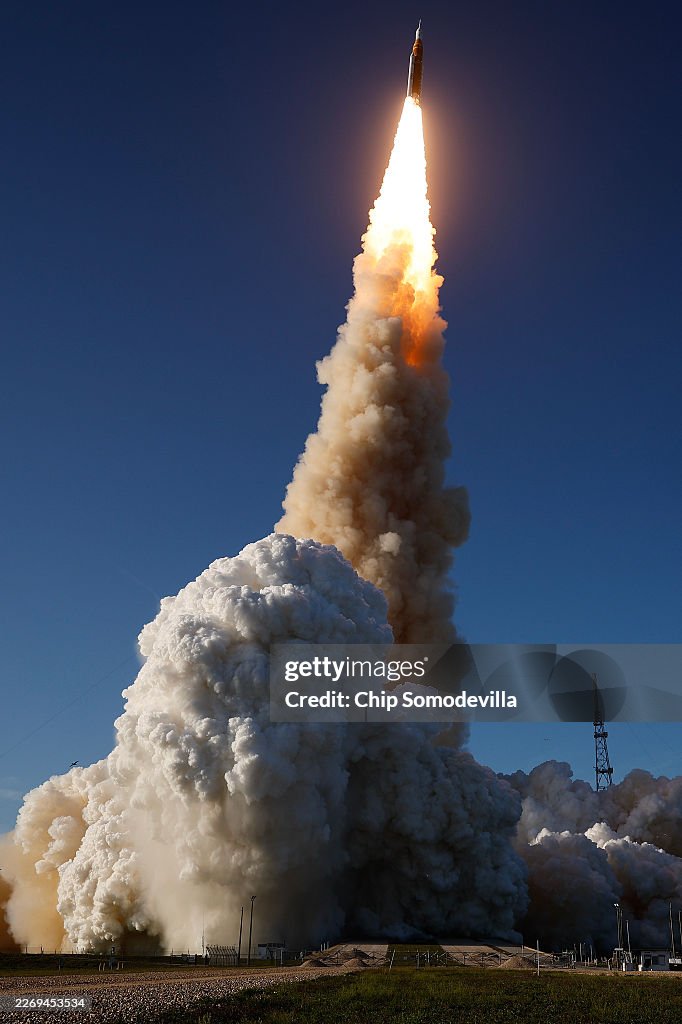
Artemis II Marks First Lunar Trip in New Space Age
Daniela Reyes
Staff Writer
Since 1972, the United States has not come across the moon until Artemis II. The lunar flyby mission had a trajectory with its main goal to test systems deep within space, focusing on emergency procedures, navigation, and communication as we advance in a new age with technology.
The four-person crew mission is vital in telling whether sustained human activity beyond low Earth orbit is possible. Contrasting the previous Apollo missions, Artemis II is a bridge created to help Artemis III, planned to land in 2028 near the lunar south pole.
According to NASA, “The Artemis III mission will launch crew in the Orion spacecraft on top of the SLS (Space Launch System) rocket to test rendezvous and docking capabilities between Orion and commercial spacecraft needed to land astronauts on the Moon.”
These next steps are what will create shared expectations of safety protocols for future missions that need to determine how the lunar surface can be used. Artemis II takes place with NASA astronauts Christina Koch, Reid Weisman, Victor Glover, and Jeremy Hansen. The crew helped test life support systems throughout the mission, which helped to create a habitable environment for those on the ship.
Within this period, there have been two contrasting operation models that have become relevant across the globe: the American model and the Chinese model, demonstrating a significant difference in open coalitions versus state control.
Through the American model, the spacecraft serves as an exploration vehicle that encourages scientific discovery, economic benefits, and building the momentum for a mission to Mars. The goal of this approach is to rely on a framework where international partners and companies alike can operate under shared rules.
According to the Artemis Accords, a set of U.S. led international agreements it is based off of, “Principles for a safe, peaceful, and prosperous future in space,” indicating how the governance of civil exploration will be like moving forward.
In choosing the best course of action through the Accords, countries across the globe can enhance their techniques and norms of responsible behavior for use of outer space.
This pressures China as they attempt to obtain their goal of landing on the moon in 2030, with their model of state control. Through this, China hopes to limit influence from the U.S. as they continue rapidly advancing in their technology.
According to PBS News, “Although Chinese leaders recognize the need to stimulate domestic demand, the plan places technological innovation at the center of the economic strategy.” China, with an alliance with Russia, continues to compete against the United States to try and redefine the future of lunar space exploration.
Similar work has begun to become of interest in Africa, according to a representative from Africa2Moon, a project working towards Africa’s first mission to the moon. Because foreign aid won’t be enough to bridge Africa’s trillion-dollar funding gap, there needs to be an urgent shift in investment in entrepreneurship and digital skills to minimize reliance on commodity exports. Some of the implications for the youth include focusing primarily on innovation and being self-reliant through internal solutions.
A prime example of this can be enhancing regional integration to foster a vibrant start up culture to empower the youth. This was proposed by the Africa-Europe Foundation (AEF), an independent, multi-stakeholder platform that strengthened the relationship between Europe and Africa.
According to the AEF, “In partnership with the African Climate Foundation, has released a new report: The Missing Connection: Unlocking Sustainable Infrastructure Financing in Africa,” was released to discuss which resources can function synergistically to drive sustainability for a positive long-term impact.
Over time, this could help countries who have this funding gap to vitally link to a broader network that can directly help fuel economic growth. The concrete actions and processes help both to establish ways that the country will advance by addressing the critical challenges its social atmosphere faces every day.
Everyday countries challenge and pressure each other to be the most advanced in technology and science as the rise of war increases globally. Since the first landing of the moon to Artemis II, the ability to have broad coalitions that provide predictability is what will count in the foreseeable future for lunar exploration.
Image Courtesy Getty Images.