Technological Warfare and The Human Cost: The bombing of Iranian Primary School
Nihma Abdallah
Staff Writer
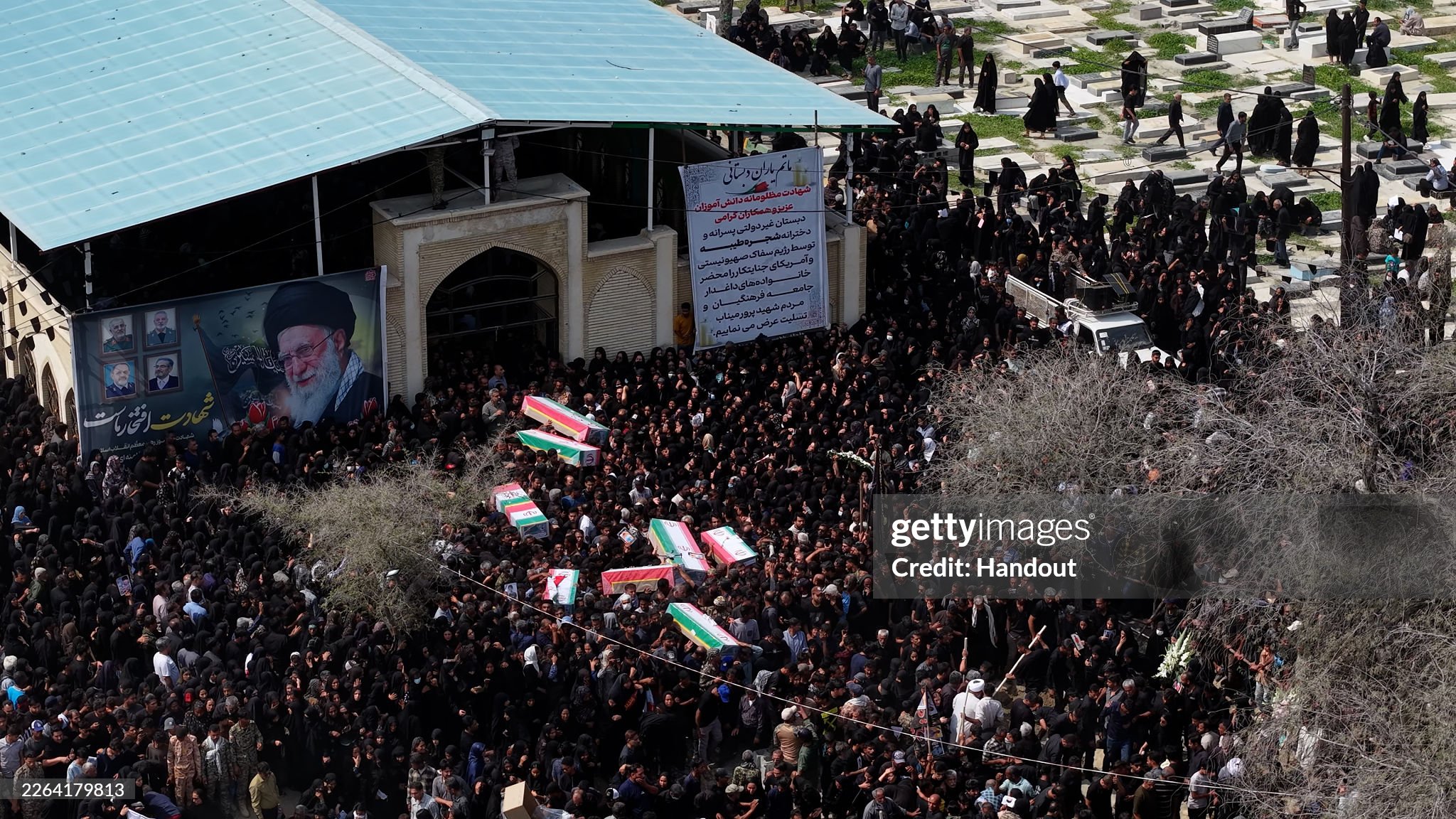
On February 28, a strike on Shajarah Tayyebeh, an elementary school in Iran, resulted in at least 175 deaths. Although United States officials initially dismissed claims of accountability, preliminary findings from multiple sources indicate sole responsibility lies with the U.S.
Initial claims had stated that the strike was a part of a target on an adjacent Iranian military base, of near which the school was located.. However, a visual investigation by The New York Times reported that the building housing the school had been fenced off from the military base between 2013 and 2016.
While U.S. and Israeli military technologies are characterized as among the most advanced globally, further investigations have found that officers at U.S. Central Command created the target coordinates for the strike using outdated data provided by the Defense Intelligence Agency.
Officials emphasize that the findings are still preliminary and that there are important unanswered questions about why outdated information was not double-checked. Investigators do not yet fully understand how the outdated data was sent to central command or why the school building had been labeled as a military target when it was passed to central command.
When asked to comment, officials from CENTCOM declined, according to the Washington Post. Furthermore, officials from the Defense Intelligence Agency referred the question to the Pentagon which also declined to comment.
Most Trump administration officials have simply stated that the incident is under investigation. Specifically, when U.S. Defense Secretary Pete Hegseth was questioned about the Pentagon’s investigation into the strike, he replied: “We’re investigating it.”
According to NPR, the investigation is expected to take months and will include interviews with all those involved, from planners and commanders to those who carried out the strikes.
Multiple videos reveal the weapon to be a Tomahawk missile. Despite President Trump’s claims that, in his opinion, the strike was carried out “by Iran.” The New York Times noted how Mr. Trump told reporters, “They’re very inaccurate, as you know, with their munitions. They have no accuracy whatsoever. It was done by Iran.
Tomahawk missiles were developed by the United States and are currently used by its forces, and has not sold that weapon to Iran. Tomahawk missiles were developed in the latter part of the Cold War by the United States, and they were first used in combat during 1991. Since then, only three countries are known to currently possess them: Australia, the UK and the US. Two additional countries have agreed to purchase them, Japan in 2024 and the Netherlands in 2025, neither of which include Iran or carried out strikes on February 28.
Iran does have its own domestically designed cruise missiles, but they are distinct from Tomahawks. NPR reports that Iranian state media has also released pictures of Tomahawk missile components displayed on a table in front of the demolished school.
Other civilian sites, including a hospital and historic landmarks, have also been severely damaged since the joint US-Israeli operation began. Despite promises from US President Donald Trump to the Iranian people of aid, help, and liberation, satellite images and verified videos show the growing destruction as the number of reported civilian casualties continues to rise, according to Al Jazeera.
In Washington, NBC News reports on how more than 120 democratic members of Congress are asking the Pentagon for detailed information about how the US military is limiting civilian casualties in Iran. In their letter, lawmakers asked why the school target was selected and whether the Pentagon would investigate the strike as a possible war crime.
During the Biden administration, the Department of Defense created the civil harm mitigation and response initiative. However, when Hegseth was named secretary of the department, the civilian mitigation teams were cut by 90%. The decision to scale back those efforts meant that the US Central Command, which oversees U.S. informants in the Middle East, according to NPR, had only one staff member assigned to civilian casualty mitigation operations.
The authors of the letter also raised crucial concerns about the broader role of AI in selecting targets, assessing intelligence, and making legal determinations during ongoing military operations. This is part of an increasing and widespread speculation about the risks of miscalculation as AI becomes more deeply embedded in US and Israeli military technology.
Overall, the attack has drawn significant international condemnation and raised questions about how the school ended up being struck. Although most presidents would refrain from commenting while an investigation is underway. Mr. Trump has not hesitated to weigh in and has not backed down, even as evidence of US involvement has mounted.
Human Rights Watch has called for a war crime investigation into the attack. According to the BBC, if confirmed, a US role in the strike would amount to one of the worst single incidents of civilian casualties in decades of US conflict in the Middle East.
Image courtesy of Getty Images.