European Nations Entwined in Newest Iran War, Willing or Not?
Megan Hay
Staff Writer
European countries are rapidly being pulled into the United States and Israel’s recent war against Iran, willing or not. While European leaders were not consulted on the operation, they now find themselves forced to contend with the fallout.
For months, tensions rose amid repeated warnings from U.S. President Donald Trump about potential military intervention in Iran, NBC News reports. Then, on February 28, the U.S. and Israel launched sweeping airstrikes against Iran in “Operation Epic Fury.”
Europe has looked uncoordinated at best following the attack, reports BBC News. Politically, the continent is struggling to find a united voice as developments rapidly occur and involvement remains unavoidable.
According to The Associated Press, one such development includes a surprise Iranian-made drone attack on May 2 that struck a British air base in the island country of Cyprus. Cypriot officials confirmed the drone originated from Lebanon and believe it was launched by the Iranian-backed Hezbollah militant group. It was the first drone attack of the war launched onto European territory.
British Prime Minister Keir Starmer responded by saying British personnel would only get involved in military action that was legal and well planned, Reuters reports. British jets have since brought down Iranian drones, and the country has resupplied allies’ air defenses and allowed its bases to be used for U.S. defensive operations. A British destroyer is also planned to arrive in Cyprus. Still, Britain’s cautious response and hesitancy to defend its allies have renewed doubts among partners about its military effectiveness.
The New York Times reports that Italy, Spain, France, and the Netherlands will also send naval assets to protect Cyprus. Italy has deployed a missile frigate, anti-drone artillery, and other air defense systems. Yet, drawing from its own stockpile has left its own arsenal dangerously diminished.
France has sent vessels including its only nuclear-powered aircraft carrier to the Mediterranean Sea and Persian Gulf. The force amounts to around 60% of its combat fleet, estimates Vincent Groizeleau, editor of Sea and Marine, a French trade journal.
“When Cyprus is attacked, it is Europe that is attacked,” French President Emmanuel Macron says. “We are bound to one another by strategic partnerships.”
Ukraine is being pulled into the war as well. The U.S. has asked for Ukraine’s assistance in protecting its bases in the Gulf from Iranian retaliatory strikes, says Al Jazeera. President Volodymyr Zelenskyy said Ukraine would send military experts, and on March 9 he dispatched chief negotiator Rustem Umerov to sell Ukrainian interceptor drones to Gulf states.
Spanish Prime Minister Pedro Sanchez remains one of the few left-wing leaders in Europe to condemn the U.S.-Israel attacks on Iran, claiming they are “unjustifiable” and that Madrid maintains it is saying “no to the war.” The Spanish government also withdrew its ambassador to Israel in protest to the recent war in Gaza and the war in Iran, according to Al Jazeera.
One of Europe’s major goals at the outbreak of the war was ensuring the safety of thousands of its citizens caught up in the conflict abroad, according to ABC News. Many Europeans live in Middle Eastern cities such as Beirut, Dubai, and Jerusalem. Efforts to bring home citizens abroad face logistical challenges, such as airspace closures. Around 30,000 German tourists ended up stuck on cruise ships, in hotels, and at closed airports. The Czech Republic had to send planes to Egypt, Jordan, and Oman to bring home Czech nationals.
Tehran’s closing of the Strait of Hormuz, a thoroughfare for one-fifth of the world’s liquefied natural gas, further complicates matters for Europe, says the Wall Street Journal. European natural-gas prices have surged roughly 70%. While higher energy prices threaten to reignite inflation, economists say if the conflict ends soon there shouldn’t be too much economic harm.
The closing of the Strait of Hormuz also sees pressure for European intervention from the U.S. More than 1,000 cargo ships, mainly oil and gas tankers, have been blocked from transiting the strait. Trump administration officials have suggested an international naval task force to reopen the strait, but according to The Guardian, enthusiasm from other countries remains low. Germany and Austria have ruled out deploying naval forces, and the French foreign minister has emphasized France’s priority of regional stability over escalating conflict.
This isn’t the first time Europe has found itself involved in a U.S.-led war in the Middle East. The shadow of the Iran war looms over the current conflict, explains BBC News. In 2003, the U.S. went to war in Iraq along with its European allies, most prominently the United Kingdom. Washington has been at pains to emphasize the differences between the conflict in 2003 and the conflict today. Yet, despite European hesitance to fully engage, countries across the continent are becoming involved regardless.
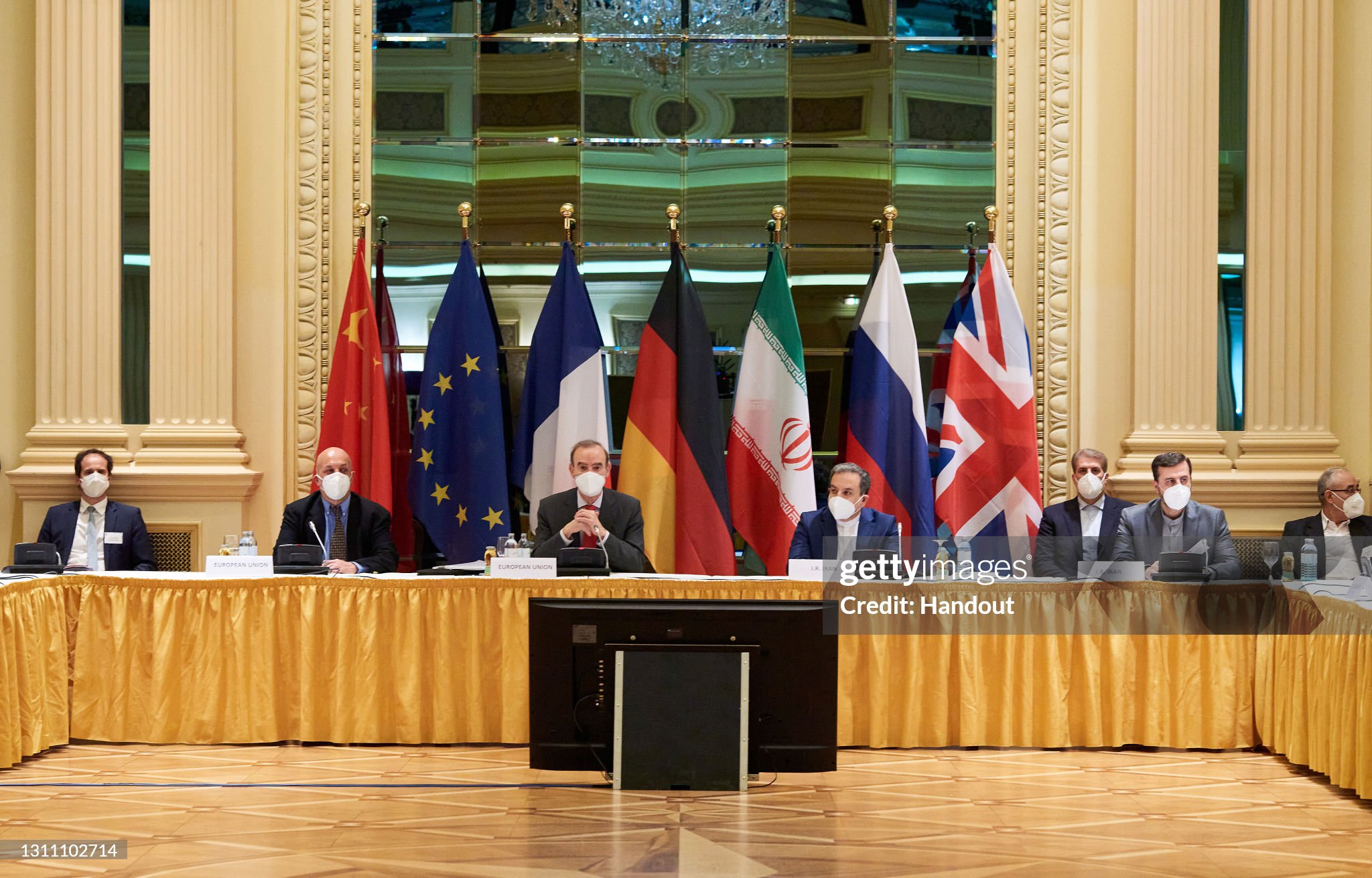
Image courtesy of Getty Images.