Ceasefire in Gaza Under Strain Amid Questions Over International Law
Nihma Abdallah
Staff Writer
It has been nearly 5 months since the supposed ceasefire has taken effect, however death tolls remain rising and Israel is signaling preparations for harder lines in Gaza. The Jerusalem Post reported Israel Defense Forces Chief of Staff Eyal Zamir told troops stationed along the Yellow Line in Gaza on friday, “We are prepared to move from defense to offense.” Fingers are being pointed by both Israel and Hamas, with accusations of almost daily violations being presented.
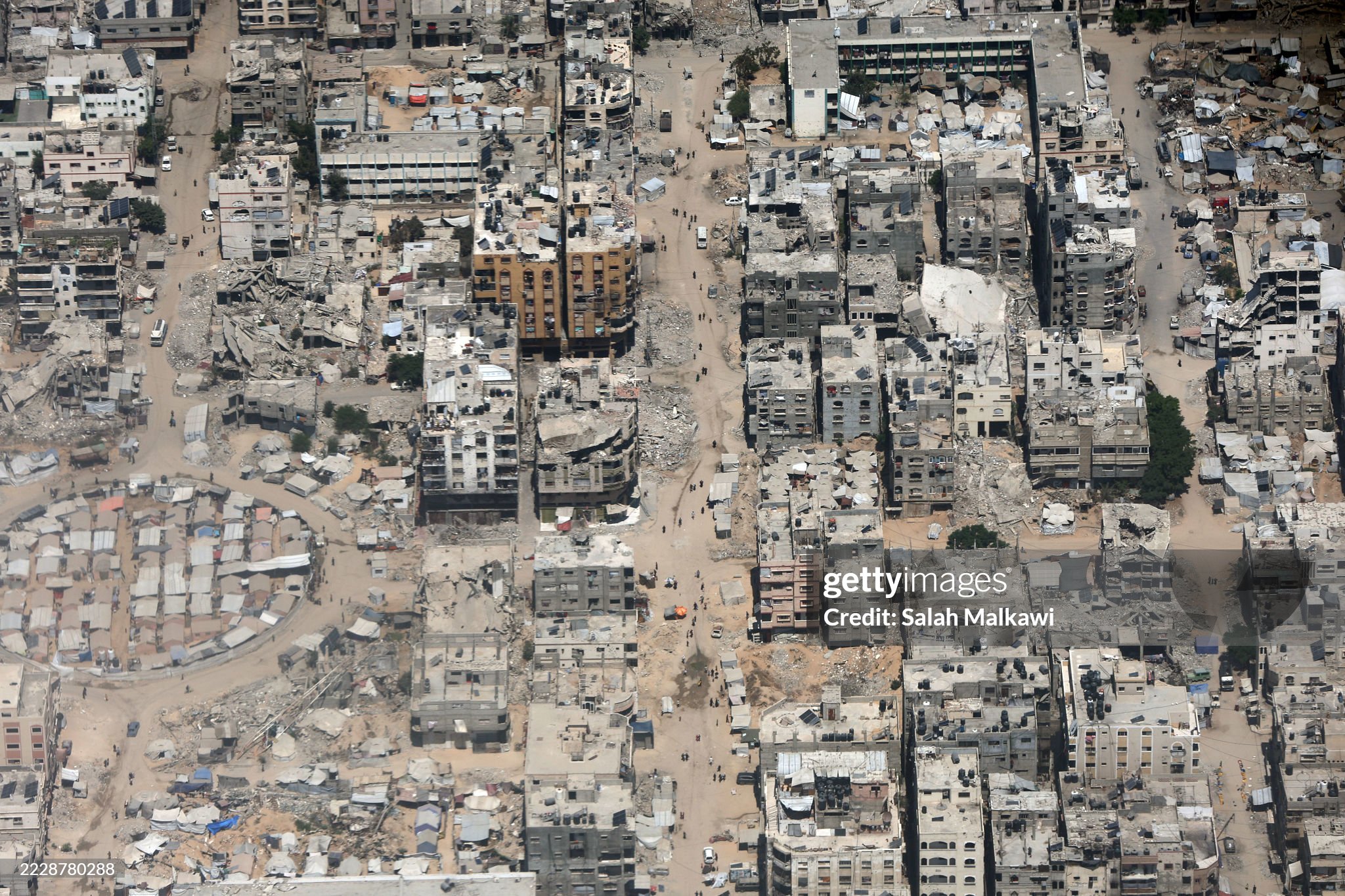
Tensions continue to rise, and according to the Palestinian Red Crescent, strikes on designated humanitarian zones continue to persist despite claims of a ceasefire. BBC News reported on Sunday morning that 11 Palestinians were killed in Israeli strikes in Gaza. In addition, the Palestinian civil defense and health officials asserted news of a strike on a tent encampment in northern Gaza which killed at least six people, as well as another in the south of the strip killing five. The IDF maintains its position that Hamas is the only independent figure violating the ceasefire.
On the ground, extreme allegations are being presented of Israel using thermal chemical weapons in Gaza that have reportedly made thousands of Palestinians ‘evaporate.’ According to an Al Jazeera investigation, there is documentation of 2,842 Palestinians who have been completely evaporated since the war began in October 2023, with stories of Gazans finding no remains of deceased family members except fragments and splattered blood reaffirming these reports.
These accounts have been linked to allegations that Israel has used internationally prohibited thermal or thermobaric weapons, also known as vacuum or aerosol bombs, which can generate temperatures exceeding roughly 6,300°F. A Russian military expert explained to Al Jazeera that when the human body is exposed to such extreme heat and pressure, fluids can instantly boil and tissues vaporize. Dr. Monira Al Bosher, director of Gaza’s Palestinian Ministry of Health, described the severe biological impact of this heat. Investigations have identified some of these munitions as U.S.-manufactured weapons, alleging they are not the first of their kind supplied by the United States.
Moving inside Israel’s Knesset, plans to reinstate the death penalty have prompted uproar and deep divisions. According to BBC News, while supporters of the legislation continue to stand firmly behind the initiative, opponents of capital punishment have rejected it on religious, ethical, and legal grounds. The religious argument is primarily that it contradicts Jewish law. In addition, Israeli human rights groups argue that the proposed law would deepen discrimination by targeting only Palestinians convicted of terrorism, rather than applying equally to Israelis. Al Jazeera writes of many referring to the proposal as apartheid legislation.
Although the bill is said to apply only to Palestinians charged with terrorist activity, critics worry about its broader implications, particularly considering claims that thousands of Palestinians are currently held in Israeli prisons, including children and some detainees held without formal charges. According to Amnesty International, if implemented, the law would affect thousands of Palestinian detainees. Some of whom, according to rights activists, are imprisoned for involvement in attacks, or for resisting occupation. Israel’s i24 News has reported that the Israeli Prison Service began logistical preparations for the draft law, outlining plans for a dedicated facility to carry out executions and to train staff to administer capital punishment. Israel’s Channel 13 News noted that under the proposal, executions could be carried out within 90 days of a court ruling, with limited grounds for appeal, and would involve mass hangings.
The UN’s top human rights official called on Israeli authorities to abandon plans for new legislation, warning proposals violate international law and fundamental human rights standards. The series of draft measures before Israel’s Knesset, according to High Commissioner Volker Türk, raise serious concerns about discrimination, abuses of due process, and violations of international humanitarian law. Amid concerns over alleged human rights breaches, including the reported use of chemical weapons and the implications of this new plan, many are questioning where the red line lies in upholding international law. Tariq Shandab, a professor of international law, argued that the international justice system has “failed the test of Gaza.”
Image courtesy of Getty Images.