
China’s Economic Slowdown
Nihma Abdallah
Staff Writer
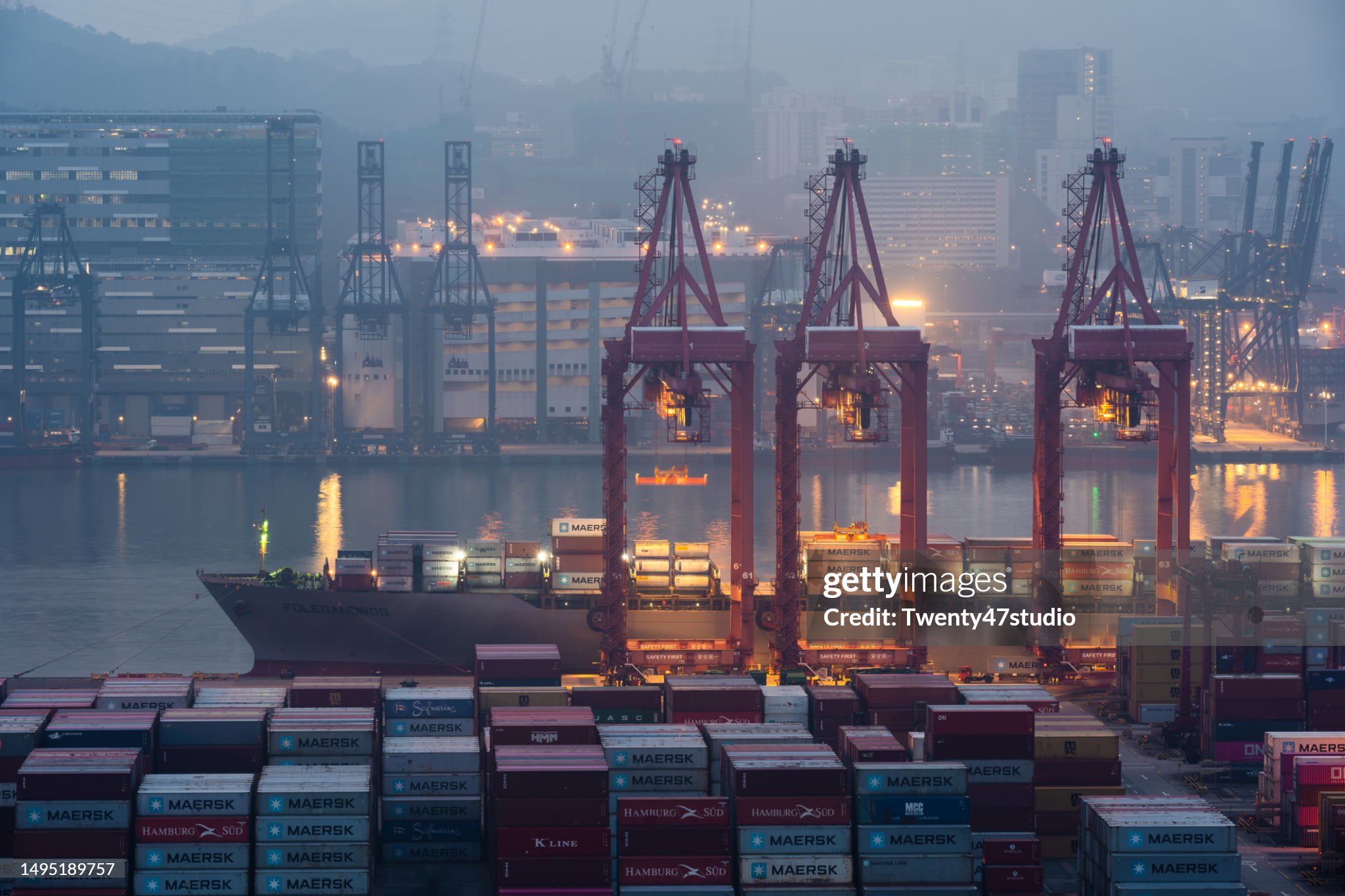
Is the world’s second-largest economy stumbling? According to The Guardian, China has just set its lowest GDP growth target for decades as it braces itself for an economic slowdown. China, second only to the United States by GPD, is a top U.S. trading partner and over the past four decades, has transformed from a largely agrarian society into a global trading and manufacturing hub, becoming one of the most central figures in international supply chains. This transformation was driven by a number of factors, most notably rapid urbanization, large-scale investments, and rapid productivity.
Naturally, many expected this “competing superpower” to bounce back after COVID-19. However, while China’s economy did maintain solid momentum in the third quarter of 2025, bringing year-to-date GDP growth to 5.2% year-on-year as reported by the World Bank, China’s economic trajectory seems to be entering a more complex phase, one marked by much slower growth and deep structural persistence.
This trajectory has been exacerbated not only by the country’s ongoing real estate correction and an aging population that’s only decreasing, but also by tenacious domestic challenges, including weak consumer spending, structural imbalances, and overreliance on export- and investment-led growth, all of which have kept growth well below past highs.
A large portion of this issue comes from the fact that households simply aren’t spending. There is little flow toward consumption. Beijing has been talking about rebalancing, yet the focus remains on infrastructure, manufacturing, and strategic industries, leaving an increasing lack of demand. Meanwhile, overproduction is leading to reduced prices in groceries, cars, and especially housing. Property prices falling may, on paper, be seen as a plus for China’s middle class; however, even though interest rates are falling and conditions appear primed for a consumer boom across China, households are pulling back. Simply because they don’t want to, not because they can’t afford to.
As attested by Market Watch, this phenomenon is referred to as “shadow saving,” and the effect is: China’s long-awaited consumer recovery has stalled. China’s households are sitting on an enormous and growing pile of cash. By 2025, household deposits had surged to levels equivalent to roughly 118% of GDP, according to official statistics. This is largely precautionary, as consumers continue to save due to an uncertain income outlook.
At the same time, the job market, especially regarding young workers, has grown increasingly uncertain. Wage growth has slowed, and layoffs in tech and other sectors have rattled expectations. Reuters reported that the youth jobless rate in China dipped in February for 16- to 24-year-olds (excluding college students) to 16.1% from 16.3% just a month earlier, data from the National Bureau of Statistics showed. Unemployment among the 25- to 29-year-old segment rose to 7.2% from 6.8%, while those in the 30 to 59 year old range saw joblessness edge up slightly to 4.2% compared with 4.0%.
As a response, Li Qiang, China’s premier, announced the targets for 2026 at the opening session of the National People’s Congress. In this annual parliamentary gathering, which began on Thursday, it was announced that the drafting of yet another 5-year plan and an economic strategy for the period of 2026 to 2030, which will be formally voted on next week.
This plan includes chapters on boosting consumption and enhancing innovation, and it specifically announced a 5.5% target for urban unemployment, along with a pledge to create more than 12 million new urban jobs, targets which are in line with previous years. However, some experts have said that China’s shift toward prioritizing high-tech industry may pose a risk to millions of blue-collar workers.
As the U.S. has launched tariffs and other actions affecting not only China but the world, Beijing appears to view the next five years as a window for China to play a more active role in the global environment. While this has been pledged, many are unsure about the reliability of this plan. According to Mara Warwick, World Bank Division Director for China, Mongolia, and Korea, “In addition to short-term fiscal stimulus, advancing structural reforms of the social protection system and creating a more predictable environment for business could help boost confidence and lay the groundwork for resilient, sustainable growth.” Crucially, she added, “China’s growth in the coming years will depend increasingly on domestic demand.” If people do not continue to spend, then China’s economy may continue to face rising deflationary pressures.
Image courtesy of Getty Images.