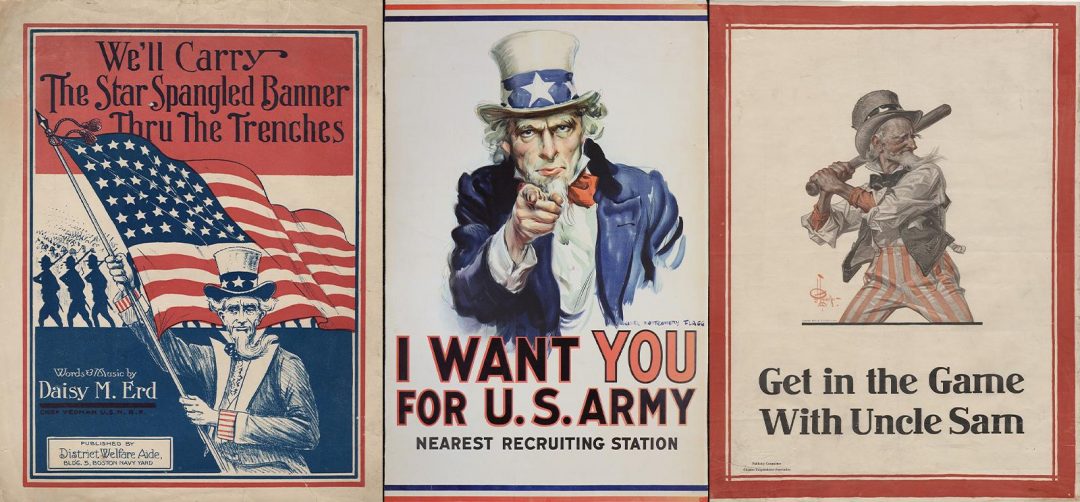
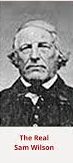
Uncle Sam has been a symbol of the United States for a very long time. Since the War of 1812, inspired by Samuel Wilson, who supplied meat from their farm to the Army. He was referred to as Uncle Sam, hence the nickname.
Since the initials U.S could refer to the United States and Uncle Sam, people started referring to the government as Uncle Sam. Eventually, Samuel Wilson become widely recognized as Uncle Sam by the state of New York, the governor of Massachusetts, and even Congress. Despite this, it is believed to have originated two years before the War of 1812, so it is doubtful to have been Samuel Wilson. In the nineteenth century, public figures had certain nicknames that were sometimes very detailed and often unflattering. So the U.S and the U.S government deserved a nickname, so Uncle Sam became it. It personalized the government, not just as a big daunting organization, but a person with a face and a message. This source gives multiple views as to who Uncle Sam could possibly be, which shows that the origin isn’t as important as the symbolism. Uncle Sam doesn’t represent a single person, but the government and the U.S as a whole. So having the origin as ambiguous gives it that much more affect as a national symbol.
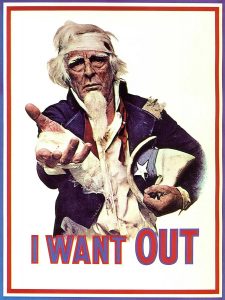 Uncle Sam was not always a positive thing. Back during the War of 1812, there were some people who were anti-war and they used Uncle Sam as a front to put their point across. Often soldiers complained that they weren’t getting paid enough and that they were “on Uncle Sam’s pay roll.” By the end of the war, the British that were in Canada ran a mock article about Uncle Sam being a slave owner. In this period of time, to other people, Uncle Sam was a symbol of how bad the U.S government was. Uncle Sam became a more positive symbol again in the 1820’s when the famous image of the older, tall, white man with the tall white hat and the serious face pointing and you saying, “I Want You for U.S Army.”[1]
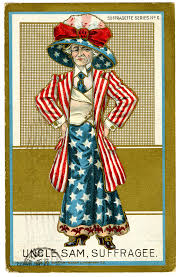 My second source brings up different instances where Uncle Sam was portrayed as a symbol of power. During 9/11, cartoonists used it to express the complicated emotions of the time, and to show that the U.S will prevail. He was depicted as Shakespear characters, as Hercules, which could symbolize his strength. He was even portrayed as a woman during the suffrage movements of 1909. These moments in history were some of the toughest, but the one thing they had in common was that the U.S was powerful and Uncle Sam was the symbol to show that. The article includes a powerful quote, “Uncle Sam will never be a ‘common man,’ but always some figure of authority, and he will never be a symbol for Russia or other countries, but always for the United States…” There are many different portrayals of Uncle Sam, but it will always represent the U.S. Including this quote shows just that.[2]
My third source brings up Uncle Sam in 1917, during WWI. He is a symbol of war and the duty of every citizen to fight for their country. Since WWI is going on during this time, he wants everyone to fight. He believes the war is strictly business. Every American has a job, whether man, woman, or even child. Everyone has a job to do to fight for their country. The people of the U.S have no idea what is going on in the world at this time, so Uncle Sam is their reminder and is there to educate them on the war and what is happening in the world. He gives a history of the military and militias, all the way back to Bunker Hill. The American education system failed them back then, but Uncle Sam won’t fail them. This source is written as a letter from Uncle Sam. This makes it very personal and gives a background of Uncle Sam that you wouldn’t get from another perspective.[3]
These sources, and many others offer different historical references to Uncle Sam and the symbolism he has been for America in different time periods. From the War of 1812, to WWI, to 9/11. Uncle Sam has always been a powerful figure in American history and will be for a long time coming.
[1] Donald R. Hickey, “A Note on the Origins of ‘Uncle Sam,’ 1810–1820,” The New England Quarterly 88, no. 4 (December 2015): 681.
[2] Wilde, Lukas R. A., and Shane Denson. “Historicizing and Theorizing Pre-Narrative Figures—Who is Uncle Sam?” Narrative 30, no. 2 (2022): 153
[3] Dickson, Harris. “Popular History of the United States by Uncle Sam Himself” (New York, Frederick A. Stokes), 1–186