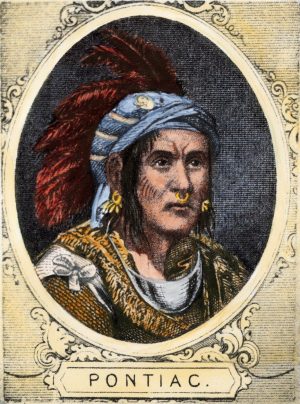
The Pontiac Speech which Pontiac delivered to an Ottawa Potawatomi and Huron council in 1763 functions as a primary source that explains why Native Americans opposed British territorial expansion during the Great Lakes conflicts. Pontiac called on Native nations to unite and defend their lands against British forces following the Seven Years’ War. The complete speech can be viewed here: https://americainclass.org/wp-content/uploads/2012/05/Pontiac.pdf [4].


The speech shows how Native American communities experienced deep mistrust and tension with colonial societies. Elizabeth Hornor shows that interactions between Native Americans and colonists, particularly through captivity during mid-eighteenth-century conflicts, often created fear and uncertainty on both sides [3]. The encounters between two groups created cultural boundaries which colonial communities found distressing. British expansion and changing policies created more conflict in this situation that people understood through Pontiac’s speech which served as his political and cultural response to these pressures.
The source provides evidence that both supports and extends the historical account presented in America: A Narrative History. The textbook establishes that imperial relationships reached their first major transformation when the Seven Years’ War ended. Pontiac’s speech shows this interpretation because it demonstrates how British policy changes affected Native community treatment. The narrative expansion shows that Native nations developed their own political goals while they fought against their oppressors.
Pontiac’s speech serves as an important historical document because it shows the moment when Native American tribes joined together to fight against British rule while defending their territories. The conflict developed because British forces expanded their territory while Native Americans fought to keep their rights and resist outside domination. The speech analysis provides better insight into Pontiac’s Rebellion causes and the larger land ownership struggle which occurred between different cultural groups during the 1700s in North America.
Carley, Georgia. “Cost, Commodity, and Gift: The Board of Trade’s Conceptualization of British–Native American Gift Giving during Pontiac’s War.” Early American Studies 14, no. 2 (Spring 2016): 203–224.
Hornor, Elizabeth. “Intimate Enemies: Captivity and Colonial Fear of Indians in the Mid-Eighteenth Century Wars.” Pennsylvania History: A Journal of Mid-Atlantic Studies 82, no. 2 (Spring 2015): 162–185.
Kaja, Jeffrey D. “‘Sometimes Bad People Take the Liberty of Stragling into Your Country’: The Struggle to Control Mobility during Pontiac’s War.” Early American Studies 14, no. 2 (Spring 2016): 225–257.
“Pontiac’s Speech to an Ottawa, Potawatomi, and Huron Council.” 1763. America in Class. https://americainclass.org/wp-content/uploads/2012/05/Pontiac.pdf
Footnotes:
[1] Georgia Carley, “Cost, Commodity, and Gift: The Board of Trade’s Conceptualization of British–Native American Gift Giving during Pontiac’s War,” Early American Studies 14, no. 2 (Spring 2016): 203–224.
[2] Jeffrey D. Kaja, “‘Sometimes Bad People Take the Liberty of Stragling into Your Country’: The Struggle to Control Mobility during Pontiac’s War,” Early American Studies 14, no. 2 (Spring 2016): 225–257.
[3] Elizabeth Hornor, “Intimate Enemies: Captivity and Colonial Fear of Indians in the Mid-Eighteenth Century Wars,” Pennsylvania History: A Journal of Mid-Atlantic Studies 82, no. 2 (Spring 2015): 162–185.
[4] “Pontiac’s Speech to an Ottawa, Potawatomi, and Huron Council,” 1763, America in Class, https://americainclass.org/wp-content/uploads/2012/05/Pontiac.pdf