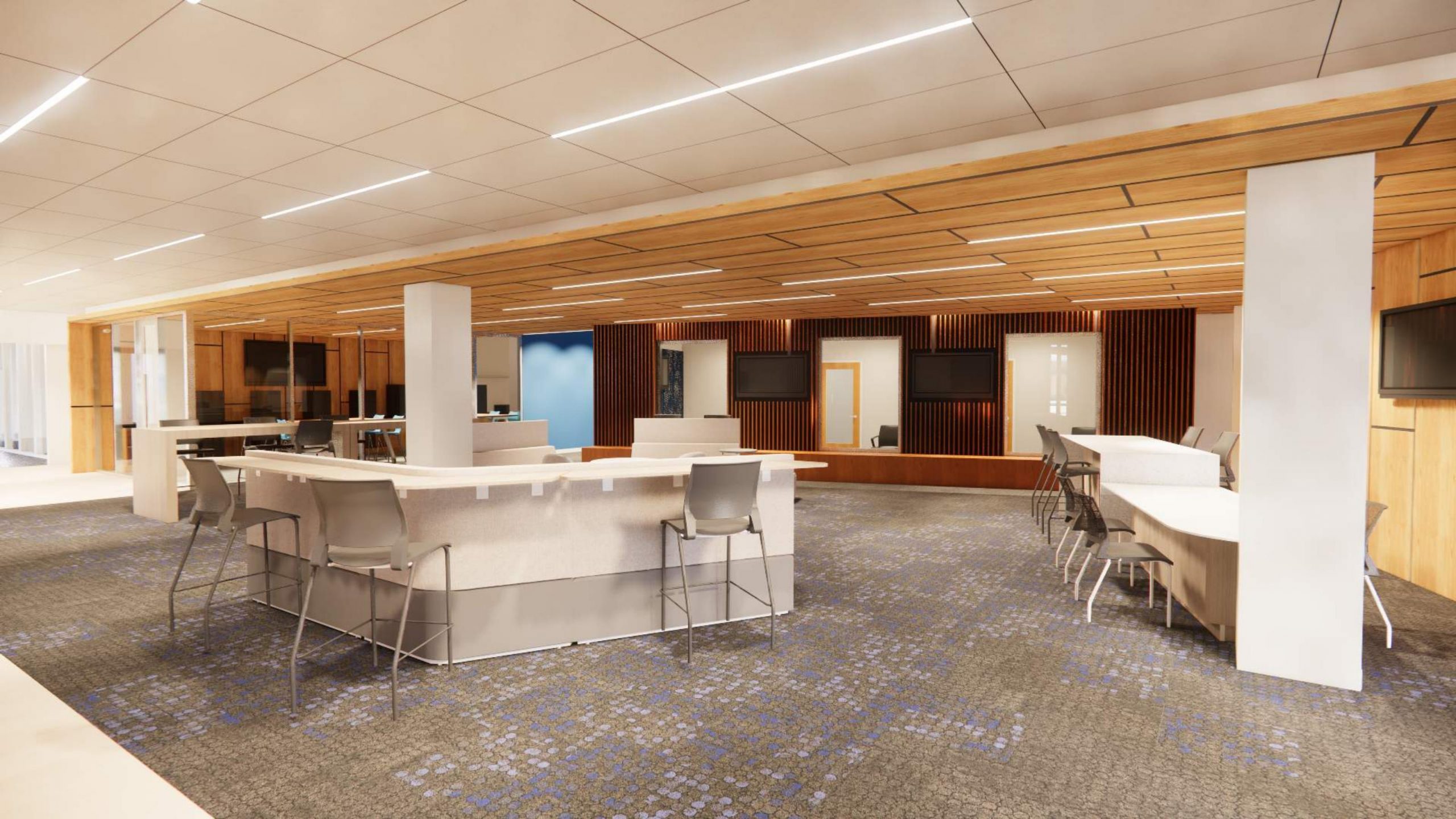
An Innovation Hub is coming to Walsh Library to provide students with hands-on learning opportunities fueled by access to emerging technologies. Located on the ground floor, the hub will include open study space, technology consultation areas and studios to explore virtual reality and artificial intelligence (AI) as well as content creation, including a recording space and podcast studios. The project was made possible through state appropriations and University funding. Seton Hall magazine editor Pegeen Hopkins spoke with chief information officer Paul Fisher to learn more about the initiative.
What is Seton Hall’s history with technology and innovation?
In the late 1990s, Seton Hall recognized the impact technology would have on higher education — in both teaching and learning — when the Internet and the microcomputer became standard. We launched a mobile computing initiative then, and today we’re still one of the few colleges nationwide to ensure our students have a standard baseline with a foundational piece of technology.
Since then, we’ve been first movers in embracing e-portfolios and using virtual reality, well before these became mainstream technologies in education. We’ve delivered pioneering simulation experiences to students — starting in virtual reality’s earliest days through to the University’s new, state-of-the art medical simulation center that includes operating rooms, triage centers and more.
Our continuing partnership with Adobe software ensures students and faculty have access to critical technology every 21st-century technology worker needs to be fluent with in order to succeed. Now we’ve committed to a migration of Seton Hall’s operational systems, moving the student information system to the Ellucian cloud by July 2027, which will allow us to be more agile and responsive as an institution.
What is the vision for this new space?
Our vision is to leverage Seton Hall’s strengths and enable students to use 21st-century technologies to research, create and build. We could help a physics student designing a model create the structure in a 3D printer. A design student could test the output of a 3D design to see if it holds up the way they believe it might. Or see if it collapses because they didn’t get the mechanics right. For communications majors, the new space will have three podcast studios they can explore in.
We envision the space being open and available to students 24 hours a day. They’ll have access to state-of-the-art technology along with ample open collaboration, study and gathering spaces.
Another part of this project’s mission is to make clear how to access the valuable library space on the main floor. The entrance will feature an obvious connection to the main floor where the circulation desk, information commons and other important services are.
What sets Seton Hall apart in empowering students in integrating technologies into their lives and work?
Our faculty genuinely understand the benefits technology brings to our students and they readily incorporate new advances into their teaching; they see its value in reinforcing fundamental, cross-departmental skills — like writing or creating, for example.
Another differentiating factor for Seton Hall is that we don’t innovate for the sake of innovating; we innovate to meet a specific student, faculty or administration-related need. We are mindful of being good stewards of the University’s resources and innovating where it makes the most impact.