
Insurance Meets Economics: How the Expiration of Affordable Care Act Subsidies Is Shaping the U.S. Healthcare Market
Kaedin Duong
Staff Writer
According to Fitch Ratings’ 2025 data, median operating margins for U.S. not-for-profit hospitals are near 1%, leaving little financial cushion against rising costs or revenue declines. These razor-thin margins make hospitals and healthcare systems vulnerable to financial shocks and sudden changes in the operating environment. Even modest shifts in payer mix, reimbursement rates, or patient volume can quickly push institutions from stability into distress.
Against this fragile backdrop, a major healthcare affordability policy expired on January 1, 2026, following the government shutdown, fundamentally reshaping how millions of Americans pay for health insurance under the Affordable Care Act (ACA). This change is not merely a consumer affordability issue; it represents a market-wide economic shock that affects insurer pricing strategies, risk pools, hospital revenue streams, employer-sponsored coverage decisions, and local labor markets. The expiration echoes across the healthcare ecosystem, amplifying existing financial pressures.
The Evolution of ACA Affordability
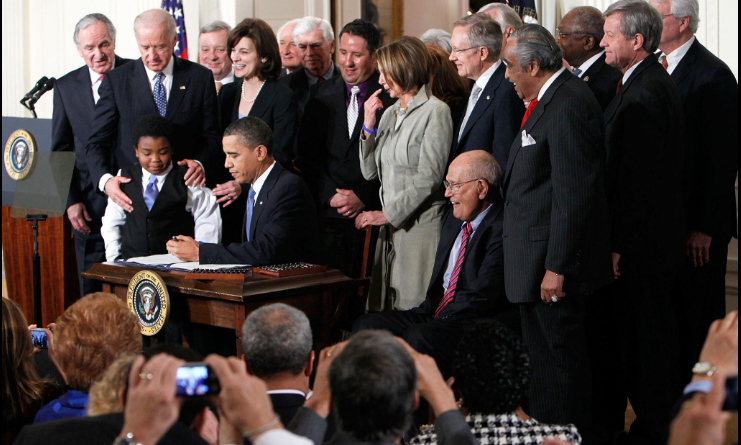
When the ACA was first established in 2014, it aimed to reduce health insurance burdens by introducing income-based subsidies for individuals purchasing coverage through insurance marketplaces. While this act, commonly referred to as Obamacare, improved affordability for low-income Americans, it posed a rigid “subsidy cliff” that restricted its effectiveness. Earning even one dollar above the 400 percent of the federal poverty level resulted in a complete loss of subsidies and eligibility. As the health insurance industry expanded and prices rose sharply, this structural affordability gap became increasingly prevalent.
Congress restructured the subsidy formula, expanding eligibility to higher-income individuals and eliminating this strict cutoff. These enhanced subsidies increased affordability and stabilized enrollment, playing a crucial role in supporting insurance participation, and maintaining balanced risk pools across the U.S. Healthcare Market.
The Public Impact
With the recent expiration of these enhanced subsidies, the dramatic subsidy cliff has been reinstated amid already high insurance premiums. This new economic landscape encourages healthier individuals to downgrade coverage or exit the market, as costs surge and demand declines. This sudden loss of affordability reshapes consumer behavior and generates ripple effects across insurers, hospitals, and the broader healthcare system. With the expiration of this policy roughly 4.2 million people could lose health insurance which would significantly impact access to care.
Insurance Companies
For health insurance companies, this loss of demand creates heightened volatility and financial risk. As healthier, low-cost individuals exit the market or shift to less comprehensive plans, insurers face deteriorating risk pools and rising average claims costs. To combat this, insurers are adjusting pricing strategies, raising premiums, or redesigning plans to limit exposure. Profit margins in ACA markets, already relatively thin, are now under increased pressure, prompting insurers to focus less on growth and more on risk management and cost control.
In order to mediate losses, insurers are reevaluating their product and geographic strategies. Narrower provider networks, higher deductibles, and stricter utilization management tools are becoming more common as companies attempt to control medical spending. In most cases, this negatively impacts consumers by limiting provider access, increasing cost-sharing, and reducing plan generosity, particularly for individuals with chronic or complex health needs. In more severe cases, insurers may exit certain states or regional markets, especially rural areas, when profitability becomes minimal or unsustainable. This consolidation reduces competition, concentrates market power among remaining insurers, limits consumer choice, and often leads to higher premiums and fewer plan options, further destabilizing local healthcare markets and placing additional financial strain on providers and employers.
The long term impact may also influence the investment decisions of insurance companies. Resources that may have gone toward innovation, digital infrastructure, or care enhancements may instead be allocated towards short-term financial stability. Furthermore, for publicly traded insurers, investor expectations can reinforce this shift, as earnings predictability becomes a higher priority than expansion in uncertain ACA marketplaces.

Spillover Effects on Employers and Other Businesses
Beyond insurers, the expiration of these subsidies ripples across the broader economy, affecting businesses and organizations of all sizes. As coverage becomes less affordable in the individual market, more workers may seek employer-sponsored insurance, placing additional financial strain on companies that are unable to absorb higher benefit costs. This burden disproportionately impacts small businesses, which often lack the bargaining power and financial flexibility to offset rising healthcare expenses, forcing difficult decisions around hiring, wages, and benefit offerings. Furthermore, businesses across the economy may experience indirect effects through declines in workforce health, productivity, and employee retention as access to affordable care diminishes. Together, these pressures underscore how changes in health insurance policy extend beyond the healthcare sector, shaping labor costs, business performance, and overall economic stability.
A Canadian Perspective on Health Insurance and Economic Stability
As an international student-athlete from Toronto, Canada, I offer a unique perspective rooted in my familiarity with a universal healthcare system. This contrast acts as a powerful illustration of how healthcare system design directly influences economic stability, labor mobility, and access to care. With the U.S landscape, economic volatility is prominent when health insurance is closely tied to employment and income. In contrast, Canada’s single-payer healthcare system provides universal coverage independent of job status or earnings, protecting individuals, employers, and providers from sudden shifts in affordability driven by policy changes. As a result, Canadian businesses, particularly small firms, do not face the same pressure to offer health insurance as a core component of compensation, allowing labor costs to remain more predictable and reducing barriers to entrepreneurship and workforce mobility.
While Canada faces its own healthcare challenges, including capacity constraints and wait times, the system offers a degree of financial stability absent in the U.S. model. The expiration of enhanced ACA subsidies illustrates how fluctuations in insurance affordability can ripple through labor markets, employer costs, and provider finances. From a Canadian viewpoint, this contrast underscores the role of healthcare system design demonstrating that healthcare policy is not only a social consideration but a fundamental economic infrastructure decision.
When affordability disappears, the ripple becomes a wave. The end of enhanced ACA subsidies shows that healthcare policy is not just about coverage; it is a force that shapes markets, labor, economic stability and an individual’s access to care.
Contact Kaedin at duongkae@shu.edu
It is sad to know that Americans are deprived of hospital attention due to costs. Our Canadian health care system provides great savings for the citizens as we do not spend anything on many kinds of hospitalization.