
AI Has Infiltrated the Music Industry, and It’s Here to Stay
Alexander Fry
Staff Writer
A technological renaissance has arrived. Generative AI has penetrated nearly every aspect of our lives, and while some aspects of it are beneficial, it threatens art and has the potential to take the jobs of creatives in every industry. In the music industry, this ‘renaissance’ feels like a plunge into the dark ages, as labels are trying to replace real artists with AI-generated music, and it’s beginning to work.
Early usage of AI in music
Once AI technology was introduced to mainstream audiences, people immediately attempted to capitalize on the craze with their own ‘creations’. While basic compositions could be generated early in AI’s lifespan, the main craze was voice imitation, as AI was able to replicate a rapper’s flow, inflections, and sound of their voice. Travis Scott, 21 Savage, and Drake were all targets of these generations, as a producer known as “Ghostwriter” wrote lyrics and then churned them through AI software to make it sound like certain rappers performed the verses. His most famous creation was “Heart on my Sleeve,” an AI-generated collaboration between Drake and The Weeknd. The song went viral and dominated music discussions on Twitter, but it was hastily removed from Spotify as the frighteningly accurate imitation of the duo was deemed a copyright violation by UMG.
As a result of “Heart on my Sleeve” kicking off the AI craze, many producers used AI rappers on their songs as it was easy to promote your beats when famous artists “rapped” on them. During this time, 21 Savage and Drake were in creative ruts, so it was difficult to tell the difference between the AI imitations and the actual rappers. However, poor songwriting and the elementary flows made it clear that these tracks were AI, although these tracks were passable for background music.
The first “AI Artist”
Contrary to his marketing, the first “AI Artist” did not make AI-generated music. FN Meka was a virtual rapper that went viral in August of 2022 as Capitol Records signed the fake rapper, claiming that he was created by AI. This was a regrettable move by Capitol Records, as he was dropped from the label after only nine days due to immense backlash regarding the content of the rapper’s songs and the marketing of him as AI. While the concept of an AI-generated artist upset people, this issue was exacerbated by FN Meka’s constant use of the n-word and rapping about police brutality and gang activity. This was controversial as he was a virtual avatar, so it came off as an appropriation of black trauma and hip-hop culture.
It was later discovered that FN Meka was not AI-generated, as a man named “Kyle, the Hooligan” came out and said he created some songs for FN Meka but wasn’t paid. His voice was pitched up to disguise the rapper and turn him into FN Meka. The virtual rapper’s music was always written and performed by humans, but it was advertised as an AI robot to spark conversation and capitalize on the AI craze.
AI solidifies itself in the music industry – The Velvet Sundown
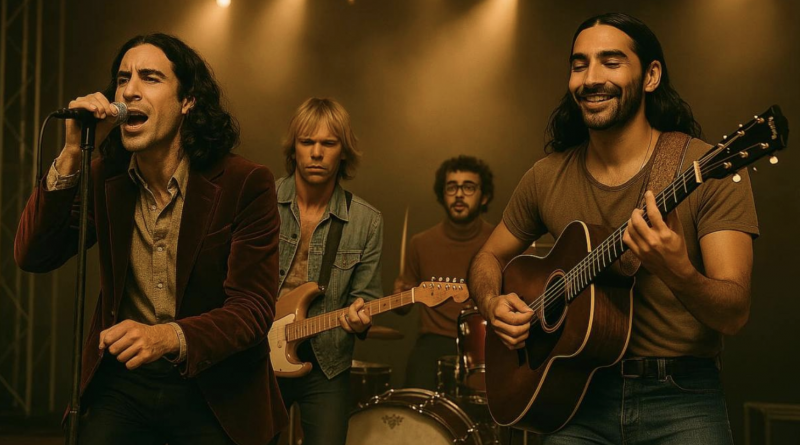
Three years later in the summer of 2025, AI had almost seamlessly integrated itself into the industry. The Velvet Sundown went viral in June and July after Spotify users noticed the band constantly pushed onto their feeds, seemingly out of nowhere as their discography didn’t extend beyond 2025. The Velvet Sundown released three albums during the summer, each of which imitated 70s rock music, combining various rock genres to where the music became indistinct and rudimentary. Initially, the creators of The Velvet Sundown claimed they were a real band, but they later admitted the obvious usage of AI to create their music and promotion. During the summer they reached over one million monthly listeners, proving that AI-generated music could infiltrate the music industry, especially as harmless background music. However, observant listeners found AI music infecting their Discover Weekly playlists and called out both the band and Spotify for the affront. Spotify didn’t make a statement on AI and its harm to human artists until much later, rapidly losing them favor with the public when paired with other issues like their low artist payouts.
While The Velvet Sundown did not rise to mass popularity and was quickly revealed as AI, they still amassed many listeners, showing that AI-generated music could easily become a normal part of the music industry. It was no longer making Michael Jackson sing reggae or imitating 60s soul singers to diss Drake, it was now creating new music through prompts and gaining an absurd number of listeners from it. This was the turning point in AI’s rise, and it has only gotten more popular from here.
Soloman Ray and AI’s takeover of contemporary Christian music
At the time of writing this article, the AI-generated artist Soloman Ray is #1 on the Christian Contemporary Music (CCM) charts. Soloman Ray is a “Mississippi-made soul singer” created by the conservative rapper known as “Topher,” who is no stranger to controversy as his song “The Patriot” was removed from Spotify after he performed it at the January 6th rallies. Soloman Ray’s music differs from Topher’s, as he primarily makes CCM and gospel music, and he’s lately been promoting Christmas music. The marketing around Ray’s music is that of a real artist, as AI videos of a man singing Christmas songs are plastered on Instagram to promote his new holiday EP.
Soloman Ray has been successful, reaching #1 in the iTunes top 100 Christian/Gospel charts and nearly hitting 500,000 monthly listeners on Spotify. The rapid rise to fame has been met with backlash, as the actual Soloman Ray, a worship leader, is against AI creation, claiming it has no soul. Topher disagrees, saying that his AI-generated music is an extension of his creativity. Christian opinion is mixed on the usage of AI in music. While some see it as a technological advance like autotune, others call it soulless and derivative. Additionally, some claim the usage of AI feeds into consumption and convenience, disconnecting the human from its soul.
It is concerning that CCM has been the main target of AI, as Soloman Ray isn’t the only AI-generated Christian music artist gaining popularity:
- Juno Skye debuted at #44 on the emerging artist charts and has gained 1.4 million total streams.
- World Hive is an AI-assisted artist that debuted at #9 on the Christian Digital Song Sales Chart with “When My Spirit is Weak.”
- JoshM debuted at #9 on the same chart in a different week with “I Never Said That (RedWords).”
Other AI artists “blowing up”
AI’s annex of CCM isn’t the extent of its influence, as the AI-generated RnB artist Xania Monet and country artist Breaking Rust have skyrocketed in popularity over the course of this autumn. Monet’s music imitates gospel and RnB influences to create accessible adult contemporary.
Xania Monet is an AI-generated RnB artist generated by the person Telisha “Nikki” Jones. Nikki claims to write all of Monet’s songs herself, basing them on her own poems, but the music itself is 100% AI-generated using the platform “Suno AI”. Xania Monet signed a $3 million contract with Hallwood Recordings and has seen great success. Her songs have hit 17 million streams in two months, and she reached #20 on the Billboard RnB charts. She currently has over 1 million Spotify listeners, proving that AI is a contender in the music industry and is replacing human artists.
Breaking Rust is the other AI-generated act that has gone viral, a country artist that is currently the most popular AI artist. He’s nearly reached 3 million monthly listeners on Spotify, with two of his songs hitting 5 million streams. The song “Walk My Walk” reached #1 on the Country Digital Sales chart, suggesting that any genre’s market could be taken over by AI.
While AI-generated music is a threat, its success reflects broader issues of derivative popular music. A user on the music database “RateYourMusic” named CalcuttaStoneman stated that Breaking Rust’s 2025 EP is “AI slop that is virtually indistinguishable from any of the human-created slop that is currently on the charts”. Aubierre Rivaldo Taylor is the human behind Breaking Rust, but their online presence is limited compared to Xania Monet’s creator.
How human artists are integrating AI into their music
AI isn’t only being used by non-artists, as there are many notable artists that have integrated AI into their music in one form or another.
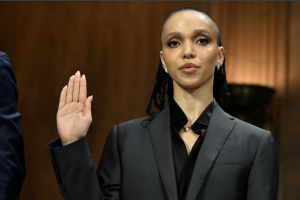
FKA twigs, a genre-bending pop/RnB/dance artist, has been extremely vocal and involved with AI, as she spoke before Congress to appeal for legislation to pass that would prevent deepfakes and AI from taking human roles. While she strongly disagrees with certain usages of AI, she often integrates it into the marketing surrounding her music, making her relationship with AI a strange one. She is currently working on an AI version of herself to handle promotion while she creates music, and twigs has also integrated AI into her music videos. The short-form videos for the rollout of EUSEXUA use AI to contort her body to create impossible dance moves, while in the music video for “Predictable Girl” she blatantly used AI art for a portion of it.
FKA twigs is not the only alternative dance/pop act to integrate AI, as experimental club artist Arca created 100 AI-generated remixes of her song, “Riquiqui” in 2020 using the AI software Bronze. Arca wrote that she “recognized the textures and melodies, but never the song”, additionally saying it was an “unforgettable experience in virtue of the mystery and wonder [that] Bronze makes possible”. Grimes, an alt-pop artist, created an AI software called “Elf.Tech” that mimics her voice so people can upload their own vocals and sound like Grimes. Grimes offers a 50/50 split on royalties for commercial use of this software. Lastly, Imogen Heap, an alt-pop artist known for songs “Hide and Seek” and “Headlock,” trained a voice model of herself called “ai.mogen”. She used vocals from ai.mogen on her latest EP “I AM ___,” switching out a timbre on the song “Aftercare” from her voice to ai.mogen’s, saying she spent “hundreds of hours to make it look nice”. While this could be a method of de-aging her vocals, some people still found a couple of songs on the EP to come off as soulless, even though AI usage was limited.
AI has also been used in rap music, as artists Kanye West and Playboi Carti have used AI in their music and promotion. Kanye used an AI dub of his voice on the track “SKY CITY” from VULTURES 2, with the rapper Cyhi performing his verse and the Kanye filter being put over his performance. Additionally, Kanye used AI in multiple VULTURES-era music videos, such as the videos for “BOMB,” “FRIED,” and “CARNIVAL.” While Playboi Carti has denied any usage of AI, he has been caught multiple times using AI voice synthesis so somebody else can rap his verses. A man named “Lawson” rapped his verses on two of the tracks on his 2025 album MUSIC, and for the hit single “Timeless” by The Weeknd, he likely had someone perform his verse for him.
AI has also been used artistically in rap music, as JPEGMAFIA sampled a 1970s soul-style cover of Future’s song “Turn Off The Lights” in his track “either on or off the drugs.” JPEGMAFIA chopped the AI sample as if it were a jazz rap / chipmunk soul song, making the AI-generated song into its own layer of a new track. Some dissented JPEGMAFIA’s use of AI in the song, although it was used with an artistic vision in mind. Another rapper who faced controversy for AI usage was Kendrick Lamar, as the music video for “The Heart Part V” used deepfake technology to plaster various celebrities’ faces over his own. However, these claims were false as deepfakes during 2022 could not be AI-generated.
Streaming services policies on AI and the future of AI music
Spotify has seen the most controversy regarding their policies on AI, as The Velvet Sundown’s takeover of Spotify playlists amplified distaste for their algorithm and treatment of real artists. Spotify recently announced they would strengthen their protections against AI by cracking down on spammy AI-generated tracks and improving their impersonation policy so real artists are not replicated and abused by AI imitations. They additionally stated they were going to add disclosures for AI music in the credits, but none of these announcements have been implemented yet. It is unclear if Spotify will make good on their statements, as they have hardly done anything about AI-generated music thus far.
The music streaming platform Deezer is the only service that tags music that is 100% AI-generated. Additionally, Deezer removes AI music from users’ recommendations so they are not bombarded by AI-generated tracks. In September, Deezer found that 28% of music uploaded was AI-generated, which is a large increase from 10% in January. It is expected that the amount of AI music on streaming platforms will rise exponentially unless more streaming services crack down on AI-generated music.
The future seems bleak, especially as corporations have little intention of slowing down or halting the use of AI in music. The signing of Xania Monet to an official label is concerning, as it shows that real people are being replaced by AI in the music industry. Furthermore, with artists like Breaking Rust gaining traction it is unlikely for AI music to slow down. It is improbable for AI to fully take over the music industry as it can only replicate music, so unique, smaller artists will be safe. Examples of these could be the indie rock band Geese, inventive rappers like McKinley Dixon, and experimental artists like The Sidepieces and galen tipton, as these artists can survive in their niche target markets. However, AI threatens popular music as the current state of pop is already quite soulless. Artists like Taylor Swift and Sabrina Carpenter are releasing derivative albums, while some Billboard-charting songs like “Ordinary” by Alex Warren are intensely soporific and uninventive. Country Pop is especially at risk, as artists like Morgan Wallen are releasing swaths of tracks that will soon be easily replicated by AI. While hope is not lost, current acts will need to reach the heights of unique artists like Kate Bush, Björk, or Kendrick Lamar to protect popular music from being taken over by AI. It’s not over for human musicians, but unless the mainstream diversifies and legislation is passed by Congress to slow down AI in art, we will continue to see AI take over music.
Contact Alexander at alexander.fry@student.shu.edu