
The New WNBA Collective Bargaining Agreement
Rachel Gaudette
Staff Writer
The WNBA is set to start their season on May 8th after the new Collective Bargaining Agreement (CBA) was ratified on March 24th, 2026. The agreement took eight days and over one hundred hours of bargaining to reach agreement between the Women’s National Basketball Players Association (WNBPA) and the WNBA Board of Governors. WNBPA president, Nneka Ogwumike, announced on ESPN’s talk show, First Take that the CBA had been put to vote by more than 90% of the league’s players and was unanimously agreed upon.
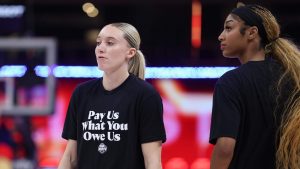
The WNBPA released a statement about the agreement, stating that, “This moment is the result of years of work and a shared belief that as the league rises, so must the players.” This comes long overdue as the disagreement on what players deserve has continued to rise with the influx of interest in women’s sports. The 2025 season held the most viewership since the season of 1998, and as the association continues to grow exponentially, players believe they have not been getting their fair share, driven heavily by the major influence of athletes like Angel Reese, Paige Bueckers, and of course, Caitlin Clark. This was voiced loudly throughout the 2025 season with the players’ movement of “Pay us what you owe us.” The WNBPA also said in their statement that “Too often, women have been told to be grateful for the opportunity. This union sees it differently. It is about knowing our worth and having the courage to demand more, not just for ourselves, but for those coming next.” These concerns were heard clearly and are addressed in this new CBA.
The seven-year deal signed in the CBA that does not end for renegotiation until 2032 is the first revenue-sharing model in all of women’s sports, marking a monumental recognition of the value of women’s athletics. The team salary cap for 2026 will increase to seven million dollars and will change annually based on league and team revenue growth. By the end of the contract, the cap is expected to grow to ten million. Maximum salaries for players have increased to 1.4 million for this season and expect to grow to 2.4 million by 2032. All ongoing and upcoming rookie contracts will also be accurately adjusted upward.
In addition to salary and team cap space, the WNBPA fought for better benefits for the athletes and their families. Housing will now be provided for all players through 2028 and through 2030 for any players making less than $500,000 per year. Teams will now have to receive consent from pregnant players before trading them as an attempt to allow more stability for families. Additional benefits include expanded team staffing and training facilities, first class and charter air travel, mental health coverage, life insurance, and family benefits.
There were other agreements written into the CBA that go beyond player compensation, including the new requirement for each team to roster twelve players. Additionally, it was written that the teams would have to add two additional spots on their rosters for developmental players, but this will not count against the team’s salary cap. In 2026, the length of the season is expanding to 44 games, with the following two seasons increasing to 50 games, and all seasons after being 52 games long.

This is a monumental step not only in the realm of women’s basketball, but in women’s sports as a whole. In a statement made by the WNBPA, they proclaimed that the current CBA is, “one of the most transformational labor agreements ever reached in major professional sports.” The league’s commissioner, Cathy Engelbert, affirmed this idea while calling the 2026 season a, “bold new era of the WNBA.” With the rise of popularity in women’s sports, it was necessary for the WNBPA to fight for what they believed was deserved. With the persistence of the player’s and their leaders, they successfully accomplished their mission and came to an agreement with the Board of Governors to pass the new CBA after what felt like an endless cat and mouse game.
Contact Rachel at gaudetra@shu.edu