
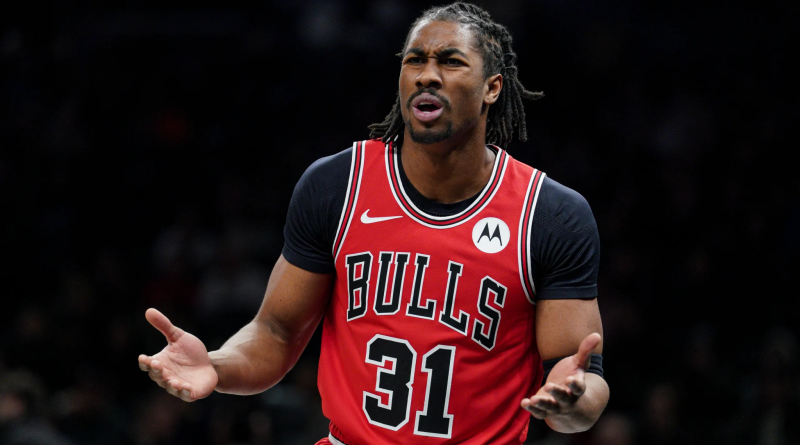
Jaden Ivey: “The Ivey League Dropout”
Justin Loretz
Sports Editor
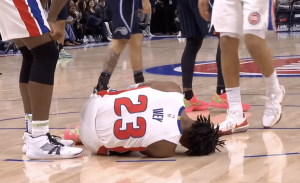
The Jaden Ivey situation has been too quickly framed as a cautionary tale of a falling star, and it is far more than a simple sports headline about a declining draft pick; it is a profound story of a young man seeking a higher purpose. As of April 2026, the former top-five pick finds himself a free agent, not for a lack of talent, but because he chose to stand firmly in his convictions during the most difficult stretch of his life. To understand Ivey’s journey, one must look past the box scores and see the toll that three years of relentless injuries took on him. Before the catastrophic broken fibula on New Year’s Day of 2025—which cut short a season where he was establishing himself as the elite scoring threat he was always supposed to be—Ivey was in line to become Cade Cunningham’s sidekick as cornerstones of the Pistons. The subsequent knee surgeries, including a painful right knee procedure and chronic patellofemoral issues, and the grueling rehab cycles that followed were not just physical hurdles, but moments of profound isolation that dismantled the spirit of a man who had spent his entire life preparing for a greatness that was suddenly snatched away. This naturally led and would lead any person of character to look toward something more permanent than a game that can be taken away in a single play.
When the Chicago Bulls waived Ivey on March 30, 2026, for “detrimental conduct” the move was framed by the media as a reaction to a “distraction,” but this portrayal unfairly characterizes a man sharing his deepest held truths. The Instagram Live broadcasts and “sermons” that Ivey shared were not the erratic actions of someone who had lost their way; rather, they were the authentic expressions of someone trying to find his way through faith. Furthermore, in many ways, the raw and unfiltered cries of someone seeking grounding through his faith after his professional world had collapsed. While his comments on league culture and religious “sermons” were deemed disruptive by the front office, they also signaled a profound shift in perspective that often follows life-altering trauma. Reports that his personal life was in upheaval and that he had turned to street preaching suggest a man in the midst of a deep existential crisis rather than a malicious locker-room cancer. For a young athlete who has seen his career-long dreams derailed by hospital stays and the media, turning toward intense conviction is a documented response to the loss of control.
In a league that often prioritizes corporate branding and uniform public personas, Ivey’s decision to use his platform to discuss his religious beliefs and personal standards was an act of immense courage. While the team cited “mutual respect and professionalism” as the reason for his release, it often felt as though the organization simply was not prepared to handle a player whose primary allegiance was not to the locker room, but to his spiritual foundation. Calling these moments “inflammatory” ignores the long history of athletes using their voices to speak on things they believe are of eternal importance, especially considering how much of a light Ivey was to the Pistons’ locker room.
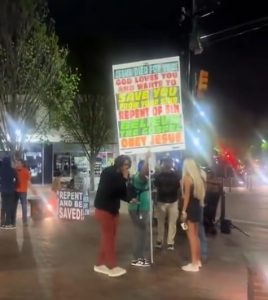
Ultimately, Ivey’s current status as a free agent is less an indictment of his ability and more a reflection of a league that struggles to accommodate individuals with uncompromising personal convictions. Former coach JB Bickerstaff’s call to “not overlook the human aspect” is a necessary reminder that Ivey is a 23-year-old human being who has endured more physical and professional heartbreak in two years than most do in a decade. His turn toward his faith is no sign of instability; it was a demonstration of resilience. For Ivey, preaching and sharing his beliefs is obviously not intended to be disruptive—it was about being honest and doing what he truly believes is best for individuals (even if he was not perfect in all of the ways he went about it). If he decides to continue his career, any team that looks at him this offseason should not merely focus on the fears brought about by incredible news sources, but they should see a man of deep principle whose character has been forged in the fire of adversity. Jaden Ivey does not need a “reclamation project,” he just needs a home that respects his inherent right to be a man of faith as much as his ability to get to the rim, if not more.
Ivey’s current status as a “radioactive” asset is a harsh indictment of a sports culture that supposedly champions mental health until it manifests in a way that is inconvenient or controversial. Rather than providing the support system necessary to navigate the psychological toll of consecutive major surgeries and a crumbling career, the industry opted to cut ties. Jaden Ivey’s story is not one of a player who failed the game, but perhaps one of a game that failed a player when he was at his most vulnerable. The question is not whether his knees can hold up, but whether any organization is brave enough to offer the empathy and stability required to help a talented young man rebuild his life.
Contact Justin at loretzju@shu.edu