
Market Rebound After Greenland Tariff Turmoil
(Trade) War for Greenland
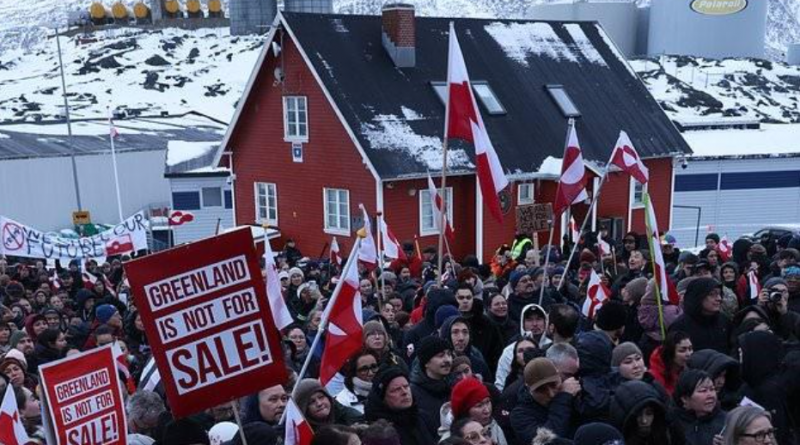
Since his first administration, Trump made it no secret that he wanted America to take control of Greenland, occasionally make militaristic threats of invading. This became reality recently when Trump escalated to a point where many considered the idea of America controlling Greenland to be a possibility, not through a hot war but through a trade war. President Trump was threatening a 10% tariff on any European Union country that opposes his takeover of the Danish territory. Specifically, Trump said he would impose an additional 10% tariff starting February 1 on goods from Denmark, Norway, Sweden, France, Germany, the Netherlands, Finland, and Britain, rising to 25% on June 1 if no deal was reached. In response, the European Union threatened retaliatory tariffs on the US.
Additionally, leaked text messages between President Trump and the Norwegian government show that Trump said that because he did not get the Nobel Peace Prize, he is not afraid to go to war for Greenland. All of this sent stocks plummeting. Because Trump made this announcement on Martin Luther King Jr. Day, American stocks were not trading, but European stocks felt the effects. The pan-European STOXX 600 (STOXX) fell 1.2%, with stock indexes in export-heavy countries like Germany (GDAXI) and France (FCHI) falling over 1.3% each. The next day, the Dow Jones Industrial Average (DJI) fell 1.76%, the S&P 500 (SPX) fell 2.06%, and the Nasdaq (IXIC) fell 2.39%. This was the biggest loss since October 10. Treasury yields, which rise when bonds fall, rose on Tuesday to their highest level since September. A surge in Japanese government bond yields also put pressure on Treasuries, adding to market fears. Additionally, the dollar index, which measures the greenback against a basket of currencies including the yen and the euro, fell 0.61% to 98.29.
The EU Strikes Back
Over 93 billion euros worth of tariffs on US-made goods had already been approved in the prior trade tensions in 2025. But they had not been implemented. The EU is retaliating by threatening to implement those tariffs if a deal is not made. This tactic seems to have worked. Because on January 21, just two days after Trump’s initial comments sent markets reeling, he walked back his threats to impose tariffs as leverage to invade Greenland. Trump announced that the scheduled tariffs on eight European countries would occur. He also ruled out the use of force and suggested that a deal was in sight to end the dispute. The markets reacted well to this. The losses from the sharp sell-off in stocks earlier in the week, based on Greenland concerns, were erased and replaced with two straight days of gains as investors digested Trump’s turnaround. On Thursday, just a day after Trump walked back his threats, on Wall Street, the major indexes closed higher. DJI rose 0.63%, SPX gained 0.55%, and the IXIC rose 0.91%.
The TACO Bell Rings
While it’s impossible to read Trump’s mind, the most plausible explanation for his sudden climbdown after his persistent demand that the US had to own Greenland and that any alternative was inadequate was the nearly 900-point fall in the Dow, a plunge in the dollar, and a climb in bond yields. His common theme of making large threats and then backing away has coined a term used on social media: “TACO” (Trump Always Chickens Out). A similar situation and conclusion occurred with the infamous “Liberation Day” tariffs, in which none of the tariffs came to fruition amid market pressure. A trade dispute would have cost the United States and Europe. Another trade war could have raised prices in the United States and further eroded business confidence and pushed a teetering US jobs market over the edge. And it could have hurt European businesses by turning American customers off their products. Retaliation could have been a dangerous proposition, some argue, because it may have led Trump to abandon other policies that are crucial to Europe, such as his support for Ukraine in the Russo-Ukrainian conflict.