
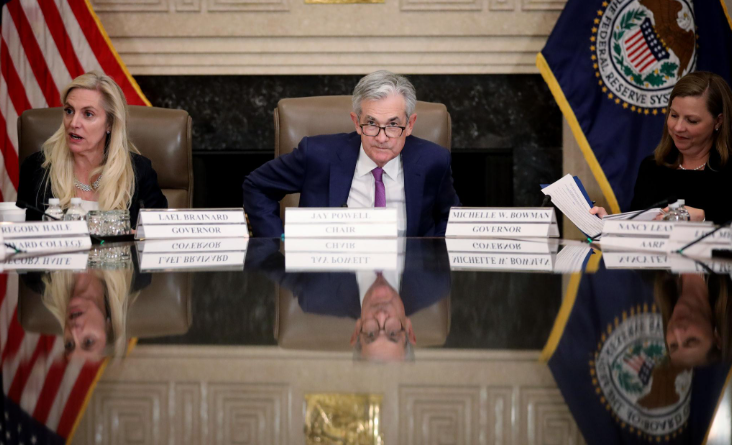
Tensions Rise Ahead of the Fed Meeting While Bank Stocks Climb
Kenneth Lionel
Staff Writer
The biggest question facing markets right now is what the Federal Reserve will do next—and why bank stocks are rising even as global traders remain cautious. Financials have rallied strongly, but beneath the surface, investors are positioning carefully ahead of a policy decision that could shape growth, earnings, and risk appetite across global markets.
Recent economic data helps explain the tension. Unemployment sits at 4.3%, slightly down from 4.4% in December 2025, while inflation has cooled. The Consumer Price Index rose 0.2% month-over-month, with annual inflation at 2.4%, one of the lowest readings in the recent cycle. Average earnings increased by $0.15, and non-farm payrolls rose by roughly 1.3 million jobs.
Taken together, the data points to moderating inflation and a labor market that is still stable but showing early signs of softening—conditions that leave the Fed in a delicate position.
Why the Fed Meeting Matters
Interest rate decisions affect nearly every part of the economy. Lower rates reduce borrowing costs, support consumer spending, and encourage business investment. Higher rates do the opposite, tightening financial conditions and slowing growth.
Last year’s rate cuts already supported capital markets activity. Trading volumes increased, M&A pipelines reopened, and investment-banking revenues strengthened. As a result, major banks posted strong fourth-quarter earnings.
Bank Stocks Have Strong Momentum
Bank stocks have staged a powerful rally. In 2025, large U.S. banks outperformed broader benchmarks, helped by higher net interest income, strong credit quality, and robust trading and investment-banking revenues. Sector-level bank indexes posted double-digit gains, reflecting margin expansion and resilient loan performance.
Investor sentiment entering 2026 has been shaped by expectations of a “soft landing,” where growth slows but avoids recession. In that environment, modest Fed easing supports credit demand and reduces downside risks.
Over the past 12 months, major banks delivered strong returns:
- Goldman Sachs: +61%
- JPMorgan: +23%
- Deutsche Bank: +107%
- Bank of America: +12%
- Bank of New York Mellon: +51%
- UBS: +44%
- Morgan Stanley: +46.5%
- Citigroup: +50%
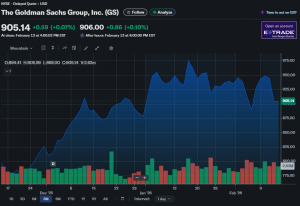
The gains were driven by higher M&A activity, stronger trading revenues, and increased capital markets deals.
AI and Capital Reallocation
Another major factor supporting markets is the rapid shift of capital into artificial intelligence and digital infrastructure. Technology firms, private equity funds, and asset managers are reallocating capital toward AI, data centers, and high-return sectors.
For example, BlackRock’s acquisition of Global Infrastructure Partners gave it exposure to Aligned Data Centers. These trends are also boosting investment-banking activity, as firms raise capital, pursue acquisitions, and finance large-scale infrastructure projects.

Global Equity Outlook
The broader equity environment remains supportive. Goldman Sachs Research projects global equities could return about 11% over the next 12 months, including dividends, driven by continued global economic expansion and modest Fed easing.
Analysts describe the current environment as a late-cycle optimism phase: valuations are elevated, but earnings growth is still supporting stock prices.
Why Traders Are on Edge
Despite strong bank performance, markets often become volatile ahead of Federal Reserve meetings. Historically, equities trade nervously in the days leading up to rate decisions, as investors wait for guidance.
Markets tend to rally when traders expect rate cuts or dovish language, but surprise hawkish signals can trigger sharp reversals. Sector reactions also vary: banks typically benefit from expectations of steady growth and moderate rates, but can sell off if markets suddenly price in recession or aggressive tightening.
After three consecutive rate cuts, the Fed is now in a “wait-and-see” phase, balancing a cooled but still functional labor market against inflation that remains slightly above its 2% target. With rates viewed as roughly neutral, incoming data on jobs and inflation will determine whether additional cuts arrive in 2026 or the Fed stays on hold.
Because decisions are made by a committee with both dovish and hawkish members, uncertainty around the exact path of rates remains high. This keeps global investors hedging risk, rotating between sectors, and positioning tactically ahead of each meeting.
The Bottom Line
When the macro narrative centers on continued growth combined with modest easing, bank stocks tend to rally. Investors price in strong credit demand, healthy capital markets activity, and manageable funding costs.
But ahead of key Fed meetings, traders often reduce risk and wait for policy clarity. That dynamic explains the current market environment: bank stocks are rising on strong fundamentals, while global traders remain on edge as they await the Fed’s next move.
Contact Kenneth at lionelke@shu.edu