
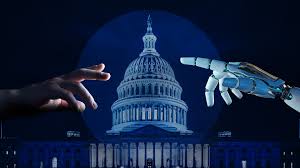
AI Quietly Being Used In Legislation
Kevin Abbaszadeh
Technology Editor
Artificial intelligence is already part of the lawmaking process… right now. Governments are using AI tools to summarize bills, scan massive amounts of public comments, flag legal risks, and assist with early drafting. This is happening quietly, with little public disclosure.
In places like the United States Congress, lawmakers deal with thousands of pages of legislation and millions of citizen submissions. AI helps sort and compress that information. The problem is simple: when AI decides what gets summarized, flagged, or ignored, it shapes what lawmakers actually see. That ends up being influence, even if it’s indirect.
AI systems aren’t neutral. They rely on training data and assumptions built by humans. If they’re trained on past legislation or historical enforcement data, they tend to reinforce existing norms and power structures. New or unpopular viewpoints are more likely to be filtered out as “outliers” or “low relevance.” No one votes on that decision, and most people don’t even know it’s happening.
Transparency is the biggest issue. There is rarely a clear statement saying a bill analysis or policy recommendation was generated or assisted by AI. Voters assume humans reviewed everything. That assumption is often wrong. When AI tools are involved, there’s no clear line of accountability if bad laws pass or important warnings are missed.
Other governments are moving even faster. The European Union already uses automated systems for regulatory impact assessments and policy modeling. These tools influence which proposals move forward and which die early. Again, the process is mostly invisible to the public.
Supporters argue this is just efficiency. But efficiency changes outcomes. If an AI tool filters public comments, it can quietly reduce the impact of dissent. If it flags certain language as risky, it can shape how laws are written before debate even begins.
The risk isn’t AI replacing lawmakers. It’s AI becoming an unexamined layer between the public and the people writing the laws. Once that layer is normalized, it’s hard to remove.
If AI is helping shape legislation, the public should know where, how, and to what extent. Laws don’t need to be written by machines to be influenced by them. And influence without transparency is a problem… even when it’s convenient.
Contact Kevin at kevin.abbaszadeh@student.shu.edu