
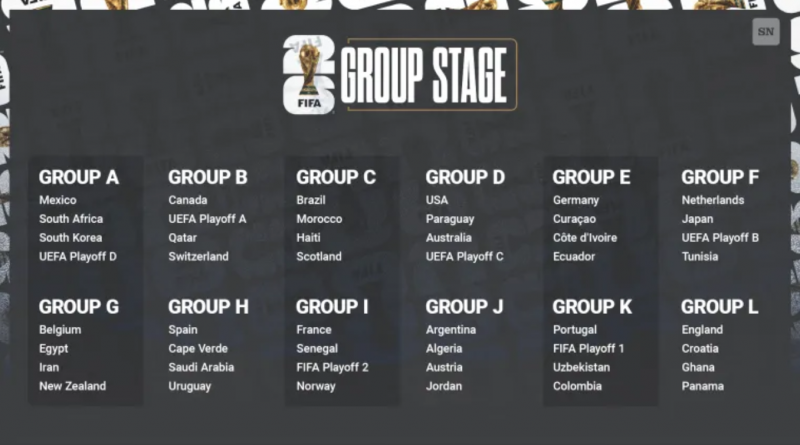
2026 FIFA World Cup Draw
Justin Loretz
Sports Editor
The reveal of the 2026 FIFA World Cup draw has officially ignited global anticipation for what is set to be the largest, most ambitious tournament in the event’s history. With the United States, Mexico, and Canada hosting the 2026 edition, the field has been expanded to 48 teams (previously only 32), completely reshaping the competitive landscape and setting the stage for unprecedented matchups. With the bracket now unveiled, analysts, national teams, and fans finally have a view of the potential pathways to glory—and the obstacles standing in the way.
Before we dive into all of the groups and matchups, it is essential to understand that this World Cup marks a structural revolution. Instead of the traditional split of 32 nations into eight groups, this tournament will feature 48—a dramatic increase of both opportunity and volatility for the world.
For rising football nations, this format offers a historic chance to break through. For established giants, it creates new pressure to avoid early slip-ups. The margin for error widens, but so does the minefield.
Headline Groups: Powerhouses and Potential Chaos
Every World Cup draw produces a “Group of Death,” but with 48 teams, 2026 may have several. Some of the headline groups already generating buzz include:

Group C: Argentina’s Early Test
The reigning champions in Argentina are headlining a group packed with stylistic contrasts. The defending champions look poised for another deep run, but they draw opponents who have impressive athleticism and solid defensive structures that will test them early. Argentina remains the favorite, but the bracket now shows a potential round of 32 clash with a European side that could complicate their title defense.
Group F: European Heavyweights Collide
Features two of Europe’s perennial knockout-stage forces. This is the sort of pairing usually reserved for the quarterfinals, not the opening phase. The clash promises to set the tone for the knockout bracket—particularly because finishing first or second dictates dramatically different matchups in the Round of 32.
Group H: The Wildcard Group
One of the most unpredictable groups is tri-continental, pairing together a rising African nation, a South American dark horse, and an emerging Asian contender. Analysts are already calling this the “chaos group,” where all four teams enter without a clear favorite. The bracket also suggests that the winner of Group H could have a very opportunistic pathway paved for knockouts—making this group one of the most feasible for a potential sleeper storyline.
Host Nations: Opportunity and Pressure
No World Cup is complete without examining the fortunes of the host countries.
United States
Drawing into a balanced yet tricky group, the United States Men’s National Team faces a blend consisting of a strong CONMEBOL (Confederación Sudamericana de Fútbol / South American Football Confederation) opposition in Paraguay, an entire continent in Australia, and a fourth team in Europe to be decided in March 2026 with the winner of the UEFA Playoff C group advancing. The bracket suggests a realistic path to both the Rounds of 32 and 16, assuming they secure at least one marquee result. On home soil, expectations will be higher than ever.
Mexico
For El Tri, their group offers a familiar challenge: a tactically disciplined opponent in South Africa, a team with strong counterattacking prowess in South Korea, and an unpredictable European force (again, to be determined in March 2026 with the winner of the UEFA Playoff D group advancing). With knockout opportunities that run through regional rivals, Mexico’s bracket could transform into a redemption arc—or another painful chapter in the quest to break the “quinto partido” curse (the curse of the fifth game).
Canada
Canada enters with a young, dynamic squad and a group that presents a realistic opportunity to advance. Their bracket slot projects a tough opponent in the round of 32, but with Alphonso Davies and Jonathan David leading the line, this may be the nation’s best chance ever to make historic knockout run.
Knockout Pathways: Where the Tournament Will Be Won
With the draw completed, the focus immediately shifts to the knockout bracket—where everything from travel distances to potential rematches plays a role.
Travel & Geography
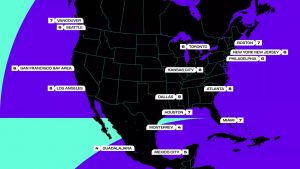
Because the tournament spans three massive countries, travel logistics will serve as a major competitive factor. Teams based in the Western region could face thousands of additional miles if they advance east or south. The bracket indicates that some group winners will face cross-continental travel before the quarterfinals even take place, a unique strategic wrinkle absent in previous tournaments.
Potential Blockbuster Early Matchups
The bracket reveals several high-profile matchups that could occur earlier than expected:
• A possible Brazil–Germany Round of 16 if results align a certain way.
• A potential England vs. France showdown in the quarterfinals, repeating their 2022 classic.
• The possibility of a Messi (or post-Messi) Argentina facing Portugal before the semifinals.
These possibilities alone demonstrate the volatile beauty of the 48-team format.
Dark Horses Positioned to Shock the World
One of the most intriguing takeaways from the revealed bracket is how several rising football nations have been handed favorable knockout routes. Teams from Africa and Asia, particularly those with recent success in continental competitions, may find themselves with realistic pathways to the quarterfinals. The expanded field does not just add more teams—it adds more storylines, more chances for historic upsets, and more pressure on global powers to perform.
What This Draw Means for the Tournament’s Narrative

Simply put, the 2026 World Cup draw has amplified every narrative at once:
• The giants have clearly defined paths, but not without danger.
• The hosts each face realistic but challenging roads.
• The dark horses have more chances than ever to make history.
• The global scale of the tournament ensures unprecedented drama.
As teams begin preparing for their opening matches, fans now have a roadmap for what could become the most unpredictable and story-rich World Cup ever staged.
Contact Justin at loretzju@shu.edu