“The Foggy Dew” by The Chieftains and Sinead O’Connor, recorded in 1995, describes one fateful Easter Monday on April 24, 1916. The attacks of Easter Rising began when a group of Irish nationalists proclaimed the establishment of the Irish Republic, and rebelled against the British government in Ireland. 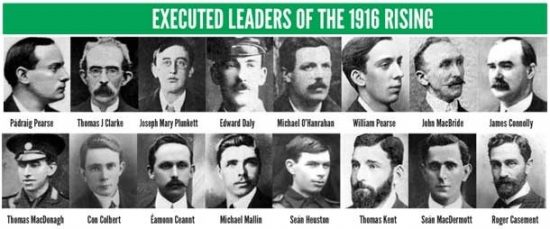
Pictured are the executed leaders of the 1916 Easter Rising.
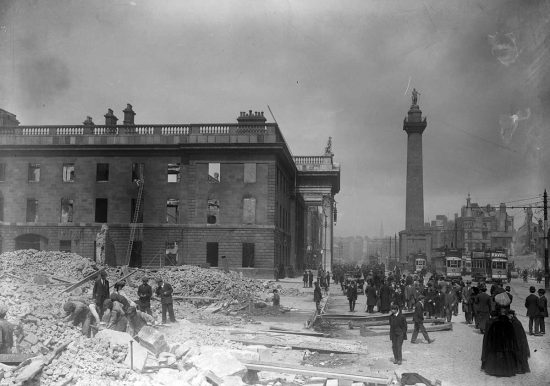
The rebels took control of buildings in Dublin and were met with force from the British troops. The fighting occurred for a week, ending with the deaths or injuries of over 2,000 people died. By May, a firing squad executed 15 leaders of the uprising. Over 3,000 people believed to have supported the uprising, both directly and indirectly, were arrested, with 1,800 of them being imprisoned in England without a trial. (History 2009).
The imprisonments and martial law under British rule led to greater support for the Easter Rising, as some citizens initially had been wary of it. Eventually, support for the Easter Rising gained traction, as in December 1921, a treaty was signed after a cease-fire between the Irish Republican Army and Britain that June. In 1922, the Irish Free State was established, which evolved into the modern-day Republic of Ireland.
On Easter Monday of 1949, the 26 counties in southern and western Ireland were officially proclaimed as the independent Republic of Ireland. Ireland’s six northern counties remained with the United Kingdom, as they do in 2020.
“History – 1916 Easter Rising – Rebel Songs (Part 4).” BBC, BBC, www.bbc.co.uk/history/british/easterrising/songs/rs04.shtml.