Byrnes, J. T. (2002). John Paul II & educating for life: Moving toward a renewal of Catholic educational philosophy. New York: P. Lang.
Most of the book is devoted to the views and work of Karol Wojtla, who served as Pope John Paul II from 1978-2005. Byrnes reviews developments in the Catholic philosophy of education since Vatican II (1962-65, beginning under Pope John XXIII and closing under Pope Paul VI) attempted to reconcile Catholic teaching with modernity. Continue reading “Educating for Life”
 This edited volume derives from papers delivered at a 1999 conference sponsored by the Erasmus Foundation, which aims to “build bridges between the apparently disconnected worlds of Catholic thought and secular scholarship” (xi).
  This “history” takes up where Gleason (1995) left off with the decline of “Neo-Scholasticism” and the attempts to modernize Catholic education post Vatican II. The underlying question is “what makes a university Catholic”? Gallin includes many historical examples from Catholic universities. These long examples and the political details make this rather a heavy read (I confess I skipped over many of the details) but Gallin clearly shows the origin of many of our current challenges, especially the financial issues and – as indicated in the title – questions of identity.
 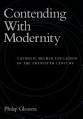 This book covers “the historical development of American Catholic higher education since 1900” (vii). While it is primarily from a Catholic perspective, Gleason places this development in a broader educational and ideological context. The introduction provides an historical overview that is developed in great detail in later chapters.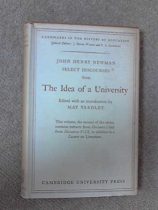
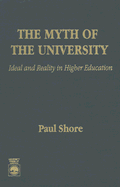 This is an interesting and readable book, and although it was not well reviewed (largely on account of being impractical, and perceived as elitist and reactionary) I felt the author made some important points. At the crux is the dialectic between the university as an intellectual “community of scholars” (with a nostalgic look back to medieval times) and the socio-political reality of universities as training for profitable employment and the entry of universities into a competitive marketplace.