Historical Source: Emancipation Proclamation, January 1, 1863
The Emancipation Proclamation, which President Abraham Lincoln signed on January 1, 1863, stands as one of the most important documents in American history. The proclamation established that all enslaved individuals who resided in Confederate territories would achieve permanent freedom.[1] The American Civil War shifted from being a battle to maintain Union control into a war focused on ending slavery and redefining freedom in the United States. To fully understand its importance, one needs to study the American social conditions that existed during that time.
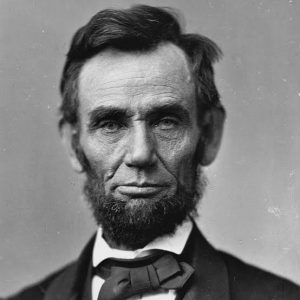
The Civil War began in 1861 after Southern states left the Union.[2] The main issues that caused the conflict between the North and South were slavery, states’ rights, and political disagreements. At first, Lincoln’s main goal was to keep the country together. However, as the war continued, he realized that freeing enslaved people in Confederate states would weaken the South while also giving the Union a stronger moral purpose for fighting.[3]
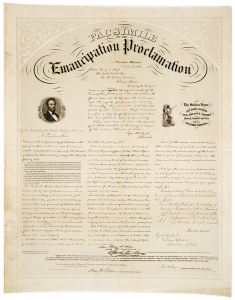
The Proclamation contains important and strategic language. It only applied to states that were actively fighting the Union, meaning it did not affect enslaved people in border states that remained loyal.[4] Lincoln had to act carefully because he wanted to make a strong statement without losing political support. While the document is often seen as a moral statement, it does not use overly emotional or religious language instead, it is written in a formal, legal tone that emphasizes military authority and necessity. This shows that Lincoln was justifying emancipation as a war measure, not just a moral argument. The wording reflects both legal authority and political strategy.
The Proclamation also created real consequences. It allowed African Americans to serve in the Union army and navy, which helped strengthen the North’s forces.[5] This changed public perception by showing that formerly enslaved people could actively fight for their own freedom and contribute to the nation. It also led to legal and political changes, including increased support for abolition and, eventually, the passing of the Thirteenth Amendment to the United States Constitution.[6]
The document shows the complex political situation of the time through its details. The text uses precise language to balance legal authority, military strategy, and ethical considerations. Although it did not immediately free all enslaved people, it marked the beginning of the end of slavery in the United States.[7]
For anyone visiting this virtual museum, seeing the original document from the National Archives makes its importance even more clear. The Emancipation Proclamation is more than just a document it represents a turning point in American history and shows how leadership, timing, and strategy can transform a nation.
[1] Eric Foner, The Fiery Trial: Abraham Lincoln and American Slavery (New York: W.W. Norton & Company, 2010).
[2] James M. McPherson, Battle Cry of Freedom: The Civil War Era (New York: Oxford University Press, 1988).
[3] Ibid.
[4] Allen C. Guelzo, Lincoln’s Emancipation Proclamation: The End of Slavery in America (New York: Simon & Schuster, 2004).
[5] Foner, The Fiery Trial.
[6] McPherson, Battle Cry of Freedom
[7] Guelzo, Lincoln’s Emancipation Proclamation.